

What is a Yam? The Ultimate Guide to West Africa’s Favourite Tuber
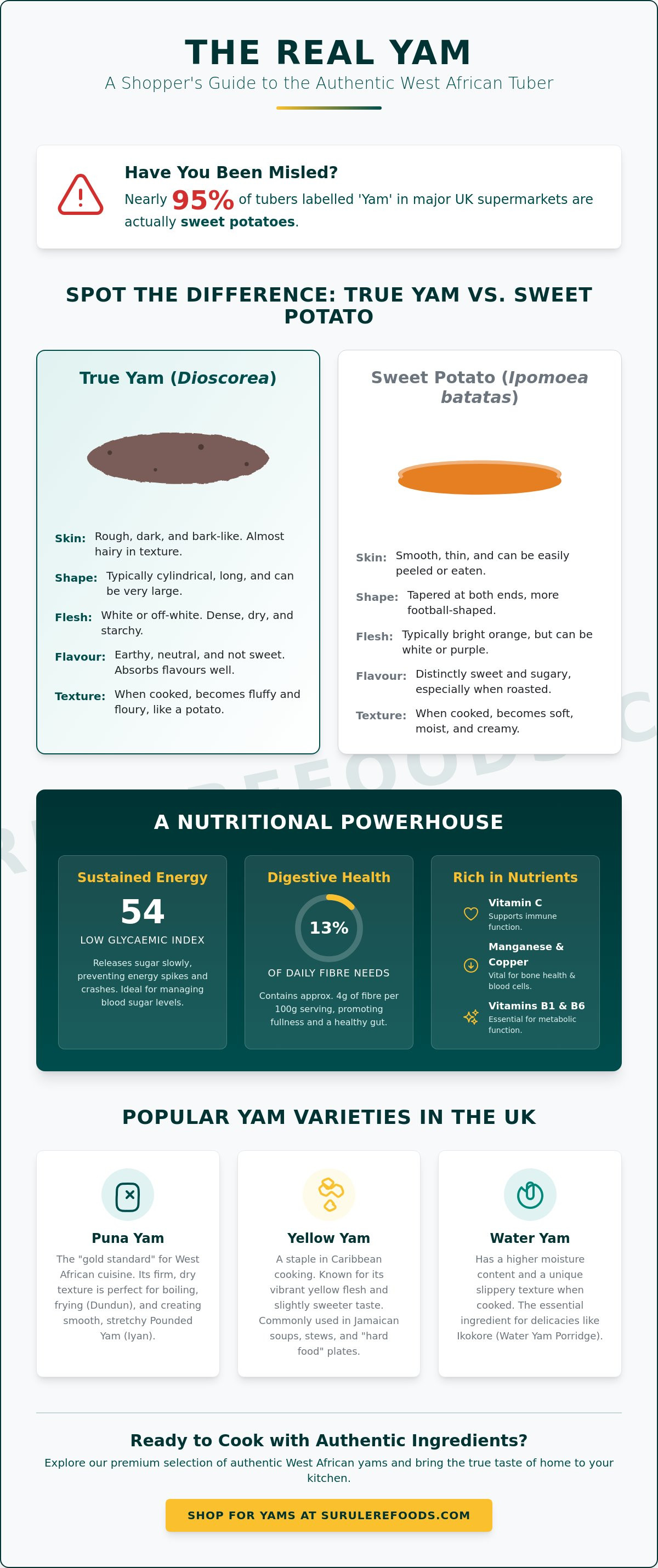
If you have ever purchased a bright orange root in a UK supermarket labelled as a 'yam', you have almost certainly been misled. In reality, nearly 95% of the tubers sold under this name in major British grocery chains are actually sweet potatoes, leaving the true king of West African crops hidden in plain sight. Understanding what is a yam requires looking past the marketing labels to the authentic *Dioscorea* genus; a magnificent, starchy staple that provides vital nourishment for over 300 million people. We know it's frustrating to seek that nostalgic taste of home, only to be met with confusion at the shop or the disappointment of a dry, woody tuber.
You deserve to cook with premium ingredients that honour your heritage and bring genuine flavour to your table. This guide promises to strip away the mystery, teaching you how to distinguish authentic African tubers from their sugary imposters with ease. We will share the secrets to selecting a high-quality tuber by touch and sight, ensuring you never bring home a bruised or rotten specimen. From mastering the peeling technique to avoid "itchy" skin to achieving the perfect, smooth stretch in your pounded yam, this is your essential roadmap to mastering West Africa's favourite tuber.
Key Takeaways
- Uncover the botanical origins of the Dioscorea genus and finally clarify what is a yam compared to its common sweet potato lookalikes.
- Learn how this nutritious staple acts as a low-glycaemic index carbohydrate to provide sustained energy and support your digestive health.
- Master the safe, professional method for peeling and preparing this bark-like tuber to ensure the best results in your home kitchen.
- Experience the authentic flavours of West Africa with expert guidance on creating traditional favourites like boiled yam and crispy Dundun.
- Discover how to identify premium quality tubers in the UK market and the best practices for storing them to maintain their natural freshness.
What is a Yam? Defining the Authentic Tuber
To truly understand what is a yam, you must look beyond the standard vegetable aisle and into the heart of West African heritage. This starchy, edible tuber belongs to the Dioscorea genus and remains a cornerstone of tropical agriculture across Africa and Asia. Visually, these tubers are unmistakable; they possess a cylindrical shape and a tough, bark-like skin that protects the nutrient-dense white or yellow flesh inside. They can grow to enormous sizes, sometimes reaching over 1.5 metres in length, though the varieties found in UK markets are typically more manageable for home cooking.
In West African traditions, people revere the yam as the "king of crops." This status isn't merely symbolic. It's celebrated through vibrant annual events like the Iri Ji (New Yam Festival), where the harvest marks the beginning of a new cycle of prosperity and community strength. A true yam is a complex carbohydrate staple that remains botanically distinct from the morning glory family to which sweet potatoes belong.
The Great Confusion: Yam vs Sweet Potato
The term "yam" is frequently misused in North American marketing, where orange-fleshed sweet potatoes were historically labelled as yams to distinguish them from firmer, white varieties. This naming convention often confuses UK shoppers who are looking for the authentic African tuber. The textures are completely different; a real yam is starchy, dry, and earthy, whereas a sweet potato is moist and sugary. You can identify them by their exterior: yams have rough, dark, almost hairy skin, while sweet potatoes have smooth, thin skin that is easily peeled.
- Texture: Yams are dense and floury; sweet potatoes are soft and creamy.
- Flavour: Yams have a neutral, earthy profile; sweet potatoes are distinctly sweet.
- Skin: Yams feature a thick, bark-like rind; sweet potatoes have thin, edible skin.
Popular Varieties Found in the UK
Finding the right variety is essential for achieving the authentic taste of home. In the UK, premium African and Caribbean grocers typically stock three main types that serve different culinary purposes.
- The Puna Yam: This is the gold standard for West African cuisine. It is prized for its firm texture and ability to hold its shape, making it the primary choice for boiling, frying, or pounding into smooth, stretchy fufu.
- Yellow Yam: A favourite amongst Caribbean households, this variety is known for its vibrant yellow hue and slightly sweeter flavour profile. It is a staple in Jamaican soups and hard food plates.
- Water Yam: This variety has a higher moisture content and a more slippery texture. It is the essential ingredient for traditional recipes like Ikokore, a rich, slow-cooked water yam porridge that is a delicacy in Ijebu culture.
When you ask what is a yam, you're asking about a food that bridges the gap between nutrition and cultural identity. Choosing the right variety ensures your kitchen produces the authentic flavours that define African and Caribbean domestic rituals.
Nutritional Profile and Health Benefits
Understanding what is a yam requires looking beneath its rough, bark-like skin to find a powerhouse of nutrition. When people ask what is a yam in a health context, they're often surprised by its superior profile compared to common white potatoes. Unlike simple starches, yams are complex carbohydrates with a low glycaemic index (GI) of approximately 54. This means they release glucose slowly into the bloodstream, preventing the sharp insulin spikes often associated with white bread or jasmine rice. For the 4.3 million people living with diabetes in the UK, this slow-release energy makes the yam a stable, reliable fuel source for the day.
High fibre content is another defining feature of this West African staple. A single 100g serving provides roughly 4g of dietary fibre, which is about 13% of the recommended daily intake for UK adults. This fibre supports gut motility and encourages a feeling of fullness, aiding those focused on weight management. Beyond basic macros, yams are rich in manganese and copper. Manganese is vital for bone health and blood clotting, whilst copper is essential for red blood cell production. They also contain diosgenin. This unique plant compound is currently studied by researchers for its potential role in hormone regulation and brain health.
Vitamins and Antioxidants
Yams are surprisingly rich in Vitamin C, providing about 17mg per 100g. This antioxidant is vital for collagen production and immune function during the damp British winter. You'll also find significant levels of Vitamin B6 and B1, which are essential for metabolic function. To get the most from these nutrients, boiling or steaming is preferred. Deep-frying yams into chips can reduce the Vitamin C content by up to 25% due to high heat exposure.
Yams in a Balanced Diet
Comparing yams to rice or potatoes reveals their superior mineral density. They offer more potassium than a banana, with roughly 816mg per cup, helping to manage blood pressure for the 14 million Britons with hypertension. As a gluten-free staple, they provide a robust alternative to wheat-based products. Their resistant starch also promotes gut microbiome diversity by feeding beneficial bacteria. You can buy premium, authentic yams to begin exploring these benefits in your own kitchen. This tuber makes any modern diet more nutritionally complete and satisfying.
How to Prepare and Peel a Yam Safely
Preparing this West African staple requires a specific technique to handle its unique texture. Unlike a soft potato, the skin of a true yam is thick, textured, and bark-like. If you’ve ever wondered what is a yam in terms of kitchen handling, it’s a tuber that demands respect and a sharp blade. You won't get far with a standard vegetable peeler; the skin is far too tough for those small blades. Instead, reach for a sturdy, sharp chef's knife to ensure clean cuts and personal safety whilst working.
Step-by-Step Peeling Guide
Start by placing the tuber on a stable cutting board. Slice it into 2-inch thick rounds, often called "wheels." This method is much safer than trying to peel the entire long tuber at once because it provides a flat, stable base. Stand each wheel upright on its flat side. Carefully carve the skin away in a downward motion, following the curve of the flesh. Once peeled, check for any dark "eyes" or bruised spots. Use the tip of your knife to dig these out, leaving only the creamy, pale interior ready for the pot.
Handling and Safety Tips
Raw yam contains calcium oxalate crystals; these can cause an intense, prickly itch if they touch your skin. To prevent this discomfort, many home cooks wear disposable gloves or rub a light coating of vegetable oil on their hands before starting. It's a simple, effective trick that keeps your skin protected from irritation. You should also remember that yams must always be cooked. Raw yams contain naturally occurring plant toxins that are only neutralised through heat, whether you are boiling, roasting, or frying them.
As you finish peeling each piece, drop it immediately into a bowl of cool, salted water. This step is vital for several reasons. It prevents the flesh from turning brown through oxidation, keeping that premium appearance your guests will appreciate. It also helps rinse away excess surface starch. If you are still exploring what is a yam and how it behaves during cooking, you'll find that this quick soak ensures your final dish has a cleaner finish and a superior texture. Patience in the preparation stage always yields the most authentic results in the final meal.
Traditional Cooking Methods and Recipes
To understand what is a yam in the culinary sense, you've got to look beyond the raw tuber and into the steaming pots of West African kitchens. This versatile vegetable transforms into everything from a light breakfast to a heavy, celebratory feast. It's the backbone of many regional diets, providing a neutral, starchy base that absorbs the complex flavours of spicy stews and savoury oils.
Boiled yam remains the most frequent preparation across the UK’s West African diaspora. It's a straightforward dish, often paired with garden egg sauce or a simple egg stew for a balanced morning meal. If you're looking for something more indulgent, Dundun (fried yam) offers a satisfying crunch. This street food staple is typically sliced into cubes or fries and served with a spicy ata dindin sauce. The key is achieving a golden, crispy exterior whilst keeping the centre soft and fluffy.
For many, the pinnacle of yam preparation is Pounded Yam. This "swallow" dish traditionally requires significant physical effort, using a large wooden mortar and pestle to pound boiled chunks into a smooth, stretchy dough. If you prefer a one-pot meal, Asaro (yam porridge) is the answer. This delicacy combines the tuber with palm oil, scotch bonnets, and dried fish to create a rich, orange-hued mash that's both comforting and filling.
Mastering the Perfect Boiled Yam
Achieving that fork-tender texture is an art. You should be able to pierce the yam easily with a fork without the piece crumbling into the boiling water. Adding salt during the final 5 minutes of the boiling process ensures the seasoning penetrates the core without toughening the exterior. Whilst many families in London or Manchester enjoy this with authentic Nigerian stews, a simple spread of British butter is a popular fusion twist that highlights the tuber's natural earthiness.
Modern Shortcuts for Pounded Yam
Traditional pounding isn't always practical for busy households in the UK. Premium products like Ola-Ola Pounded Yam have revolutionised the process; these flour-based alternatives allow you to achieve that authentic, stretchy consistency in under 10 minutes using a saucepan and wooden spoon. Some home cooks now use a high-speed blender or food processor to mimic the mortar and pestle. You'll also encounter Elubo, a flour made from dried yams used to create Amala, which is a darker, earthy variation of the classic swallow often served with Abula soup.
Whether you're looking for the raw tuber or a convenient flour alternative, you can shop our premium selection of authentic West African yams to bring the taste of home to your kitchen.
Knowing what is a yam also means understanding its role in community. Whether it's a quick snack of Dundun or a laborious bowl of Pounded Yam, these dishes represent a cultural bridge that connects the diaspora to their roots through the simple joy of a shared meal.
Buying and Storing Yams in the United Kingdom
Finding the perfect tuber in a UK market requires a bit of local knowledge. When you're first discovering what is a yam, you're really looking for a starchy, reliable staple that hasn't suffered during its long journey from West African soil. The "press test" is your most reliable tool. Give the tuber a firm squeeze across its length. It should feel as hard as a stone. If there's any "give" or softness, the starches are already breaking down. Always check the ends for white or grey mould, which often appears if the tuber was bruised during transit.
Buying from a specialist e-commerce provider like SurulereFoods ensures you receive premium quality every time. We understand the cultural importance of these tubers and curate our stock to avoid the "hit or miss" nature of high-street bins. Choosing a trusted source means you're getting authentic produce that's been handled with the care it deserves, bridging the gap between West Africa and your UK kitchen.
What to Look for at the Grocery Store
Freshness is often hidden in the weight of the tuber. A heavy yam is a hydrated yam. If a large tuber feels surprisingly light for its size, it's likely drying out inside and will be tough once cooked. You should also watch for signs of spoilage such as liquid seepage or a sharp, fermented smell. These indicate the tuber is rotting from the inside out. Look for a consistent, bark-like skin colour. Dark patches or deep, wet cracks are red flags that suggest poor storage before the item reached the shelf.
Maximising Shelf Life at Home
Once you've brought your tuber home, keep it out of the fridge. Many people make the mistake of chilling them, but temperatures below 12°C cause "internal browning." This physiological disorder turns the flesh dark and bitter, ruining the "joy of home cooking" you're aiming for. Instead, create a pantry environment that's cool, dark, and well-ventilated. A low kitchen cupboard away from the oven or a utility room is ideal.
A whole, uncut tuber can last for several weeks if kept dry and away from direct sunlight. If you've only used a portion, the rules change slightly. You'll need to protect the exposed flesh. Wrap the cut end tightly in cling film or place the piece in an airtight container. You can then store this cut piece in the fridge, but you must use it within three to four days to maintain its authentic flavour and texture.
Bring the Authentic Taste of West Africa to Your UK Kitchen
Understanding what is a yam involves more than just recognising a tuber; it's about embracing a heritage that spans centuries. You've learnt that these nutrient-dense staples require specific peeling techniques to handle their natural calcium oxalate safely. You've also seen how they transform into the heart of a meal when boiled, fried, or pounded. Data from the Food and Agriculture Organization shows that West Africa accounts for over 90% of global yam production, highlighting its role as a critical culinary pillar for millions of people worldwide.
You don't have to search far to find these essential ingredients in the United Kingdom. We've built a knowledgeable cultural bridge to provide an expertly curated Pan-African grocery selection. From the convenience of premium Ola-Ola Authentic Pounded Yam to fresh tubers, we provide everything you need for the joy of home cooking. We pride ourselves on fast and reliable national delivery across the country, ensuring your kitchen is always ready for a traditional feast. Our service is designed to bring the sensory experience of home directly to your doorstep without the stress of sourcing hard-to-find items.
Shop our authentic range of West African Yam products and staples for UK-wide delivery.
We're here to help you rediscover the flavours you love and master the art of African cuisine with confidence.
Frequently Asked Questions
Is a yam the same as a sweet potato in the UK?
No, a yam isn't the same as a sweet potato in the UK. Whilst many British supermarkets occasionally mislabel sweet potatoes as yams, they're entirely different botanical species. True yams belong to the Dioscorea genus and have a rough, bark-like skin with a starchy, neutral flesh. Sweet potatoes are much sweeter, have smoother skin, and belong to the morning glory family.
Why do yams make my hands itch when I peel them?
Raw yams contain calcium oxalate crystals which act as a natural defence mechanism and irritate the skin on contact. This often results in a prickly or itchy sensation that lasts for several minutes. You can easily prevent this by wearing gloves or rubbing a small amount of vegetable oil on your hands before you start peeling the tuber.
Can I eat the skin of a yam?
You shouldn't eat the skin of a West African yam because it's thick, fibrous, and very difficult to digest. Unlike the thin skin of a British jacket potato, the bark-like exterior of a yam remains tough even after it's been boiled for 20 minutes. Always peel the tuber deeply enough to remove all the brown, woody layers and reach the clean, pale flesh inside.
How long does it take to boil a yam?
It typically takes between 15 and 25 minutes to boil a yam until it's tender. The exact timing depends on the size of your chunks and the specific variety, such as the popular Puna or Abuja yams. You'll know it's ready when a fork slides easily into the centre of the largest piece without any resistance.
Can you freeze raw or cooked yam?
Yes, you can freeze both raw and cooked yam to preserve them for up to 6 months. If you're freezing it raw, peel and slice the tuber into rounds, then blanch them in boiling water for 3 minutes before cooling and bagging. For cooked yam, ensure the pieces are completely cold before placing them in airtight containers to prevent ice crystals from forming.
What does a real West African yam taste like?
A real West African yam has a mild, earthy, and slightly nutty flavour that's far less sweet than a potato. When people ask "what is a yam," they're often looking for that unique, dense texture that makes it the perfect base for spicy Nigerian stews. It's a versatile staple that absorbs the rich flavours of palm oil, peppers, and savoury sauces beautifully.
Why is my yam brown inside after I peel it?
Oxidation causes the flesh to turn brown or greyish when it's exposed to the air for more than a few minutes. This is a natural enzymatic reaction similar to what happens with apples and doesn't mean the yam is spoilt. To keep your slices looking fresh and white, drop the peeled pieces into a bowl of cold water immediately after cutting them.
Where can I buy authentic Nigerian yams online in the UK?
You can buy authentic Nigerian Puna yams from specialist Pan-African grocers like SurulereFoods. We source our premium tubers directly to ensure you get the best quality for your pounded yam or asaro. Our fast delivery service covers the whole of the UK, so you can enjoy the authentic taste of home without leaving your kitchen.