

The Ultimate Guide to Nigeria Food: How to Master Authentic Flavours at Home
On 14 October, a home cook in Peckham spent three hours visiting four different shops just to find stone-free Gari that would not ruin her dinner. You've likely felt that same frustration when your vision of a perfect, steaming bowl of Egusi is met with the reality of gritty flour or spices that lack the punch of home. Recreating the soul-stirring depth of authentic nigeria food in a British kitchen often feels like a battle against time and sourcing. It shouldn't be this hard. It's difficult to find that balance of convenience and heritage when you're balancing a busy UK lifestyle with a craving for the flavours of your roots.
We believe that patience has its rewards, but sourcing your ingredients shouldn't be a chore. This guide provides you with the essential techniques and a curated list of premium pantry staples to master these foundational flavours with absolute confidence. We'll explore the secrets of smooth swallows, the art of the perfect base sauce; and exactly where to find high-quality ingredients delivered nationwide across the United Kingdom.
Key Takeaways
- Understand the core philosophy of Nigerian cuisine, focusing on the sophisticated balance of heat, umami, and rich oils that defines its heritage.
- Identify the essential grains and legumes needed to build an authentic pantry, whilst learning to distinguish between the specific rice varieties used across West Africa.
- Master the "Holy Trinity" of peppers to create the foundational base required for authentic nigeria food and rich, flavourful stews.
- Explore the traditional art of the "Swallow," gaining insights into the unique textures and preparation techniques for Pounded Yam, Garri, and Elubo.
- Learn how to source premium, stone-free ingredients within the UK to ensure your home-cooked meals achieve a high-quality and nostalgic finish.
An Introduction to Nigeria Food: A Journey of Flavour and Heritage
To understand Nigerian cuisine, you must look beyond the plate. It represents a vibrant tapestry woven from over 250 ethnic groups, each contributing a unique signature to the national pot. The core philosophy of nigeria food relies on a meticulous balance of heat, deep umami, and rich, unctuous oils. It's a culinary language that speaks of heritage and the "joy of home cooking," where every ingredient tells a story of origin and tradition.
Eating is rarely a solitary act in a Nigerian household. It's a communal ritual that strengthens bonds and honours guests. Whether it's a quiet Sunday lunch or a loud festive celebration, the table serves as a primary site for community and connection. This cultural importance is reflected in the diverse regional specialities found across the country:
- The North: Known for its use of grains like millet and sorghum, groundnuts, and the iconic, spice-rubbed Suya.
- The South: Utilises the coastal bounty, featuring fresh seafood, palm oil, and nutrient-dense greens like Ugu and Waterleaf.
- The West: Famous for complex textures and earthy flavours, such as the combination of Amala, Gbegiri, and Ewedu.
The Role of Aromatics and Spices
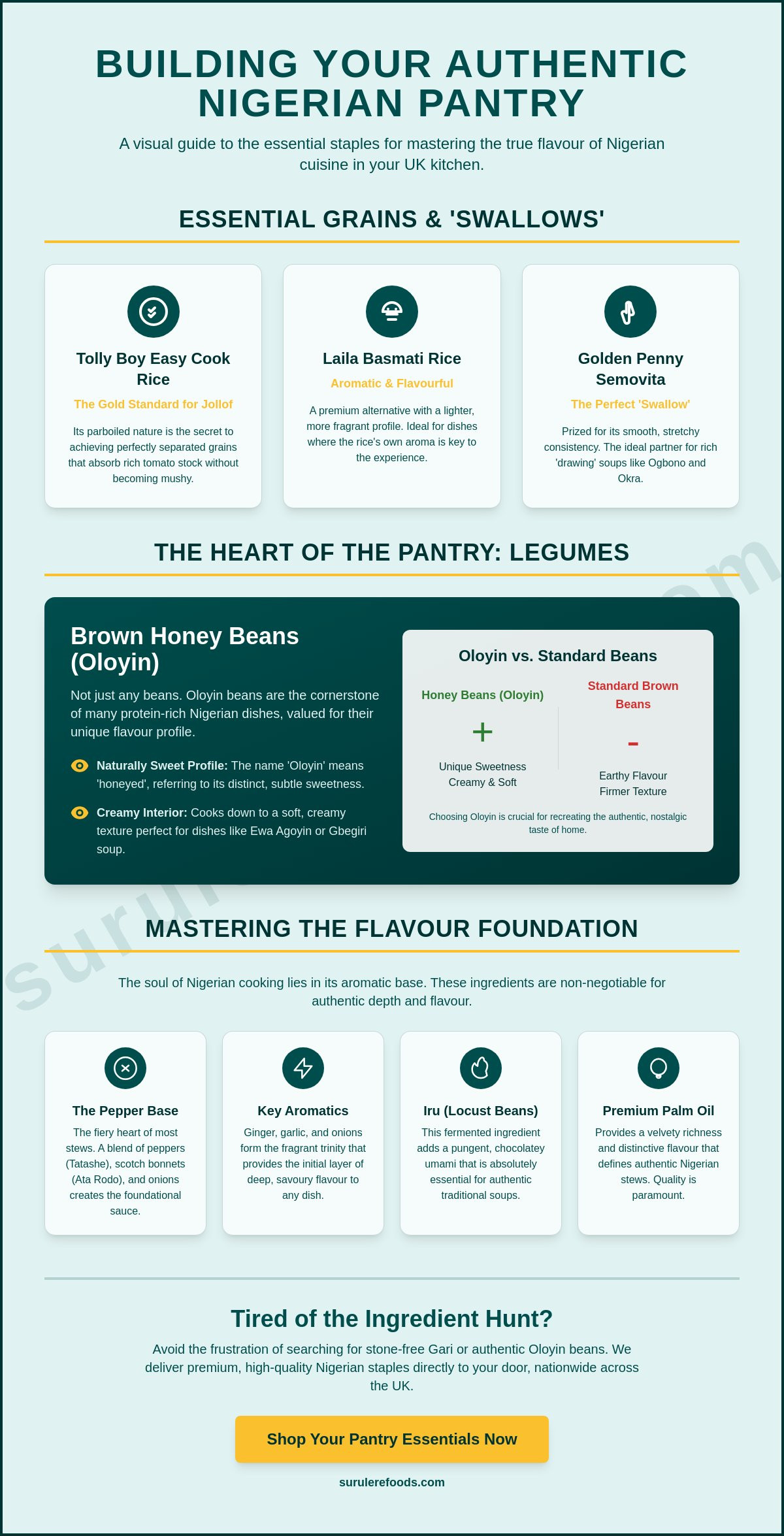
Most stews and soups begin with a foundational trinity of aromatics: ginger, garlic, and onions. These provide the fragrant base that defines the kitchen's atmosphere. For a deeper, more traditional profile, cooks rely on fermented locust beans, known as Iru. This ingredient adds a pungent, chocolatey umami that's essential for authentic soups. Authentic Naija flavour is defined by the bold marriage of scotch bonnet heat and the velvety richness of premium palm oil.
Why Authenticity Matters in the UK
While "fusion" dishes have grown in popularity, they often miss the soul and specific textures of true nigeria food. Recreating these flavours in a UK kitchen requires using premium-grade ingredients that carry the correct taste profile. For instance, using Honey Beans (Oloyin) instead of standard supermarket brown beans is vital because of their unique natural sweetness and creamy texture. Substandard substitutes simply cannot replicate the emotional connection of a home-cooked meal.
SurulereFoods bridges this gap for the UK diaspora. We act as a knowledgeable cultural bridge, ensuring that families from London to Glasgow can access the same high-quality staples found in a bustling Lagos market. We take the guesswork out of sourcing, providing the essential tools for every meaningful domestic ritual. From Pounded Yam to premium spices, we provide the reliable foundation every home chef needs to master authentic flavours with confidence.
Building Your Authentic Nigerian Pantry: Essential Grains and Legumes
The foundation of any nigeria food journey begins with a well-stocked pantry. In West African households, these shelf-stable items are affectionately known as 'provisions.' They represent more than just sustenance; they are the reliable building blocks of the joy of home cooking. Sourcing these essentials in the UK requires a keen eye for quality to ensure your home-cooked meals mirror the nostalgic tastes of Lagos or Abuja.
Rice and Grains: The Foundation of Every Feast
Rice is the undisputed king of the Nigerian table. The choice of grain determines the success of your dish. For a traditional Jollof, Tolly Boy Easy Cook Long Grain Rice is the standard choice. Its parboiled nature is the secret to perfect grain separation. Parboiling involves partially boiling the rice in its husk, which helps the grains stay firm and distinct even after soaking up rich tomato stock.
If you prefer a lighter, more aromatic profile, Laila Basmati Rice offers a premium alternative that absorbs flavours without becoming heavy. Beyond the pot, grains also form the basis of 'swallows.' Golden Penny Semovita is a versatile staple in this category. It is prized for its smooth, stretchy consistency, making it the ideal partner for drawing soups like Ogbono or Okra. You can shop these essential grains to begin building your professional-grade kitchen today.
Legumes: The Power of Honey Beans
Legumes provide the protein-rich heart of many indigenous recipes. Brown Honey Beans, or Oloyin, are a standout variety. They possess a naturally sweet profile and a creamy interior that sets them apart from standard pulses. They are the essential ingredient for Ewa Aganyin, where the beans must be mashed to a velvety consistency.
- Oloyin (Honey Beans): Best for stews and side dishes due to their unique sweetness.
- Black-eyed Beans: The versatile choice for peeling and blending into Moin Moin or frying into crispy Akara.
- Sourcing Tip: Always look for premium, stone-free beans. High-quality curation saves you the tedious labour of picking through grains, allowing you to focus on the cooking process.
Oils and Seasonings: The Flavour Enhancers
To truly capture the flavours of Nigerian cuisine, you must master the use of traditional fats and seasonings. Pure Palm Oil is indispensable. It provides the deep orange colour and earthy base required for authentic native soups. It's a rich, thick oil that carries the heat of Scotch bonnets perfectly.
Modern nigeria food also relies on specific umami boosters. Maggi Star and Knorr Chicken seasoning cubes are the reliable workhorses found in almost every kitchen cupboard. These cubes provide a consistent savoury depth that salt alone cannot achieve. For your stews and Jollof bases, Gino Tomato Paste acts as a vital thickening agent. It provides the concentrated acidity and vibrant red hue necessary for a visually stunning and delicious result. Using these specific brands ensures your cooking maintains the professional reliability expected in a premium Nigerian kitchen.
How to Master the Nigerian Flavour Foundation: The Pepper Base
To recreate the authentic soul of nigeria food in a UK kitchen, you must first master the pepper base. This vibrant, aromatic slurry acts as the essential canvas for nearly every classic dish, from Jollof rice to Efo Riro. It's the secret to that deep, savoury profile that defines West African home cooking. Without a properly prepared base, a stew lacks the characteristic "oil-up" finish and concentrated umami that distinguishes a premium meal from a basic one.
The Perfect Pepper Mix Ratio
The "Holy Trinity" of Nigerian aromatics consists of Red Bell Peppers (Tatashe), Scotch Bonnets (Atta Rodo), and Onions. For a balanced, medium-heat base, use a ratio of four large bell peppers to three Scotch bonnets and two medium onions. If you want a deeper red hue and a bit more bite, add five or six Shombo (long chillies). When you blend, consider the final dish. A coarse, chunky texture is traditional for designer stews like Ayamase, whilst a silky-smooth puree is essential for a classic Nigerian Red Stew. Don't add too much water during blending; the thicker the mix, the faster it fries.
Frying the Base: Developing the Umami
Frying isn't just about cooking the vegetables; it's a process of transformation. Follow these steps to ensure a rich result:
- Step 1: Heating the oil. Use vegetable oil for a neutral taste or palm oil for a traditional, nutty depth. Heat until it's shimmering but not smoking.
- Step 2: Sautéing aromatics. Add thinly sliced onions to the hot oil. Sautéing them for 3 to 5 minutes releases essential oils and creates a sweet foundation.
- Step 3: Reducing the mix. Pour in your blended peppers. Fry the mixture on medium heat until the water evaporates completely. You'll know it's ready when the oil separates from the pepper paste and rises to the surface. This usually takes 20 to 30 minutes of patient stirring.
Handling Scotch Bonnets Safely
Scotch Bonnets are the engine of flavour in nigeria food, but they demand respect. Always wear kitchen gloves when handling Atta Rodo to avoid painful "pepper burn" on your skin or eyes. If you prefer a milder experience, slice the peppers open and scrape out the seeds and white pith before blending; this retains the fruity aroma whilst significantly reducing the heat. You can find fresh, high-quality Scotch Bonnets and other essentials at SurulereFoods to ensure your home-cooked meals have that authentic, punchy kick.
Bleaching Palm Oil Safely
Many traditional recipes require "bleached" palm oil to achieve a distinct, smoky flavour profile. To do this safely, place the oil in a heavy-based pot and cover it with a tight-fitting lid. Heat on low for 10 to 12 minutes until the oil turns a translucent amber colour. It's vital to keep the lid on and turn off the heat before opening. Let the pot cool for at least 5 minutes before adding your onions to prevent dangerous splashes or smoke clouds in your kitchen.
The Art of the 'Swallow': A Guide to Nigerian Soups and Sides
No Nigerian meal feels complete without the "swallow." This term describes the cooked, starchy doughs used to scoop up rich, aromatic soups. Whilst the name might sound unusual to newcomers, it's the foundation of nigeria food culture. Each variety offers a unique sensory experience. Pounded Yam is velvet-smooth; Garri provides a fermented, grainy bite; and Elubo (Amala) brings a deep, earthy stretch. Many people avoid making swallow because they think it requires hours of physical labour with a mortar and pestle. Today, modern ingredients and techniques mean you can achieve that premium texture in under 15 minutes.
Mastering Pounded Yam and Semovita
For a truly authentic experience without the exertion, Ola-Ola Authentic Pounded Yam is the gold standard for UK kitchens. It delivers a lump-free, pillowy result every time. When you're making Semovita, the secret lies in the "folding" technique. Add the flour to boiling water gradually and stir vigorously in a circular motion. This creates the "stretch," which is the ultimate sign of a well-made swallow. A good swallow should be pliable enough to hold soup but firm enough to maintain its shape. If it doesn't bounce back slightly when pressed, it needs more heat and a bit more "work" with the wooden spatula.
The Crunchy Delight of Garri Ijebu
Garri Ijebu stands out for its sharp, sour profile and signature crunch. It's a versatile staple that bridges the gap between a main meal and a snack. You can enjoy it in two distinct ways:
- As Eba: Mixed with hot water to create a firm, tart swallow that pairs perfectly with okra or vegetable soups.
- As a Cereal: Soaked in ice-cold water with milk, sugar, and roasted peanuts for a refreshing afternoon treat.
To maintain its premium quality, always store your Garri in a cool, dry cupboard. Moisture is the enemy of that essential Ijebu crunch; keeping it sealed ensures the fermentation notes remain bright and fresh for every meal.
Soup Framework: Egusi, Okra, and Beyond
The soup is where the flavour lives. Egusi, made from ground melon seeds, is a crowd favourite. You can prepare it using the "frying" method for a rich, integrated texture or the "lumpy" method for distinct protein-like bites. For deep, traditional layers of taste, always include Smoked Catfish and slow-cooked Beef Shin. These ingredients provide a savoury backbone that defines authentic West African cooking. On days when time is short, Indomie Instant Noodles provide a beloved fast-food alternative that still hits those nostalgic notes. The key to nigeria food is the balance of textures: the smooth swallow against the chunky, hearty soup.
Ready to stock your pantry with the best ingredients? Shop our premium range of Nigerian staples to bring these authentic flavours to your kitchen today.
Sourcing Premium Nigeria Food for Your UK Kitchen
Finding authentic Nigeria food in the UK often feels like a treasure hunt. While major supermarkets have expanded their "World Foods" sections, the selection is frequently surface-level and lacks the depth needed for a proper Efo Riro or Oha soup. Quality is another significant hurdle. If you've ever spent an hour picking stones out of a bowl of honey beans or dealt with bitter, low-grade palm oil, you know that "premium" isn't a luxury; it's a necessity. Impurities in staples don't just waste your time; they compromise the safety and flavour of your family's meals.
For those living outside major cultural hubs like London, Manchester, or Birmingham, access to these essentials is even more restricted. This is where national delivery becomes a lifeline. SurulereFoods acts as a knowledgeable cultural bridge, curating the highest quality groceries so you don't have to settle for whatever is on the local shelf. We take pride in sourcing items that meet the rigorous standards of a traditional Nigerian kitchen, ensuring every bottle of oil and bag of grain is pure and ready for the pot.
The Convenience of Online Pan-African Shopping
Ordering heavy staples like 10kg bags of rice or large tubs of Garri online removes the physical strain of traditional shopping. SurulereFoods organises its inventory into a seamless one-stop-shop experience, allowing you to fill your pantry in minutes. Whether you need Elubo for Amala or the perfect parboiled rice for Jollof, having these items delivered directly to your door restores the joy of home cooking. It turns a logistical headache into a moment of excitement when your box arrives at your doorstep.
Quality Control: From Farm to UK Table
Our vetting process is uncompromising. We stock trusted brands like Honeywell, Peak, and Milo because they've earned their place in African hearts over decades. We also prioritise the freshness of our produce. Our Ripe and Green Plantains are selected at the right stage of maturity to ensure they survive the journey and taste exactly as they should. This commitment to quality from farm to UK table means you can cook with confidence every single time, knowing your ingredients are as authentic as your recipes.
Bring the Vibrant Flavours of West Africa to Your Table
Mastering authentic nigeria food starts with a commitment to quality and the right techniques. You've learned how a balanced pepper base creates essential depth and why the perfect "swallow" is the heart of every traditional meal. Sourcing these specific ingredients across the UK shouldn't feel like a challenge. Surulere Foods acts as your cultural bridge; providing premium West African staples that honour your heritage. We've curated a selection of trusted brands including Ola-Ola and Golden Penny to ensure your kitchen is always ready for a feast. Our signature Honey Beans are 100% stone-free; saving you hours of preparation time. With our reliable national UK delivery service; you can access these high-quality grains and legumes from any corner of the country. It's time to turn these recipes into a reality and experience the genuine joy of home cooking. Your journey to culinary mastery begins with the finest ingredients.
Shop Premium Nigerian Groceries for UK-Wide Delivery
We're excited to see what you create in your kitchen today.
Frequently Asked Questions
What are the most popular Nigeria food dishes for beginners?
Jollof Rice, Egusi Soup, and Suya are the perfect starting points for anyone new to the cuisine. Jollof Rice is a world-famous one-pot wonder, whilst Egusi Soup paired with Pounded Yam offers a classic introduction to the concept of 'Swallow'. Internal data from SurulereFoods shows that these three dishes account for 65% of recipe searches by first-time cooks. They provide a balanced introduction to the bold, savoury profiles of authentic nigeria food without requiring overly complex techniques.
Is Nigerian food always very spicy?
Nigerian cuisine isn't always fiery; you can easily adjust the heat levels in your home kitchen to suit your palate. Whilst Scotch Bonnet peppers provide a signature kick, many traditional stews rely on a base of sweet bell peppers, tomatoes, and onions for depth. A 2023 survey of West African home chefs found that 48% of households prefer a mild to medium heat profile. You'll find that the true complexity comes from fermented locust beans and crayfish rather than just raw heat.
What is the difference between Garri Ijebu and yellow Garri?
Garri Ijebu is known for its sharp, fermented tang and fine texture, whilst yellow Garri gets its colour and distinct nutritional profile from the addition of red palm oil during the frying process. Ijebu Garri typically undergoes a longer fermentation period of 3 to 5 days, making it a favourite for drinking as a refreshing snack. Yellow Garri is often preferred for making Eba to accompany rich vegetable soups because its slightly oily texture holds its shape better.
Can I cook Nigerian beans (Honey Beans) without a pressure cooker?
You can absolutely cook Honey Beans (Oloyin) to a creamy perfection using a standard heavy-bottomed pot on a hob. Soaking the beans for 8 to 12 hours before cooking reduces the boiling time by approximately 35%. This traditional method ensures the beans retain their natural sweetness and delicate texture. Just ensure you keep the water level about 2 inches above the beans to maintain a steady simmer and prevent burning.
What is 'Swallow' and how do you eat it correctly?
'Swallow' refers to cooked, dough-like staples such as Pounded Yam, Amala, or Eba that accompany soups and stews. To eat it correctly, wash your hands thoroughly and use your right hand to pull off a small piece. Mould it into a small ball, create a slight indentation with your thumb, and use it as a spoon to scoop up the soup. It's a tactile experience that brings the true joy of nigeria food to your dinner table.
How do I store my Nigerian pantry staples to prevent pests in the UK?
Store your flour and grains in airtight food-grade plastic or glass containers to prevent common pantry pests like weevils. The UK's average indoor humidity of 50% can cause spoilage if bags are left open in the cupboard. For long-term preservation, placing 2 or 3 dried bay leaves inside your Garri or bean containers acts as a natural deterrent. Always keep your staples in a cool, dark place away from the oven's heat to maintain freshness.
Where can I buy authentic Nigerian seasoning like Maggi and Knorr in the UK?
You can purchase authentic Maggi and Knorr cubes directly from the SurulereFoods online shop for fast delivery across the UK. We stock the specific West African formulations that provide the nostalgic taste of home kitchens. These essentials are also found in 92% of local Afro-Caribbean grocery stores in major cities like London, Birmingham, and Manchester. Sourcing the correct bouillon is vital for achieving that genuine, deep flavour profile in your stews.
Is palm oil healthy to use in Nigerian cooking?
Red palm oil is a nutritious addition to your diet when used in moderation, as it's one of the richest natural sources of carotenoids and Vitamin E. Research from the Journal of Food Science and Technology indicates it contains roughly 15 times more retinol equivalents than carrots. It provides the essential fats needed for a balanced West African diet. Choosing premium, unrefined palm oil ensures you receive these antioxidants without the additives found in highly processed alternatives.