

The Ultimate Guide to Honey Beans (Oloyin): Flavour, Nutrition, and Sourcing
If you think all legumes are created equal, one bite of a perfectly simmered Oloyin bean will instantly prove you wrong. Most home cooks in the UK have felt the frustration of spending three hours over a stove only to end up with a pot of stony, bland, or stubbornly tough pulses. It's disheartening when you're craving that specific, nostalgic taste of home but the quality of your ingredients simply lets you down. You deserve a bowl that delivers on its promise; naturally sweet, buttery, and incredibly soft every single time.
This guide helps you master honey beans, from identifying the premium brown variety to achieving that signature creamy texture without the endless wait. You'll discover the impressive nutritional profile of these West African staples and learn the exact techniques to preserve their unique flavour. We also provide the solution to your sourcing woes by highlighting where to find a reliable, high-quality supplier right here in the UK.
Key Takeaways
- Understand the rich heritage of the Oloyin variety and why its unique, naturally sweet flavour profile has earned it a legendary status in West African cuisine.
- Learn the professional secrets to identifying premium, stone-free batches, ensuring you avoid the common pitfalls of old, hardened stock that refuses to soften.
- Master the art of the overnight soak and slow-boil to achieve the signature creamy consistency that makes honey beans a favourite for both traditional and modern dishes.
- Explore the significant health benefits of these pulses, from their high plant-based protein content to the essential dietary fibre that supports sustained satiety.
- Discover how to reliably source authentic, farm-fresh Oloyin beans within the UK, bringing the true taste of home to your pantry with ease.
What are Honey Beans? Understanding the Oloyin Heritage
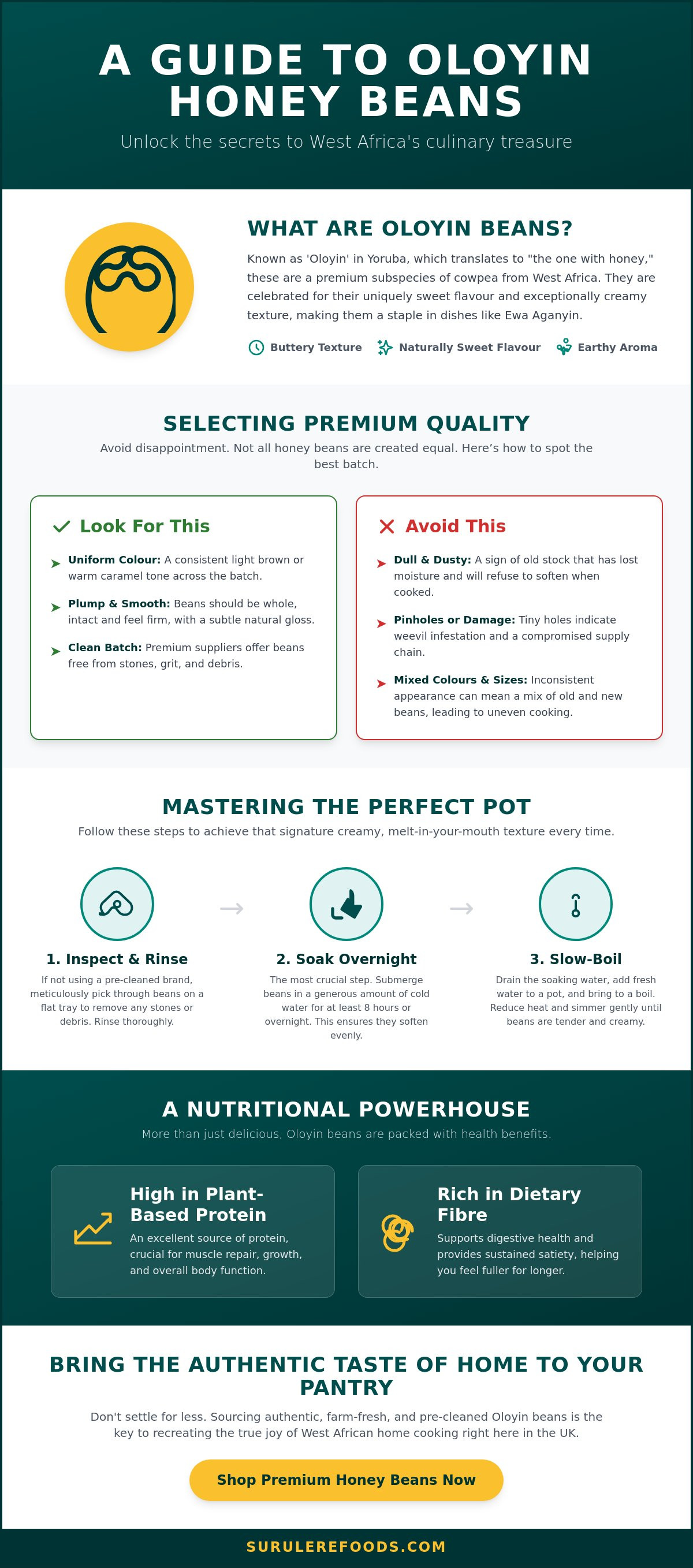
Honey beans represent far more than a simple pantry staple; they are a culinary treasure deeply rooted in West African soil. Technically a subspecies of the cowpea (Vigna unguiculata), these legumes are prized for a sensory profile that sets them apart from every other bean variety. In the Yoruba language of Nigeria, they are known as "Oloyin," a name that literally translates to "the one with honey." This isn't a marketing gimmick. It's an accurate description of their distinctively sweet, earthy flavour and a texture so creamy it melts on the tongue after cooking.
Whilst you might find standard black-eyed beans in any British supermarket, honey beans are a different class of ingredient altogether. They lack the slightly bitter aftertaste often associated with common legumes. Instead, they offer a rich, buttery depth that has made them a sought-after "premium" choice for the African and Caribbean diaspora across the UK. For those who grew up with them, the aroma of honey beans simmering on a stove is a powerful trigger for cultural nostalgia and home-cooked comfort.
The Origin and Cultural Significance of Oloyin
The cultivation of Oloyin beans is historically concentrated in the fertile regions of Nigeria and neighbouring West African nations. For generations, they've been the centrepiece of domestic life, featuring in daily meals and elaborate traditional celebrations alike. In Nigerian households, they are the essential foundation for iconic dishes such as Ewa Aganyin or Gbegiri soup. Their premium status amongst the diaspora stems from this nostalgic connection to home. Sourcing authentic honey beans is often the first step for many UK families looking to recreate the authentic joy of a Sunday afternoon meal in Lagos or Ibadan. They represent a cultural bridge, connecting modern UK kitchens to centuries of West African agricultural heritage.
Physical Characteristics: Identifying the Real Thing
Identifying genuine Oloyin beans requires a keen eye for detail. They typically display a light brown to warm caramel colour and possess a distinct kidney shape. Their physical build is unique because of specific traits that influence how they behave in the pot. Their thin outer skin allows for a faster cooking process compared to tougher beans; it ensures the interior reaches a velvety consistency without the skin becoming detached or papery. Unlike the mottled or stark white appearance of other cowpeas, Oloyin maintains a consistent, sun-kissed tone. This high starch content breaks down beautifully during the boiling process, creating a natural sauce whilst the beans remain tender.
Oloyin beans are the naturally sweetest legume in the West African pantry.
Selecting Premium Quality: How to Spot the Best Brown Honey Beans
Experience the joy of a perfect meal by starting with high-quality ingredients. Authentic Nigerian Oloyin, or honey beans, are prized for their unique natural sweetness and creamy texture. However, not all bags offer the same culinary experience. You should look for a batch with a uniform, light-tan colour and a subtle gloss on the skin. Avoid dull, dusty-looking beans. These often signal old stock that's lost its internal moisture. Old beans are stubborn. They won't soften even after hours of boiling, which wastes your time and energy. As the most widely planted native legume in Africa, these pulses are a kitchen staple that deserves careful selection.
Look closely for tiny perforations or "pinholes" in the skin. These holes indicate weevil damage, a common issue in poorly managed supply chains. Premium beans should be smooth, plump, and intact. In the UK, many households find that buying in bulk 5kg or 10kg bags is the most cost-effective approach. It reduces the price per kilogram and ensures you always have a reliable base for a quick, nutritious dinner. When you buy in larger quantities, you can focus on the quality of the source rather than making frequent trips to the shops.
The Challenge of Debris and Stones
Traditional harvesting involves drying bean pods on the ground in the sun. This process occasionally lets small pebbles or grit slip into the final sack. Finding a stone mid-bite isn't just unpleasant; it's a genuine safety risk for your teeth. This is why many home cooks spend at least 15 to 20 minutes "picking" through their beans before washing. You can skip this tedious chore by choosing pre-cleaned, premium-packaged options like those curated by SurulereFoods. If you do pick them yourself, use a wide, flat tray and work in small handfuls under bright light to catch any stray debris efficiently while maintaining high hygiene standards.
Storage Solutions for the British Kitchen
Once you've brought your beans home, storage is key to maintaining that fresh-harvest quality. The UK's humidity can fluctuate, which encourages spoilage or pest activity if the beans are left in open bags. Transfer your honey beans into airtight glass or heavy-duty plastic containers immediately. Never store dried beans in the fridge or freezer. The moisture inside those appliances can cause mould or alter the bean's structure, making them cook unevenly. Keep your jars in a cool, dark kitchen cupboard. Well-stored dried beans remain at peak quality for up to 12 months, though they're usually so delicious they won't stay on your shelf for that long.
Mastering the Art of Cooking Oloyin Beans
Cooking honey beans requires the patience that our name, Surulere, embodies. You're not just boiling a legume; you're coaxing out a creamy, naturally sweet profile that defines West African comfort food. To achieve that signature buttery texture, start with an overnight soak. This simple ritual reduces cooking time by 25 percent and helps break down the complex sugars that often lead to digestive discomfort.
A common mistake in many kitchens is adding salt too early. Salt reacts with the bean skins, creating a chemical barrier that keeps them tough and leathery regardless of how long you boil them. Always wait until the beans have reached your desired softness before introducing salt or acidic ingredients. This ensures the skins remain tender whilst the insides turn to velvet.
Preparation: From Soaking to Softness
Begin by bringing your beans to a vigorous boil for 10 to 15 minutes, then discard this initial water entirely. This step is the most effective way to reduce flatulence and clear away any impurities. Refill the pot with fresh water, maintaining a ratio of three parts water to one part beans. Keep the heat at a steady, gentle simmer to preserve the bean's shape. The "mash test" is the only reliable way to check for readiness; if a bean doesn't turn to a smooth paste between your thumb and forefinger with zero resistance, it needs more time on the stove.
Classic Honey Bean Recipes
- Ewa Aganyin: This iconic Nigerian street food involves mashing the beans until they're incredibly smooth, then topping them with a spicy, smoky sauce made from bleached palm oil and dried chillies.
- Moyin Moyin and Gbegiri: By peeling the honey beans, you can blend them into a fine paste for steamed puddings (Moyin Moyin) or a silky, golden soup (Gbegiri) that's traditionally paired with Tuwo or Amala.
- Simple Ewa Oloyin: A daily staple where the beans are simmered with diced onions, a spoonful of palm oil, and a touch of Scotch bonnet for a balanced, warming meal.
Modern Pairings for the UK Palate
The natural sweetness of Oloyin makes it an adaptable star in the modern British kitchen. Serving these beans alongside ripe fried plantain creates a "sweet-on-sweet" flavour profile that's a favourite amongst children and adults alike. For those seeking a nutritious lunch, they're a brilliant high-protein addition to grain bowls or roasted vegetable salads, offering a much richer texture than standard canned pulses. If you want an authentic finish, don't forget the Garri Ijebu. A light dusting of this fermented cassava provides a sharp, tart contrast and a satisfying crunch that balances the creamy beans perfectly.
Health and Nutrition: The Benefits of Oloyin
Selecting premium ingredients like honey beans isn't just about the rich, sweet taste; it's a commitment to a balanced, nutrient-dense diet. These legumes serve as a powerhouse for plant-based nutrition, providing approximately 21 grams of protein per 100g serving. This makes them an essential staple for vegans and vegetarians looking to maintain muscle mass and cellular repair without relying on animal products. Beyond protein, the high dietary fibre content ensures that your digestive system functions efficiently whilst keeping you feeling full for longer, which can assist in weight management goals.
The nutritional profile of Oloyin is particularly beneficial for those monitoring their metabolic health. With a Glycemic Index (GI) typically lower than 40, these beans release glucose slowly into the bloodstream. This prevents the sharp insulin spikes often associated with refined carbohydrates. Additionally, a single 100g serving contains roughly 5mg of iron, 170mg of magnesium, and over 1,000mg of potassium. These minerals are vital for oxygen transport, muscle function, and maintaining healthy blood pressure levels across the UK's diverse population.
Honey Beans vs. Black-Eyed Beans: A Nutritional Comparison
While both varieties are staples in West African cuisine, Oloyin stands out due to its higher natural sugar content, which creates its signature "honey" flavour without the need for added sweeteners. Honey beans generally boast a thinner seed coat than black-eyed beans. This structural difference results in shorter cooking times and improved digestibility, often reducing the bloating sometimes associated with legumes. If you're preparing traditional dishes like Gbegiri or Moin Moin, the naturally creamy texture of Oloyin makes it superior for mashing and pureeing compared to the grainier finish of the standard black-eyed variety. It's a choice that rewards the cook with both better texture and a more delicate digestive experience.
Supporting a Healthy Lifestyle
Incorporating these legumes into your weekly meal prep provides a steady source of complex carbohydrates. These slow-burning fuel sources offer long-lasting energy for busy professionals and active families alike. Research from the British Heart Foundation indicates that diets rich in legumes can help lower LDL cholesterol, significantly reducing the risk of cardiovascular disease. The magnesium found in every bowl supports a healthy heart rhythm and nervous system function. A single serving of honey beans provides a significant portion of the recommended daily fibre intake, helping you meet the UK government's 30g target with ease. Experience the nutritional richness of home by choosing to shop authentic honey beans for your next kitchen creation.
Authentic Sourcing: Why Premium Honey Beans Matter for Your Pantry
Finding authentic Oloyin beans in mainstream UK supermarkets often feels like a wild goose chase. Most high-street shelves stock generic brown beans that lack the signature sweetness and creamy texture of true honey beans. These mass-market options frequently sit in warehouses for extended periods, leading to tough skins and frustratingly uneven cooking times. SurulereFoods bridges this gap by connecting West African farms directly to British kitchens. We ensure you aren't just buying a pulse; you're investing in the genuine taste of home.
The SurulereFoods Promise of Authenticity
Our commitment centres on sourcing premium, stone-free, and meticulously cleaned brown honey beans. We prioritise the current year’s harvest because freshness dictates how quickly the beans soften and how rich the final broth becomes. Old beans require hours of boiling; our fresh stock respects your time and your palate. As a Pan-African expert, we understand that quality isn't negotiable for a Sunday morning moin-moin or a midweek Gbegiri. We've organised a robust national delivery network across the UK, ensuring your pantry stays stocked regardless of your postcode. Shopping with a specialist means you receive ingredients handled with the cultural respect they deserve. Our name, Surulere, reminds us that patience is rewarding, especially when it results in a perfectly tender meal.
Building Your Essential West African Larder
A bag of honey beans is only the beginning of your culinary journey. To recreate the authentic flavours of Lagos or Accra, you need the right supporting cast. You can complement your beans with our rich palm oil, ground crayfish, and classic Knorr seasoning cubes for that indispensable depth of flavour. We've made it simple to order fresh Scotch bonnets and ripe plantains alongside your dry goods. This one-stop approach saves you from visiting multiple shops across town. It's a convenient way to maintain your traditions without compromise.
Cooking traditional staples is a rewarding process that nourishes the soul. You'll find that using the correct ingredients makes every step of the recipe more intuitive. Experience the satisfaction of a perfectly seasoned pot of Ewa Aganyin, made with ingredients that haven't lost their character in transit. Your kitchen deserves the best, and we're here to provide the bridge to the flavours you love. Don't settle for substitutes when the real thing is just a few clicks away.
Bring the Authentic Taste of Home to Your Kitchen
Elevate your next meal with the natural sweetness and creamy texture that only authentic Oloyin can provide. These legumes aren't just a pantry staple; they're a nutritional powerhouse packed with plant-based protein and essential fibre. Choosing premium honey beans ensures you spend less time sorting through grit and more time enjoying the rich, cultural heritage of West African cuisine. At SurulereFoods, we've eliminated the guesswork by sourcing 100% stone-free legumes through our trusted Pan-African network. Whether you're preparing a classic Gbegiri or a simple side of Dodo, the quality of your ingredients defines the final dish. We handle the logistics with fast national delivery across the UK so you can focus on the joy of cooking. Experience the difference that expert curation makes with our meticulously cleaned stock. It's time to transform your domestic ritual into a celebration of flavour and nostalgia.
Shop our premium Brown Honey Beans for national UK delivery and rediscover the authentic flavours you love. Your journey back to the heart of home cooking starts with a single, high-quality ingredient. We can't wait to see what you'll create in your kitchen today.
Frequently Asked Questions
Are honey beans the same as brown beans?
No, they aren't the same. Honey beans, also known as Oloyin, are a specific variety of brown beans prized for their naturally sweet flavour and lighter, creamy skin. While standard brown beans have a more earthy taste, honey beans fetch a premium price because they cook into a much softer texture. They're the preferred choice for traditional dishes like Ewa Aganyin due to this unique sweetness.
Do I really need to soak honey beans overnight?
You don't strictly need to soak them, but doing so for 8 to 12 hours significantly reduces your time at the stove. Soaking helps break down complex sugars that cause digestive discomfort and ensures an even, creamy consistency. If you're short on time, a quick soak in boiling water for 60 minutes can help, but the overnight method remains the gold standard for the best results.
Why are my honey beans still hard after cooking for an hour?
Hard beans often result from using "old stock" or cooking in hard water, which affects 60% of households in the UK. If your honey beans aren't soft after 60 minutes, the beans might be over a year old, causing the cell walls to toughen. You can fix this by adding a pinch of bicarbonate of soda to the pot or using filtered water to help soften the skins.
Can I cook honey beans in a pressure cooker to save time?
Yes, a pressure cooker is a brilliant tool that reduces the cooking time for honey beans from 90 minutes to just 20 or 25 minutes. This is a lifesaver for busy families wanting a taste of home during the work week. Just remember not to overfill the pot, as beans produce foam that can block the steam valve. Always follow your cooker's specific instructions for legumes.
Are honey beans suitable for a vegan or gluten-free diet?
They're absolutely perfect for both. Honey beans are a 100% plant-based protein source, offering about 21 grams of protein per 100g serving. They're naturally gluten-free and provide the sustained energy levels needed for a healthy lifestyle. For vegans in the UK looking to diversify their diet, these beans offer a delicious, nutrient-dense alternative to processed meat substitutes.
How do I stop honey beans from making me bloated?
The best way to prevent bloating is to discard the soaking water and rinse the beans thoroughly before you start boiling them. Adding carminative ingredients like fresh ginger or a teaspoon of cumin to the pot also helps your system process the 15 grams of fibre found in a typical serving. These simple steps make the beans much easier on your digestion whilst retaining all their nutritional value.
What is the best way to eat honey beans for breakfast?
A classic way to enjoy honey beans for breakfast is "Ewa," paired with fried plantain or warm, crusty bread. If you want something different, you can blend them to make Akara (savoury bean cakes) or steam them into Moin Moin. These traditional West African breakfast options provide a high-protein start to your day that keeps you feeling full and energised until your lunch break.
Where can I buy authentic honey beans for delivery in the UK?
You can buy premium, authentic honey beans directly from SurulereFoods for fast delivery anywhere in the United Kingdom. We pride ourselves on sourcing high-quality grains that bring the nostalgic joy of home cooking to your kitchen. Whether you're in London, Birmingham, or Glasgow, our online store ensures you have access to the essential staples you need without the stress of searching local shops.