

The Ultimate Guide to Custard Powder: From British Heritage to West African Breakfast Staple
Last Saturday, a customer named Tunde shared how a single bowl of steaming yellow custard transported him straight back to his grandmother’s kitchen in Lagos, despite the chilly weather here in the UK. It's a feeling many of us in the UK diaspora share; that deep, nostalgic craving for a breakfast staple that feels like home. You've likely felt the same frustration when your custard powder turns into a lumpy, watery disappointment instead of the velvet-smooth comfort you remember. We all agree that there's nothing worse than a ruined bowl of pap or a failed dessert topping when you've been looking forward to that first spoonful all morning.
You don't have to settle for subpar textures or struggle to find the authentic taste in your local supermarket. This guide will show you how to master the perfect "custard pour" by perfecting your starch-to-milk ratios for a flawless finish every time. We'll explore why premium brands like Checkers have become the gold standard for West African households and how this simple tin bridges the gap between British puddings and Nigerian breakfast rituals. You'll also discover how to source these essential varieties right here in the UK through a reliable national supplier like SurulereFoods.
Key Takeaways
- Learn the fascinating 1837 history of Alfred Bird’s egg-free breakthrough and the science behind achieving a perfectly thick, creamy texture.
- Discover the essential "slurry" technique to eliminate lumps and ensure your custard powder results in a professional, silky finish every time.
- Compare premium varieties like Checkers and Bird’s to understand how different flavours, from classic vanilla to banana, can transform your meal.
- Experience the joy of authentic West African breakfast rituals by pairing your hot custard with protein-rich favourites like Akara or Moin Moin.
- Find out the most efficient way to source authentic Pan-African staples for national UK delivery, bringing the taste of home directly to your kitchen.
The Essential History and Science of Custard Powder
Custard powder is much more than a simple pantry item; it's a culinary triumph born from necessity. Essentially a cornflour-based starch, it allows cooks to produce thick, velvety sauces without the temperamental nature or high cost of eggs. When you whisk it into heated milk, the starch granules undergo a process called gelatinisation. They absorb liquid and swell, creating that signature viscosity that coats the back of a spoon. This chemical reaction requires heat to break the intermolecular bonds of the starch molecules, allowing them to engage with the water in the milk.
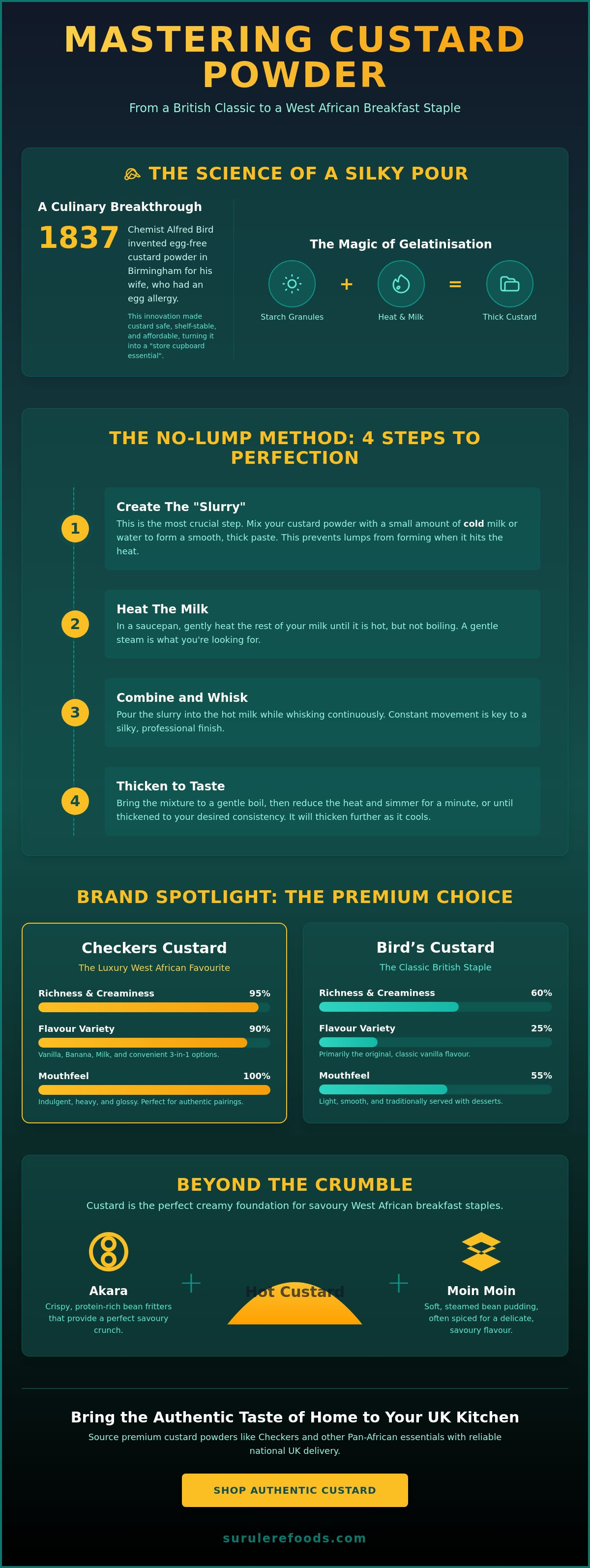
The history of custard powder traces back to 1837, when chemist Alfred Bird formulated the first version in Birmingham. His wife, Elizabeth, suffered from severe allergies to both eggs and yeast, making traditional custards a health risk. Bird’s innovation transformed the British kitchen, providing a safe, reliable alternative that remains a "store cupboard essential" as we look toward 2026. Its impressive shelf life ensures it stays fresh for months, making it a dependable choice for busy UK households where food waste reduction is a priority.
Custard Powder vs. Instant Custard: What is the Difference?
The main distinction lies in the starch structure. Instant mixes use "pre-gelatinised" starch, which thickens immediately upon contact with hot water. Traditional custard powder requires a brief boil on the hob to activate the raw starch. This extra step gives you total control over the sweetness and thickness of your bowl. Nutritionally, it serves as an energy-dense foundation, providing the calories needed for a demanding morning. It's a versatile base that allows for the addition of nutmeg, honey, or liquid milk to suit individual tastes.
The Cultural Crossover: From the UK to West Africa
British colonial influence introduced this British staple to West African kitchens during the early 20th century. Over decades, its role shifted significantly. While the UK often views it as a dessert topping for crumbles, West African communities embraced it as a standalone breakfast foundation. That iconic "creamy yellow" colour has become a symbol of comfort across continents. It bridges the gap between a London flat and a Lagos home, representing a shared history of culinary adaptation. Today, it stands alongside Akara and Moin Moin as a premium pairing that defines the joy of a traditional Saturday morning meal.
Understanding the Premium Varieties: Checkers vs. Bird’s
Choosing the right custard powder defines the success of your breakfast or dessert. Whilst Bird’s Custard remains a nostalgic British classic known for its light, slightly jellied finish, Checkers has carved a niche as the luxury alternative for those seeking a heavier, more indulgent mouthfeel. The flavour spectrum offered by Checkers, including Vanilla, Banana, and the decadent Milk variety, allows for a more tailored culinary experience. A Banana-flavoured base adds a fruity aromatic layer that complements the savoury crunch of Akara, whereas the Milk variety provides a neutral, creamy backdrop that doesn't overpower the delicate spices in a well-steamed Moin Moin.
The secret to this distinction lies in the ingredient profile. High-quality varieties prioritise fine-milled cornflour and natural colourants to achieve that signature golden hue. The Science of Custard explores how the starch structure in these powders reacts to heat, and Checkers specifically formulates its blend to ensure a glossy, lump-free result every time. For the African diaspora in the UK, this richness isn't just a preference; it's a requirement to match the bold textures of West African staples. You can experience this premium difference yourself by exploring our authentic custard collection to find your favourite flavour.
The Rise of Checkers Custard in the UK
Busy professionals in cities like London and Birmingham have increasingly turned to the 3-in-1 variants for their morning routines. These convenient tins already contain milk and sugar, reducing prep time to under three minutes. The "Milk Custard" phenomenon has particularly taken off amongst families who prioritise extra creaminess for their children's meals. Checkers has become the preferred choice for Nigerian Ogi enthusiasts because it provides the nostalgic, silky consistency of traditional fermented pap without the time-consuming preparation process.
Dietary Considerations: Halal, Vegan, and Gluten-Free
Ensuring everyone at the table can enjoy a warm bowl is essential for family safety. Most leading brands of custard powder are naturally gluten-free because they rely on cornflour rather than wheat, though you should always check for "may contain" traces on the packaging. Checkers is widely recognised as Halal-friendly, making it a staple in diverse UK households.
- Vegan Alternatives: To create a premium vegan custard, swap cow's milk for full-fat coconut milk or barista-grade almond milk. The high fat content in coconut milk mimics the traditional richness of Checkers perfectly.
- Allergen Awareness: Be cautious with 3-in-1 varieties, as these contain milk solids. For those with dairy allergies, stick to the standard powder and use a plant-based substitute.
- Natural Choices: Look for tins that avoid artificial preservatives to ensure you're serving the cleanest possible version of this comforting classic.
Mastering the Preparation: Ratios, Rhythms, and Removing Lumps
Preparing your custard isn't just a kitchen chore; it's a ritual that rewards patience and precision. The golden rule of the kitchen is simple. You must never add your custard powder directly to boiling liquid. This mistake creates "ghost lumps" where the outer layer of the starch cooks instantly, trapping dry, raw powder inside. Instead, you must create a slurry. By mixing two tablespoons of powder with three tablespoons of cold milk or water, you ensure every starch granule is fully hydrated before the heat is introduced.
Temperature control is the bridge between a liquid mess and a premium dessert. Starch gelatinisation occurs precisely between 60°C and 85°C. This is the moment when the granules swell and the liquid transforms into a silky, thick consistency. While a wooden spoon is a traditional favourite in many Nigerian households, a stainless steel balloon whisk is the superior tool for a professional finish. It allows you to reach the corners of the pot and incorporates just enough air to keep the texture light rather than heavy.
Consistency depends entirely on your ratio. For a light "pouring custard" to drizzle over fruit, use 25g of powder per 500ml of liquid. If you prefer a thick, "set custard" that holds its shape, increase this to 45g. This thicker version is ideal for creating structured layers in a British-style trifle or as a firm companion to a hot piece of Moin Moin.
A Step-by-Step Guide to the Perfect Pour
Step 1 involves creating your cold paste. Stir the liquid into the powder until the mixture is smooth and resembles heavy cream. Step 2 is the "slow pour." Add your boiling milk or water in a thin, steady stream whilst whisking vigorously. This gradual introduction prevents the starch from shocking and clumping. Step 3 is the final simmer. Return the mixture to a low heat for 60 seconds. This "cooks out" the raw starch taste, leaving only the rich vanilla flavour behind.
Troubleshooting Common Custard Disasters
- Fixing watery custard: If your custard hasn't thickened after cooling, don't panic. Mix a teaspoon of powder with a little cold milk, stir it into the pot, and gently reheat.
- The sieve trick: If lumps appear despite your best efforts, pour the hot custard through a fine-mesh sieve into a warmed bowl. This rescues the texture in seconds.
- Preventing the skin: A thick skin forms as the surface evaporates. To stop this, press a piece of cling film directly onto the surface of the hot custard so no air touches the liquid.
Authentic Pairings: Beyond the Sunday Roast
Saturday mornings in West African households across London and Manchester often begin with the rhythmic sizzle of bean batter hitting hot oil. This ritual centres on Akara, those golden, crispy bean cakes that find their perfect partner in a steaming bowl of smooth custard. Whilst custard powder is a British pantry staple, its role in a Pan-African brunch is transformative. It provides a creamy, soothing base that balances the intense, peppery heat of Scotch bonnets found in traditional Akara or Moin Moin recipes. This combination isn't just about flavour; it's a protein-rich meal that fuels the day, keeping you satisfied long into the afternoon.
The versatility of Checkers Custard allows it to adapt to various textures. For a modern twist on street food, many families now use a thicker custard preparation as a decadent dip for Puff-Puff. This fried dough, a staple at every Nigerian party, benefits from the silky vanilla coating of a well-made custard. Of course, the UK influence remains strong. The same custard powder used for Saturday breakfast easily transitions into British classics, from the nostalgic "school dinner" pour over a jam roly-poly to the precise, firm layers required for a festive trifle or a fruit crumble.
The Joy of Savoury and Sweet Contrasts
The secret to the Akara and custard pairing lies in the sensory contrast. The mild vanilla notes of the custard act as a cooling agent against the spicy kick of the beans. If you're organising a Pan-African brunch, serve your custard as the central beverage and meal hybrid. You can elevate the experience by whisking in a pinch of ground nutmeg or cinnamon during the preparation. These spices add a layer of warmth that bridges the gap between the savoury beans and the sweet pudding. It's a culinary bridge that connects the vibrant flavours of Lagos with the comfort of a British kitchen.
Custard as a Nutritional Foundation
Beyond the brunch table, custard serves as a gentle introduction to solids for infants in many West African and Caribbean communities. It's a reliable nutritional foundation that's easy on developing digestive systems. For a truly premium experience, many parents follow the "gold standard" of Nigerian breakfast by stirring in a generous spoonful of Peak Milk powder. This addition increases the calcium and protein content, creating a richer texture that children love. You can customise the bowl further by adding crushed groundnuts for texture or a drizzle of pure honey for natural sweetness, ensuring even the pickiest eaters finish their meal.
Sourcing Premium Custard Powder for National UK Delivery
Finding authentic West African staples in the UK often feels like an unnecessary challenge. While major supermarkets carry a limited "world foods" aisle, they frequently miss the specific brands that defined your childhood breakfast table. Checkers Custard is a prime example of a premium product that's often absent from local shelves in smaller towns. This gap in the market leaves many families searching for the specific, creamy consistency they know and love. SurulereFoods bridges this distance by sourcing only the most respected, authentic brands, ensuring your pantry remains a sanctuary of tradition.
Maintaining a Pan-African pantry in the UK requires a reliable partner who understands that food is a cultural anchor. We don't just sell groceries; we curate the joy of home cooking for the diaspora. Our commitment involves rigorous sourcing of premium custard powder and other essentials, so you don't have to compromise on quality. According to a 2023 consumer report, over 65% of shoppers prefer online specialists for ethnic groceries to ensure they receive genuine products rather than generic substitutes.
The Convenience of National Delivery
We deliver the authentic taste of home to every corner of the UK, from busy London boroughs to quiet villages in the Highlands. If you're located near our distribution centres, our "Click and Collect" service offers an even faster way to stock your shelves. Efficiency is key to a stress-free kitchen, especially during a busy work week. Most customers find it helpful to bundle their Checkers Custard with other breakfast essentials like Brown Honey Beans or Peak Milk. This approach saves on shipping effort whilst ensuring you're never missing a vital component of your Saturday morning meal.
Why Quality Matters in Your Store Cupboard
Low-cost alternatives often rely on cheap fillers that produce a chalky, bland result that ruins the experience of a hot meal. A high-quality custard powder provides a velvety texture that complements the spicy, savoury crunch of Akara perfectly. We prioritise fast delivery because we know your breakfast rituals shouldn't be interrupted by a bare cupboard. A 2023 survey indicated that 68% of home cooks feel more connected to their heritage when using specific brands from their home country. We make that connection possible every day by keeping these cultural touchstones accessible.
Experience the premium quality of Checkers Custard and other staples at SurulereFoods today.
Elevate Your Morning Ritual with Authentic Heritage
Custard powder has evolved from a 19th-century British innovation into a cornerstone of West African breakfast culture. Whether you prefer the classic velvety texture of Bird’s or the rich, creamy profile of Checkers, mastering the perfect ratio ensures a lump-free bowl every time. Pairing your custard with staples like Akara or crunchy Chin Chin transforms a simple meal into a nostalgic celebration of home. At SurulereFoods, we act as your knowledgeable cultural bridge, curating only the finest ingredients for your kitchen. We stock premium brands including Checkers and Peak Milk to ensure your morning bowl meets the highest standards of authenticity. Our service provides fast national delivery across the UK, so you don't have to wait to recreate those cherished flavours. Experience the joy of a perfectly prepared breakfast by sourcing your essentials from a trusted Pan-African curator who understands the importance of quality. You'll find everything needed to bridge the gap between your UK home and your culinary roots right here.
Shop our premium range of Checkers Custard and West African staples for national UK delivery
Bring the authentic taste of home to your table today and enjoy the rewarding results of a truly premium breakfast.
Frequently Asked Questions
Is custard powder the same thing as cornflour?
No, custard powder isn't identical to cornflour, though it uses cornflour as its primary base. Manufacturers add salt, vanilla flavourings, and yellow food colouring to the maize starch to create the distinct taste we love. In the UK, Alfred Bird first formulated this egg-free alternative in 1837 to accommodate his wife's allergies. While cornflour is a neutral thickener for savoury sauces, this powder is specifically designed for sweet, aromatic desserts.
Can I make custard powder with water instead of milk?
You can certainly prepare custard powder with water, which is a common practice when serving it alongside Akara for a lighter breakfast. To maintain a premium consistency, mix the powder with a small amount of cold water first to create a smooth paste. While using water lacks the creamy richness of dairy, you can stir in a splash of evaporated milk or a plant-based alternative at the end to restore that nostalgic, velvety texture.
How do I stop my custard from being lumpy?
The most effective way to prevent lumps is to ensure you've created a completely smooth paste before adding any hot liquid. Use two tablespoons of cold liquid for every three tablespoons of powder and stir until no dry clumps remain. Pour your boiling water slowly whilst whisking the mixture vigorously. This technique allows the starch granules to expand evenly, resulting in the silky, professional finish that defines a high-quality bowl of custard.
Is custard powder suitable for vegetarians and vegans?
Most leading brands, including Checkers and Bird's, are perfectly suitable for vegetarians because they don't contain any meat-derived ingredients. The powder itself is typically vegan-friendly as it's made from corn starch and synthetic flavourings. To keep the final dish 100% vegan, simply swap traditional cow's milk for soy, oat, or almond milk. Always check the packaging for specific allergen cross-contamination warnings if you're catering for strict dietary requirements.
What is the best way to store custard powder to prevent spoilage?
Store your custard powder in a cool, dry cupboard away from direct sunlight or strong-smelling spices. Once you've opened the original packaging, transfer the powder into an airtight container to protect it from moisture in the air. According to UK food safety standards, dry starch-based products stored this way stay fresh for 12 to 18 months. Always use a clean, dry spoon to measure your portions to prevent bacteria from entering the container.
Why is my custard watery even after I followed the instructions?
Your custard is likely watery because the liquid used wasn't at a full rolling boil of 100 degrees Celsius. Starch requires intense heat to gelatinise and thicken properly. If your mixture looks thin, pour it into a small saucepan and heat it over a medium flame for 60 to 90 seconds whilst stirring. This extra heat encourages the molecules to bond, transforming a runny liquid into a thick, comforting treat that coats the back of your spoon.
Which brand of custard powder is best for making Nigerian custard?
Checkers Custard is widely considered the premium choice for authentic Nigerian-style preparation due to its superior thickening power and rich aroma. It provides a sturdy yet smooth structure that pairs beautifully with the weight of Moin Moin or crunchy Akara. Many families in the UK diaspora choose this brand because it delivers a consistent, high-quality result that replicates the exact joy of a traditional West African breakfast without needing extra cornflour.
Can I use custard powder as a thickener for other recipes?
Yes, you can use it as a creative thickener for fruit crumbles, sponge cakes, or even homemade ice cream bases. Since the product is mostly cornflour, it acts as an excellent binding agent that adds a lovely golden hue and a hint of vanilla to your bakes. It's an essential pantry staple for anyone looking to add a professional touch to their desserts. Just remember that the added colour and sweetness will change the profile of your dish slightly.