

Simple Fried Plantain Recipe: How to Make Authentic Nigerian Dodo
If your plantain skins aren't covered in dark "leopard spots," you're likely frying them far too early. We've all experienced the frustration of dodo that looks golden on the outside but remains starchy in the middle; or worse, slices that soak up oil like a sponge. With the retail price of plantains reaching NGN 880.65 per kilogram in April 2026 and vegetable oil import costs having jumped 32% in 2024, every slice is far too precious to waste. Mastering a simple fried plantain recipe is about more than just heat; it's about the patience to wait for the perfect ripeness and the precision to get your oil temperature just right.
We understand that dodo is the emotional heart of the West African kitchen, evoking warm memories of family Sundays and festive gatherings. This guide promises to turn you into an expert curator of the perfect fry, ensuring your plantains are always sweet, soft, and beautifully caramelised. We'll walk you through the essential stages of ripeness, the secret to avoiding greasy results, and the authentic pairings like brown honey beans or eggs that make this dish a truly rewarding experience.
Key Takeaways
- Master the simple fried plantain recipe by perfecting the traditional diagonal cut to achieve the ultimate caramelised texture.
- Learn the professional technique for peeling premium ripe plantains without bruising the fruit, maintaining the integrity of every slice.
- Gain the confidence to troubleshoot common frying errors, ensuring your dodo is always light and golden rather than overly greasy.
- Explore how to curate a complete West African feast by pairing your dodo with authentic staples like Oloyin Honey Beans or Jollof rice.
What is Dodo? The Cultural Heart of West African Fried Plantain
Dodo is far more than a side dish; it's the rhythmic heartbeat of a Nigerian kitchen. To the uninitiated, it might look like a humble fruit, but to those who grew up with the scent of sizzling oil, Dodo, the cultural heart of West African fried plantain represents the ultimate comfort. Whether you're serving it as a quick afternoon snack or the crowning glory of a celebratory platter, this simple fried plantain recipe delivers a sensory experience that bridges the gap between the UK and home. The joy lies in that specific moment when the edges turn a deep, translucent amber and the kitchen fills with a heavy, sweet aroma that signals a meal is finally ready. It's a versatile component that can be a snack, a side, or even the main event when paired correctly with protein or grains.
Dodo vs. Maduros: Is There a Difference?
Whilst you'll find fried plantains across the Caribbean and Latin America known as Maduros, the West African dodo carries its own distinct identity. The difference isn't in the fruit itself, but in the cultural rituals and pairings that define the plate. In Nigeria and Ghana, we prioritise a specific diagonal cut, creating wide, flat discs that maximise the surface area for caramelisation. Some chefs even prefer small cubes for a different mouthfeel in mixed dishes. Most home cooks in the diaspora rely on high-quality vegetable oil for a clean finish, though some traditionalists still reach for a splash of premium palm oil to add a rich, earthy depth to the flavour profile. These small nuances in preparation distinguish an authentic West African dodo from its global counterparts.
Why Plantain is a West African Staple
Plantain remains an essential pillar of the Pan-African diet because it's incredibly versatile and nutritionally dense. As a slow-release carbohydrate, it provides sustained energy amongst a population that traditionally values hearty, filling meals. It's one of the few ingredients that can effortlessly transition between savoury and sweet in a single bite. Nigeria's massive production of 7 to 8 million metric tons annually ensures it remains a constant presence on dining tables, regardless of the season. For the diaspora in the UK, mastering a simple fried plantain recipe is a way to preserve that heritage, turning a routine dinner into a meaningful domestic ritual. It provides a reliable bridge to cultural roots, ensuring that even in a fast-paced UK lifestyle, the slow, rewarding patience of the kitchen remains intact.
The Ripeness Scale: Choosing Your Plantain for Frying
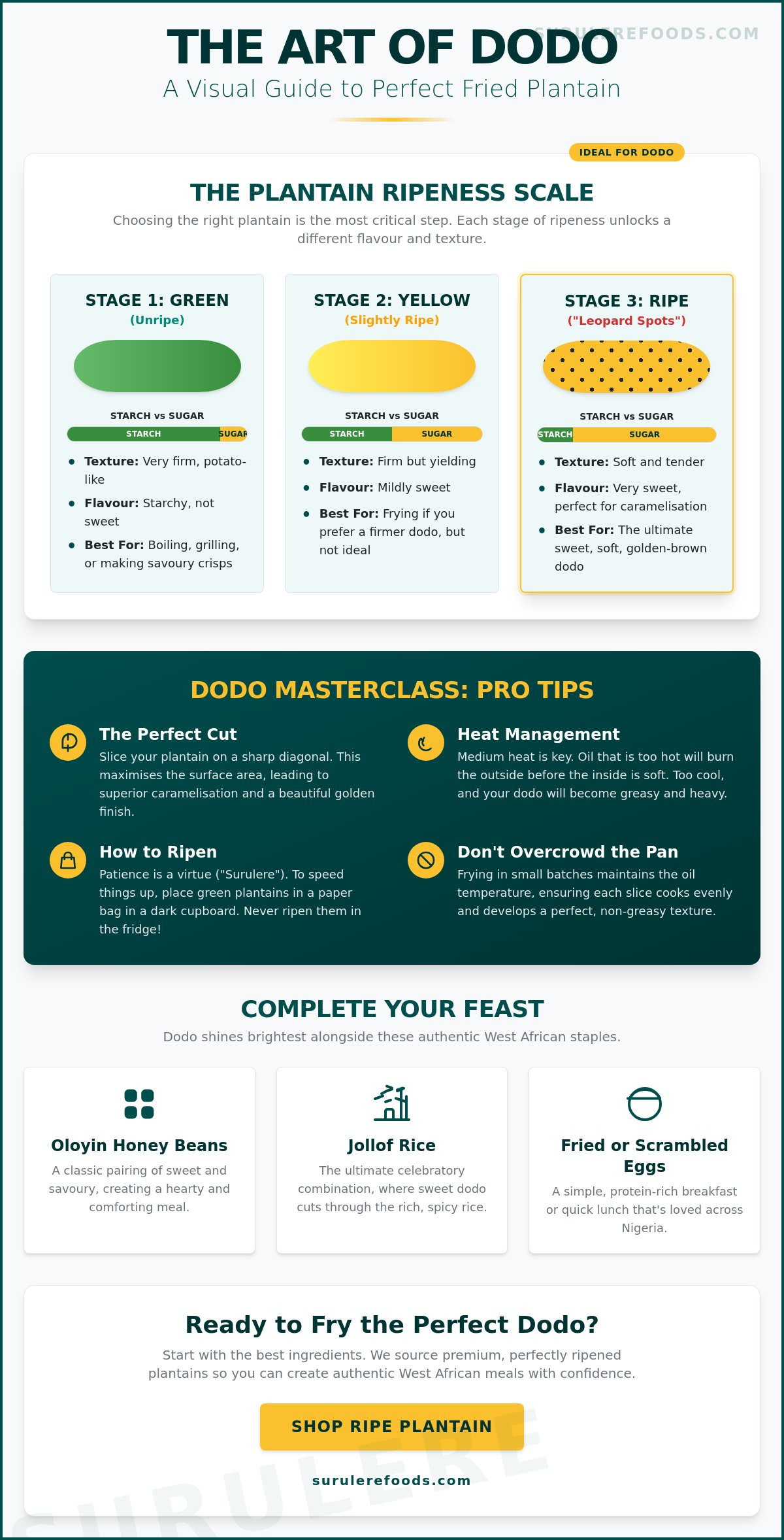
Selection is the most critical step in the entire process. If you start with the wrong fruit, even the most precise simple fried plantain recipe will fall short of those warm, nostalgic expectations. For authentic Nigerian dodo, we look for the "Leopard Spot" stage. This visual cue tells you the starches have converted into sugars, ensuring that signature sweetness and soft interior. The perfect dodo plantain has a 70/30 ratio of black spots to yellow skin. Whilst a completely yellow plantain might look appealing on a kitchen counter, it often lacks the depth of flavour required for a truly caramelised finish. Conversely, a green plantain is starchy and potato-like, making it better suited for boiling or making savoury chips rather than frying into soft dodo.
If your plantains are entirely black, they're at their peak sweetness but require a delicate touch. These over-ripe fruits are incredibly soft; they can easily turn to mush if the oil temperature isn't perfectly managed. However, they remain a favourite amongst those who love a jammy, almost melt-in-the-mouth texture. If you're planning a weekend feast and need the right ingredients, you can source Ripe Plantain from our premium selection to ensure you have the best starting point for your meal.
How to Ripen Plantains at Home
Patience is rewarding, as the name Surulere reminds us. To accelerate the process, place your plantains in a brown paper bag and store them in a cool, dark cupboard. The bag traps ethylene gas, which speeds up the softening process naturally. You must avoid the fridge at all costs whilst the fruit is still ripening. Cold temperatures stall the sugar conversion and will turn the skin a dull grey-black without actually sweetening the flesh. To check if a plantain has gone too far, use the "mush" test: if the fruit feels liquid inside the skin or smells slightly fermented, it's past its best for frying.
Green vs. Yellow vs. Black: A Quick Reference
Understanding the stages of a plantain helps you decide which dish to prepare. Whilst a Dodo recipe from The New York Times might provide a great baseline, your choice of fruit dictates the final result:
- Green: Very firm and starchy. These are savoury and best used for boiling or thin, crispy chips.
- Yellow: Mildly sweet with a firm bite. These are excellent for grilling or for those who prefer a less sugary dodo.
- Black/Spotted: High sugar content and soft texture. This is the gold standard for dodo, providing that iconic deep amber glow once fried.
Step-by-Step: Our Simple Fried Plantain Recipe
Once you've selected the perfect fruit with those essential leopard spots, it's time to transform them into the golden treasure we call dodo. This simple fried plantain recipe relies on precision and technique rather than complex seasonings. The goal is to highlight the natural sugars that have developed during the ripening process. Start by cutting off both tips of the plantain. Use a sharp knife to make a shallow slit through the skin lengthwise, taking care not to pierce the flesh. This allows you to peel the skin back in one clean motion, revealing the soft, creamy fruit inside. If the plantain is at its peak ripeness, the skin should come away with very little resistance.
Ingredients You Will Need
- 2-3 very Ripe Plantain fruits, which you can source directly from our curated selection.
- High-quality neutral frying oil, such as vegetable or sunflower oil.
- Authentic Palm Oil if you prefer a richer, traditional flavour and a deeper orange hue.
- A tiny pinch of sea salt; this is entirely optional as the caramelised sugars provide ample flavour on their own.
The Frying Process
The secret to the perfect dodo lies in the diagonal cut. Slice the plantain into discs approximately 1cm thick at a 45-degree angle. This specific shape is more than just a tradition; it increases the surface area of each slice, allowing for maximum caramelisation whilst keeping the centre soft. Heat your oil in a wide frying pan until it's shimmering but not smoking. If you have a kitchen thermometer, aim for approximately 180°C. If the oil is too cold, the plantain will absorb it and become greasy; if it's too hot, the sugars will burn before the middle is cooked through.
Carefully place the slices into the pan in a single layer. You must not overcrowd the pan, as this causes the oil temperature to drop rapidly. Let them fry for 2 to 3 minutes per side. You're looking for a deep, golden-brown finish that indicates the sugars have fully caramelised. Flip them once the edges begin to darken and look slightly translucent. Once both sides are perfectly bronzed, remove them with a slotted spoon and drain them on kitchen paper. This final step is crucial to ensure your dodo remains light and crisp rather than oily. Following this simple fried plantain recipe ensures a result that is sweet, savoury, and deeply satisfying every time.
Common Mistakes and How to Avoid Them
Even the most seasoned home cooks can encounter pitfalls when executing a simple fried plantain recipe. The most frequent complaint involves dodo that has absorbed far too much oil, leaving it heavy and greasy rather than light and sweet. This isn't usually a fault of the fruit itself, but rather a misunderstanding of the physics involved in the frying process. When you place a slice into oil that is below the recommended 180°C, the moisture inside the plantain doesn't evaporate quickly enough to create a steam barrier. Without this barrier, the oil seeps into the starchy cells. Conversely, if the heat is too high, the exterior sugars will char into a bitter black crust before the heat can penetrate the centre.
Avoid the common "crowding trap" at all costs. It is essential to fry in batches, leaving enough space for each slice to move in the oil without touching its neighbour. This discipline ensures the temperature remains stable throughout the cooking time. If you find yourself with leftovers, don't let them go to waste. You can restore those prized crispy edges by reheating your dodo in an air fryer for 3 to 4 minutes at 180°C. This method is far superior to the microwave, which often results in a limp, rubbery texture that loses the joy of the original fry.
Why is my Dodo Soggy?
A soggy result usually stems from two main factors: oil temperature and steam management. Always test your oil with a small piece of plantain before committing the whole batch. If it doesn't sizzle immediately, wait. Once fried, never cover your dodo with a lid or another plate. This traps the rising steam, which then condenses and softens the beautifully caramelised exterior you've worked so hard to achieve. Instead, allow them to breathe on a wire rack or kitchen paper whilst they cool slightly.
How to Prevent Burning
Because ripe plantains are so high in natural sugars, they can turn from golden to burnt in a matter of seconds. It is a rewarding process that requires your full attention. Once you see the first side reach a deep amber hue, adjust your hob to a medium setting. Using a heavy-bottomed frying pan is a professional secret that helps distribute heat evenly, preventing the hot spots that lead to uneven browning. To get started with the best ingredients, shop our premium range of West African staples and experience the difference that quality makes in your kitchen.
What to Serve with Fried Plantain (Dodo)
Mastering this simple fried plantain recipe is only half the journey; the true joy lies in the curation of the final plate. Dodo is the ultimate culinary diplomat, effortlessly bridging the gap between savoury proteins and starchy staples. The pairing of dodo and Brown Honey Beans, often prepared in the iconic Ewa Aganyin style, remains the gold standard of Nigerian comfort food. The creamy, slightly earthy texture of the beans provides a sophisticated contrast to the jammy sweetness of the caramelised plantain. For those seeking a more elaborate feast, dodo is a mandatory guest at any party, sitting proudly alongside smoky Jollof rice and a well-seasoned Chicken Leg & Thigh.
If you prefer a lighter experience, dodo excels as a quick snack or a vibrant breakfast component. Many in the diaspora find comfort in a simple pairing of fried plantain with soft-boiled or fried eggs, often enjoyed with a cold malt drink to cut through the richness. For a truly traditional Sunday lunch, consider serving your plantains alongside a steaming bowl of melon seed soup. You can discover the heritage behind this dish in our guide to Egusi: The Ultimate Guide to West Africa’s Favourite Melon Seeds. These combinations transform a basic side dish into a meaningful domestic ritual that celebrates Pan-African flavours.
Authentic Pairings from SurulereFoods
To recreate these flavours with professional reliability, we suggest starting with our premium Oloyin or Brown Honey Beans. These varieties are prized for their natural sweetness, which complements this simple fried plantain recipe perfectly. To add a necessary kick to your bean stew or side sauce, incorporate fresh Scotch bonnet (Atta Rodo) for that authentic heat. We also recommend using Knorr Chicken or Maggi Star seasoning cubes to provide the savoury depth required to balance the sugars in the plantain. These essential staples ensure your home cooking meets the high standards of a traditional West African kitchen.
Where to Buy Ripe Plantains in the UK
Sourcing the right fruit is often the biggest challenge for those living in the UK, especially when you require a specific stage of ripeness for dodo. SurulereFoods acts as a knowledgeable cultural bridge, delivering fresh ripe and green plantains directly to your doorstep across the UK. Our online grocery service takes the guesswork out of your shopping, providing the convenience of fast delivery whilst maintaining the high-quality standards of a premium curator. You no longer need to hunt through local markets for hard-to-find ingredients; we bring the authentic experience of the marketplace to you.
Bring the Authentic Taste of Dodo to Your Kitchen
You've now mastered the essential techniques of this simple fried plantain recipe, from identifying the 70/30 "leopard spot" ripeness ratio to maintaining a precise 180°C oil temperature. These small but vital details transform a basic side dish into a premium, caramelised masterpiece that carries the warm scent of home. By avoiding the "crowding trap" and prioritising the traditional diagonal cut, you ensure every slice remains soft inside whilst retaining those prized crispy edges. Frying dodo is a rewarding process that celebrates patience and heritage; it's a skill that elevates every West African meal.
Ready to start your next culinary project? Shop Authentic Ripe Plantains and West African Staples at SurulereFoods for the finest ingredients available in the UK. We provide premium West African groceries delivered UK-wide, ensuring you receive the fresh, high-quality produce needed for traditional Nigerian and Ghanaian flavours. Our service is highly rated for fast delivery and exceptional product freshness, making us your reliable partner in the kitchen. We can't wait to see the delicious results of your home cooking.
Frequently Asked Questions
Can I fry green plantains using this same recipe?
You can fry green plantains using a similar method, but the result won't be dodo. Green plantains are starchy and savoury, lacking the sugar content needed for caramelisation. They're typically used to make crunchy chips or "tostones" rather than the soft, sweet slices found in a simple fried plantain recipe meant for ripe fruit. If you prefer a potato-like texture, green is the way to go.
What is the best oil for frying plantains authentically?
Neutral oils with high smoke points, such as vegetable or sunflower oil, are the most common choices for a clean finish. However, for a truly traditional West African flavour, many home cooks use premium palm oil. This adds a rich, earthy depth and a vibrant orange hue to the dodo. Avoid using extra virgin olive oil, as its low smoke point will cause the fruit to burn before it softens.
How do I know when a plantain is too ripe to fry?
A plantain is past its best when the skin feels liquid or the fruit emits a fermented, vinegary scent. Whilst a completely black skin is often perfect for those who love a jammy texture, the "mush test" is your best guide. If the flesh collapses completely when touched, it'll likely disintegrate in the oil. Aim for fruit that is soft but still holds its shape when sliced into 1cm discs.
Is fried plantain healthy for a daily diet?
Plantains are nutrient-dense, slow-release carbohydrates that provide essential fibre, potassium, and vitamins A and C. Whilst they're a staple in many Pan-African households, the frying process adds significant calories and fats. To maintain a balanced diet, it's best to enjoy dodo as a treat or side dish alongside lean proteins. For a lighter daily option, many people now use an air fryer to reduce oil consumption.
Can I make this recipe in an air fryer?
Yes, you can adapt this simple fried plantain recipe for an air fryer by tossing the slices in a tablespoon of oil first. Arrange them in a single layer and cook at 180°C for 10 to 12 minutes, flipping halfway through. Whilst you'll lose some of the deep-fried indulgence, the air fryer still produces a beautifully caramelised exterior that satisfies those cultural cravings with much less fat.
Why does my plantain stick to the pan?
Sticking usually happens when your oil hasn't reached the required 180°C before you add the fruit. If the oil is too cold, the sugars in the plantain bond with the surface of the pan instead of searing instantly. Using a heavy-bottomed or non-stick frying pan will help prevent this. Ensure the oil is shimmering and test a single slice before committing the entire batch to the heat.
How long does fried plantain stay fresh?
Dodo is at its absolute peak when eaten immediately after frying. You can store leftovers in an airtight container in the fridge for 2 to 3 days, but the texture will soften significantly. Don't use a microwave to reheat them, as this makes the fruit rubbery. Instead, a quick 3-minute blast in a hot air fryer or a brief toss in a dry pan will help restore the crispy edges.
What is the difference between dodo and plantain chips?
The primary difference lies in the ripeness of the fruit and the thickness of the cut. Dodo is made from ripe, soft plantains sliced into thick diagonal pieces for a sweet, jammy centre. Plantain chips, like our popular Olu Olu variety, are made from green, starchy plantains sliced wafer-thin and fried until they're entirely crunchy. One is a soft side dish, whilst the other is a crisp, savoury snack.