

Locust Beans (Iru): The Ultimate Guide to West Africa’s Secret Umami Ingredient
Imagine standing in your London kitchen, craving the soul-warming taste of authentic Efo Riro, but worrying the pungent aroma of traditional seasoning might linger in your flat for days. You know that no amount of modern stock cubes can replicate the complex, earthy depth that premium locust beans bring to a pot. It's a common frustration for many in the UK diaspora; you want that nostalgic flavour but struggle to find stone-free Iru or feel unsure whether Woro or Pete is the right choice for your Sunday stew.
We agree that your culinary heritage shouldn't be a compromise between authenticity and convenience. This guide will show you how to master this essential West African ingredient, which contains approximately 39 per cent protein, while providing clever storage tips that keep your modern home smelling fresh. You'll discover the rich history of this umami powerhouse, learn which variety suits your specific recipe, and gain the confidence to use it as a natural flavour enhancer that honours your roots.
Key Takeaways
- Discover the rich cultural heritage of Iru, Dawadawa, and Netetou, and why these fermented seeds are considered the essential soul of authentic West African cooking.
- Learn the vital differences between Iru Woro and Iru Pete to ensure you select the correct variety and texture for your specific culinary creations.
- Master the art of building deep, savoury umami flavours by pairing locust beans with traditional staples like palm oil and scotch bonnets.
- Uncover the remarkable health benefits of this nutritional powerhouse, which is packed with protein and essential minerals like calcium and potassium.
- Gain expert tips on sourcing and preserving premium ingredients within the UK to bring the authentic joy of home cooking to your kitchen.
What are Locust Beans? Understanding West Africa’s Essential Seasoning
If you've ever stepped into a traditional Yoruba kitchen whilst a pot of Ayamase or Efo Riro is simmering, you've encountered the unmistakable, pungent aroma of locust beans. Known as Iru in Nigeria, Dawadawa in Ghana and parts of Northern Nigeria, or Netetou in Senegal, these are not actually beans in the conventional sense. They are the seeds of the African locust bean tree, transformed through an ancient, laborious fermentation process into West Africa's most powerful flavour enhancer.
Long before commercial seasoning cubes became a kitchen staple in the mid-1900s, Iru was the original "umami bomb." It provides a deep, savoury complexity that mimics the richness of fermented cheeses or miso. For many in the UK diaspora, this ingredient represents more than just a seasoning; it's a sensory bridge to home. It carries the "joy of home cooking" into modern British kitchens, turning a simple stew into a nostalgic masterpiece that connects generations through taste.
The Botanical Origins: The African Locust Bean Tree
The Parkia biglobosa is a resilient perennial tree that dominates the savannah landscapes of West Africa. Growing up to 20 metres in height, it's easily identified by its distinctive globular, bright yellow inflorescences that hang like ornaments from the branches. These trees are vital to the local ecosystem, often surviving for over 100 years and providing shade and soil enrichment in arid regions. The seeds are harvested from long brown pods, which also contain a sweet, yellow pulp often enjoyed as a snack by local communities.
A Brief History of Fermentation in African Cuisine
Fermentation is a cornerstone of African culinary heritage, born from the necessity of preserving protein-rich seeds in tropical climates. The traditional process involves boiling the seeds for up to 24 hours, de-hulling them, and then allowing them to ferment in leaf-lined baskets for 3 to 5 days. This slow transformation is the literal embodiment of "Surulere," the Yoruba philosophy that patience has its rewards. What begins as a hard, scentless seed becomes a soft, dark, and intensely aromatic condiment.
Today, locust beans have evolved from a rural necessity to a premium gourmet ingredient sought after by discerning home cooks in London, Birmingham, and across the UK. For the diaspora, sourcing authentic Iru is essential for recreating the specific flavour profiles of West African classics. It's a link to an ancestral past, preserved through the science of fermentation and the dedication of the artisans who still prepare it using age-old methods. Using these beans isn't just about seasoning; it's about honouring a culinary lineage that prioritises depth, health, and patience.
Iru Woro vs. Iru Pete: Distinguishing the Varieties
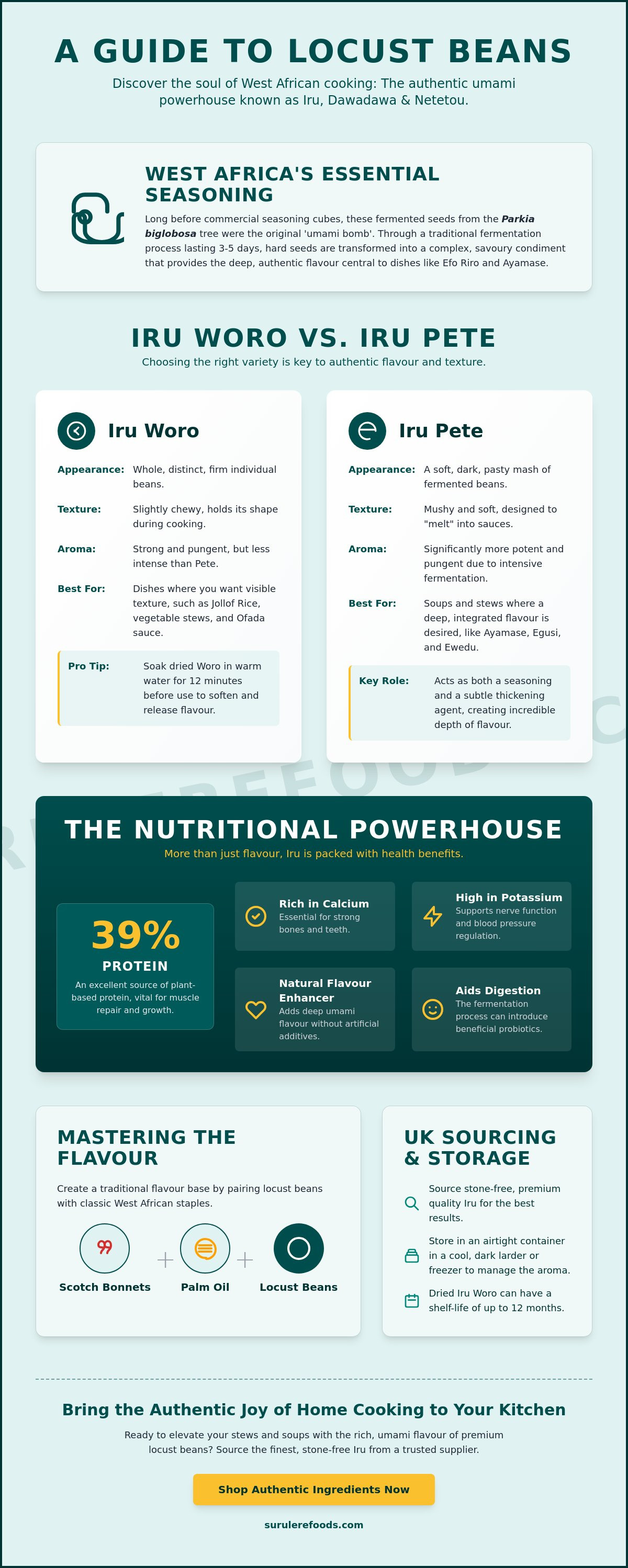
Understanding the nuance between the two main types of locust beans is essential for any cook looking to recreate the authentic taste of the Nigerian kitchen. While both varieties start as seeds from the Parkia biglobosa tree, the fermentation process and final texture set them worlds apart. The difference usually comes down to the fermenting agent used during the traditional 3 to 5 day processing period. Iru Woro is typically fermented with salt, which helps maintain its shape. Iru Pete often uses ikpoba (hibiscus seed) or specific leaves to encourage a softer, more pungent breakdown.
Iru Woro: The Whole, Sun-Dried Variety
This variety is defined by its integrity. Each bean remains distinct, firm, and slightly chewy. Producers often sun-dry these beans for longer periods, which results in a moisture content low enough to allow for a shelf life of up to 12 months when stored correctly in a cool UK larder. It's the perfect choice for dishes where you want the ingredient to be a visible, textural component. You'll find it most frequently in Jollof rice, native rice, or vegetable stews. To get the best results, soak your dried Woro in warm water for 12 minutes before cooking. This softens the outer layer whilst preserving the punchy umami core.
Iru Pete: The Soft, Fermented Mash
Think of this version as the choice for those who want deep, integrated flavour. It has a pasty, almost mushy consistency because it undergoes a more intensive fermentation process. This variety is prized for its ability to "melt" into a sauce, acting as both a seasoning and a subtle thickener. It's the secret behind the rich, dark depths of Ayamase (Designer Stew) and the soul of a well-made bowl of Egusi or Ewedu. Because the fermentation is more advanced, the aroma is significantly more potent than the Woro variety. It brings a creamy, savoury funk that binds other ingredients together beautifully.
When you're sourcing these staples in the UK, look for beans that possess a deep, dark chocolate colour rather than a pale or greyish hue. High-quality locust beans should feel slightly oily to the touch and emit a clean, fermented scent that is strong but never rancid. If you're ready to elevate your next Sunday dinner, you can shop authentic West African groceries to find the premium varieties that bring the true scent of home to your kitchen. Choosing the right variety ensures your stews have the exact profile found in the best traditional bukka spots in Lagos.
Mastering the Flavour: How to Cook with Locust Beans
The magic of locust beans lies in the ancient art of fermentation. During this natural process, enzymes break down complex proteins into free glutamates. These are the same savoury molecules found in aged parmesan or miso paste, providing a deep, rounded umami profile that lingers on the palate. When you add Iru to a pot, you aren't just adding a spice; you're introducing a complex chemical foundation that enhances every other ingredient in the dish.
To achieve an authentic West African profile, pair your Iru with rich red palm oil, ground crayfish, and fiery scotch bonnets. The fat in the palm oil acts as a carrier for the volatile aromatic compounds of the beans, whilst the crayfish adds a salty, oceanic depth. If you want to reduce your reliance on synthetic seasoning cubes, Iru is your best ally. It provides a cleaner, more robust flavour without the hidden fillers or high sodium levels found in mass-produced bouillon.
Preparation is vital for a premium dining experience. Even high-quality Iru can occasionally contain small pebbles from the traditional sun-drying process. Place your beans in a fine-mesh sieve and rinse thoroughly under cold running water. Transfer them to a bowl of water; any grit will sink to the bottom. Carefully scoop the beans from the top and inspect them before they hit the pan to ensure your meal is completely stone-free.
Iconic Recipes Featuring Locust Beans
In Ayamase, also known as Designer Stew, locust beans act as the undisputed star. They provide the earthy backbone that balances the smoky intensity of bleached palm oil and green chillies. For Egusi soup, adding a tablespoon of fermented beans elevates the nutty profile of the melon seeds. If you're making Native Rice, use the whole Iru Woro variety. These whole beans create a smoky, traditional aroma that evokes the nostalgia of a village kitchen.
Managing the Aroma in a Modern Kitchen
The pungent scent of fresh Iru can be intense in a modern UK kitchen. To manage this, store your supply in an airtight glass jar rather than plastic, as glass doesn't absorb odours. You can also portion the beans into small bags and freeze them for up to 6 months for convenience. When cooking, sauté the beans in hot oil at the very beginning. This technique "blooms" the flavour and mellows the sharp fermented scent into a rich, inviting fragrance.
The Nutritional Powerhouse: Health Benefits of Iru
Iru is a nutritional titan. These fermented locust beans provide a dense concentration of essential macro-nutrients that few modern seasonings can match. On average, fermented Parkia biglobosa seeds contain between 35% and 40% protein and approximately 30% to 40% healthy lipids. This high protein content makes it a vital source of plant-based nutrition for families across West Africa. The beans also provide a steady supply of carbohydrates, typically ranging from 10% to 15%, ensuring a balanced energy release.
The mineral profile is equally impressive. Iru is naturally rich in calcium, phosphorus, and potassium. In a 100g serving, you can find nearly 380mg of calcium, which is essential for maintaining bone density and dental health. These minerals are more than just numbers on a chart; they represent a heritage of wellness. For centuries, traditional healers in Nigeria and Ghana have used the pods and seeds to manage hypertension and support vision health. The fermentation process, which usually lasts between 2 and 4 days, is the secret to unlocking these benefits. It significantly reduces anti-nutrients like phytic acid, which allows your body to absorb the minerals much more effectively than it would from raw beans.
Probiotics and Gut Health
The magic of Iru lies in the activity of Bacillus subtilis. This specific bacterium drives the fermentation of locust beans, transforming them into a potent probiotic food. Whilst Miso and Tempeh are celebrated in the West for their gut-healing properties, Iru offers a comparable profile of beneficial bacteria. These probiotics support a healthy gut microbiome, which is the foundation of a strong immune system and efficient digestion. Regular consumption helps maintain the delicate balance of flora in your digestive tract, making your favourite stews as kind to your stomach as they are pleasing to your palate.
Natural Umami vs. Synthetic MSG
Choosing Iru is a conscious decision to move away from ultra-processed, high-sodium seasoning cubes. Many commercial bouillon cubes contain upwards of 50% salt and synthetic monosodium glutamate (MSG). By contrast, the deep, pungent aroma of Iru provides a natural umami depth that allows you to reduce added salt by as much as 30% without sacrificing flavour. It offers a complex, earthy profile that lingers on the tongue, providing a satisfying "mouthfeel" that synthetic additives simply cannot replicate. Iru is a nutrient-dense flavour enhancer with zero additives. It bridges the gap between traditional wisdom and modern health requirements, ensuring your kitchen remains a sanctuary of authentic, clean eating.
Experience the difference that premium, traditional ingredients make in your daily meals. You can buy authentic African groceries to start your journey toward a healthier, more flavourful kitchen today.
Sourcing and Preserving Authentic Locust Beans in the UK
Finding high-quality locust beans in the UK requires a discerning eye and a trusted supplier. When you're browsing online, pay close attention to the visual cues. Authentic Iru should have a deep, dark brown or near-black colour. If the beans appear grey or excessively dusty, they may be old or poorly processed. Texture is equally vital; premium Iru Woro should feel firm but not brittle, whilst Iru Pete should possess a rich, moist consistency without feeling slimy.
The aroma is your ultimate guide to purity. High-grade locust beans emit a pungent, savoury scent that signals successful fermentation. If the smell is faint or carries a sharp chemical undertone, it’s likely been diluted with fillers. Investing in premium quality isn't just about flavour; it's a health choice for your family. Traditional fermentation produces natural probiotics and essential proteins that mass-produced alternatives often lack. By choosing reputable sources, you ensure your traditional soups are free from the grit and sand often found in lower-grade batches.
Storage Best Practices to Maintain Freshness
Proper storage ensures your ingredients retain their umami punch for months. For Iru Pete, the best method is to portion it into ice cube trays and freeze. This allows you to pop out exactly what you need for a weekly pot of stew without thawing the entire batch. Frozen Iru Pete maintains its potency for up to six months. It's a simple way to keep your kitchen ready for a spontaneous pot of Ayamase.
Dried Iru Woro prefers a cool, dark cupboard. Keep it in an airtight glass jar to prevent moisture from creeping in, which can lead to mould. You should discard your beans if you notice white fuzzy patches, a slimy film on dried varieties, or a sour, "off" smell that differs from its usual fermented pungency. Well-dried beans stored correctly can easily last 12 months in a UK pantry. Always use a dry spoon when scooping from the jar to avoid cross-contamination.
The SurulereFoods Difference: Quality You Can Trust
We understand that for the West African diaspora in the UK, food is a primary connection to heritage. At SurulereFoods, we bridge this gap by sourcing locust beans that are meticulously cleaned and guaranteed stone-free. Our process eliminates the tedious task of picking through beans; it lets you focus on the joy of cooking instead. We're committed to providing the finest staples that meet strict food safety standards whilst preserving traditional techniques. We treat every batch with the respect your grandmother’s recipes deserve.
Experience the authentic taste of home with our premium locust beans and elevate your next Nigerian or Ghanaian dish with the quality your kitchen deserves.
Bring the Soul of West Africa to Your UK Kitchen
You now hold the secrets to mastering one of the world's most complex seasonings. From distinguishing between the firm texture of Iru Woro and the soft richness of Iru Pete to unlocking deep umami notes in your soups, you're ready to cook with confidence. These locust beans don't just provide incredible flavour; they offer a powerful nutritional profile including essential fatty acids and over 30% protein content by weight. At SurulereFoods, we act as your knowledgeable cultural bridge to ensure you never have to compromise on quality.
We work directly with West African producers to implement rigorous triple-stage cleaning processes, ensuring every pack is 100% stone-free. It's time to reclaim the joy of home cooking with ingredients that honour your heritage. We've made it easier than ever to stock your pantry with premium staples whilst benefiting from fast delivery across the UK. Shop our authentic, stone-free Locust Beans for UK-wide delivery and start creating those unforgettable tastes of home today.
Frequently Asked Questions
Are locust beans and carob the same thing?
No, they're entirely different botanical species despite the shared name. Carob originates from the Ceratonia siliqua tree found in the Mediterranean, whilst the African locust beans used in West African cooking come from the Parkia biglobosa tree. You'll find carob used as a cocoa substitute, but Iru is a fermented seasoning that provides a deep, savoury umami profile to traditional soups like Ewedu.
Do I need to wash locust beans before using them in my soup?
You should always rinse your locust beans briefly in cold water before adding them to the pot. This process removes any stray grit or sand that might remain from the traditional sun-drying process used in West Africa. If you've purchased the salted variety, a quick soak for 5 minutes also helps control the sodium levels in your final dish, ensuring the flavours remain perfectly balanced.
Can I use locust beans if I am on a vegan or vegetarian diet?
Yes, locust beans are a 100 per cent plant-based ingredient and serve as an essential tool for vegan and vegetarian cooking. Because they're fermented, they provide the meatiness and depth of flavour usually found in crayfish or bouillon cubes without using animal products. Many plant-based chefs in the UK use them to add a complex, fermented kick to stews, making them a premium staple for any meat-free pantry.
How do I get rid of the strong smell of Iru on my hands or in my kitchen?
Rubbing your hands with lemon juice or white vinegar is the most effective way to neutralise the pungent aroma of Iru. You can also rub your damp hands against a stainless steel sink for 30 seconds to break down the sulphur compounds responsible for the scent. To clear the air in your kitchen, simmer a pot of water with 2 tablespoons of bicarbonate of soda or a cinnamon stick whilst you cook.
What is the best substitute for locust beans if I cannot find them?
Organic dark miso paste or Chinese fermented black beans are the closest substitutes for the complex flavour of locust beans. Use 1 tablespoon of miso for every 2 tablespoons of Iru required in your recipe. Whilst these alternatives lack the exact floral notes of the African original, they provide the necessary fermented depth and saltiness required for authentic tasting Nigerian or Ghanaian soups.
How long do dried locust beans last in the pantry?
Properly dried locust beans will last for up to 12 months when stored in an airtight container in a cool, dark cupboard. If you're using the fresh, soft variety, it's best to store them in the freezer where they'll maintain their quality for 6 months. Always check for any signs of mould or an unusually sour smell before use, as moisture is the primary cause of spoilage in stored pulses.
Is it safe to eat locust beans raw?
It's safe to eat fermented locust beans without further cooking because the fermentation process at 35 degrees Celsius naturally preserves the seeds. However, most people find the texture and intense flavour far more palatable when they're simmered in a sauce or stew. In many West African households, small amounts are eaten raw as a traditional remedy for hypertension, though the beans are primarily used as a culinary seasoning.
Why are some locust beans salty and others are not?
The difference in saltiness depends on whether the beans were processed as Iru Woro or Iru Pete. Iru Woro is often salted and dried to a 10 per cent moisture content to extend its shelf life for export to the UK. Iru Pete is fermented longer and usually kept moist without heavy salting. Always taste a single bean from your packet first so you can adjust the added salt in your recipe accordingly.