

How to Make Pounded Yam with Flour: The Ultimate UK Guide to a Smooth Swallow
Can a simple bag of flour truly capture the soul of a traditional mortar and pestle in a modern British kitchen? If you've ever dealt with a burnt pot base or a swallow that tastes more like raw dust than dinner, you know the frustration of getting it wrong. It's a common struggle for the West African diaspora; trying to find that perfect, stretchy consistency whilst living miles away from the traditional village square.
Mastering how to make pounded yam with flour is about more than just mixing powder and water; it's about reclaiming the joy of a proper home-cooked meal. We understand that you want the authentic taste of home without the arm-aching labour. That's why we've perfected a method that guarantees a smooth, steaming result in under 10 minutes.
In this guide, you'll learn the professional "cold-start" technique to eliminate lumps forever. We'll also help you choose between premium brands like Ayoola, currently priced at £6.71 for 1.8kg, or the all-natural Olu Olu Premium, so you can serve your Egusi soup with total confidence and pride.
Key Takeaways
- Understand why dehydrated yam granules are the ideal choice for a quiet, mess-free UK kitchen whilst maintaining that authentic home-cooked flavour.
- Identify the best premium flour brands and learn how British water hardness can subtly influence the final elasticity of your swallow.
- Master the "Cold-Start" method to discover exactly how to make pounded yam with flour that is consistently smooth and lump-free.
- Gain the confidence to troubleshoot common texture issues using the professional "vigorous smash" technique for a perfect, stretchy finish.
- Explore the most rewarding soup pairings, from Egusi to Efo Riro, to transform your meal into a nostalgic celebration of heritage.
Understanding Pounded Yam Flour: Convenience Meets Tradition
Pounded yam sits at the heart of the Nigerian dining experience. It's more than just a side dish; it's a sensory anchor for family gatherings and celebrations. Traditionally, Pounded yam is made by boiling fresh tubers and pounding them in a heavy wooden mortar until they reach a smooth, stretchy consistency. In the UK, however, recreating this ritual requires a modern touch. Pounded yam flour, often affectionately called "Poundo," consists of parboiled yam granules that have been dehydrated into a fine powder. Premium options like Ola-Ola Authentic Pounded Yam ensure that the signature white colour and earthy aroma remain intact, offering a bridge to heritage without the physical strain of the mortar.
Learning how to make pounded yam with flour allows you to bring this cultural staple into your British home daily. It transforms a laborious process into a quick, 10 minute ritual that fits perfectly into a busy UK lifestyle whilst preserving the "joy of home cooking" that SurulereFoods champions. High-quality flour isn't just a substitute; it's a sophisticated evolution that respects the roots of West African cuisine.
Poundo Yam vs. Traditional Pounded Yam
The debate between fresh yam and flour often centres on texture and time. Whilst traditional pounding offers a varied, organic elasticity that some purists prefer, it takes roughly 45 minutes of intense labour. High-quality flour provides a consistent, reliable stretch every single time. Modern processing techniques used in brands like Elubo Yam Flour have significantly narrowed the flavour gap, ensuring that the parboiled granules retain the authentic taste of the tuber. For most families in the UK, the trade-off is clear: you gain 35 minutes of time without sacrificing the soul of the meal.
Why Flour is Essential for the UK Kitchen
Living in British flats or terraced houses presents unique challenges for traditional cooking. The rhythmic thumping of a heavy mortar is likely to lead to noise complaints from neighbours or damage to modern flooring. Flour offers a "no-mortar" advantage that keeps your kitchen peaceful. There are also practical organisational benefits to consider:
- Shelf Life: Flour stays fresh in your pantry for months, unlike fresh tubers which can spoil or sprout within weeks.
- Price Stability: Fresh African yams are often treated as a luxury import with fluctuating prices, whilst premium flour offers a stable, cost-effective alternative for your weekly shop.
- Consistency: Flour removes the guesswork of "bad" yams that refuse to pound smoothly, ensuring a perfect swallow every time.
By choosing a premium flour, you're not just choosing convenience; you're choosing a reliable way to share your culture with friends and family in a fast-paced environment. It's about making the "joy of home cooking" accessible, regardless of how far you are from a traditional mortar and pestle.
Selecting Your Ingredients: The Secret to an Authentic Texture
Achieving that pristine, snow-white swallow starts long before the water hits the pot. When you're learning how to make pounded yam with flour, your choice of brand is the single most important factor in determining the final colour and stretch. Low-quality flours often result in a greyish, dull appearance that lacks the appetite-whetting brightness of a traditional meal. Premium flour is the foundation of a lump-free meal. By choosing high-quality parboiled granules, you ensure the "joy of home cooking" isn't overshadowed by a disappointing texture.
The tools you use are just as vital as the ingredients. A sturdy wooden spoon, traditionally known as an omorogun, provides the leverage needed for vigorous mixing. Pair this with a high-quality non-stick pot to prevent the bottom from burning. Interestingly, the hardness of your local UK water can subtly change the behaviour of the flour. In hard water areas like London or the South East, the mineral content can occasionally make the dough feel stiffer. You might find you need a fraction more water to achieve that perfect, elastic stretch seen in this Pounded Yam (Fufu) Recipe.
Top Recommended Yam Flour Brands
For those seeking the gold standard, Ola-Ola Authentic Pounded Yam remains the favourite amongst UK households for its consistent, bright white result. If you're looking for a different profile, such as the darker, richer texture of Amala, Elubo Yam Flour is your essential choice. You can identify high-quality flour by its fine, powdery behaviour whilst still in the bag; it should feel light and free of any gritty clumps or dampness. This purity is what allows the flour to hydrate evenly, preventing the dreaded "dusty" taste.
The SurulereFoods Pantry Checklist
To truly master the art, you should organise your kitchen with authentic staples that bridge the gap between the UK and West Africa. This includes pairing your premium flours with high-quality Egusi (Melon Seeds) for a complete, nostalgic dining experience. Keeping these essentials in your pantry means you're always ready to host a family gathering or enjoy a comforting midweek meal. Remember that in the spirit of Surulere, taking the time to source the best ingredients is a rewarding process that pays off in every smooth, steaming bite. Experience the difference that professional-grade staples make by exploring our curated selection of West African groceries today.
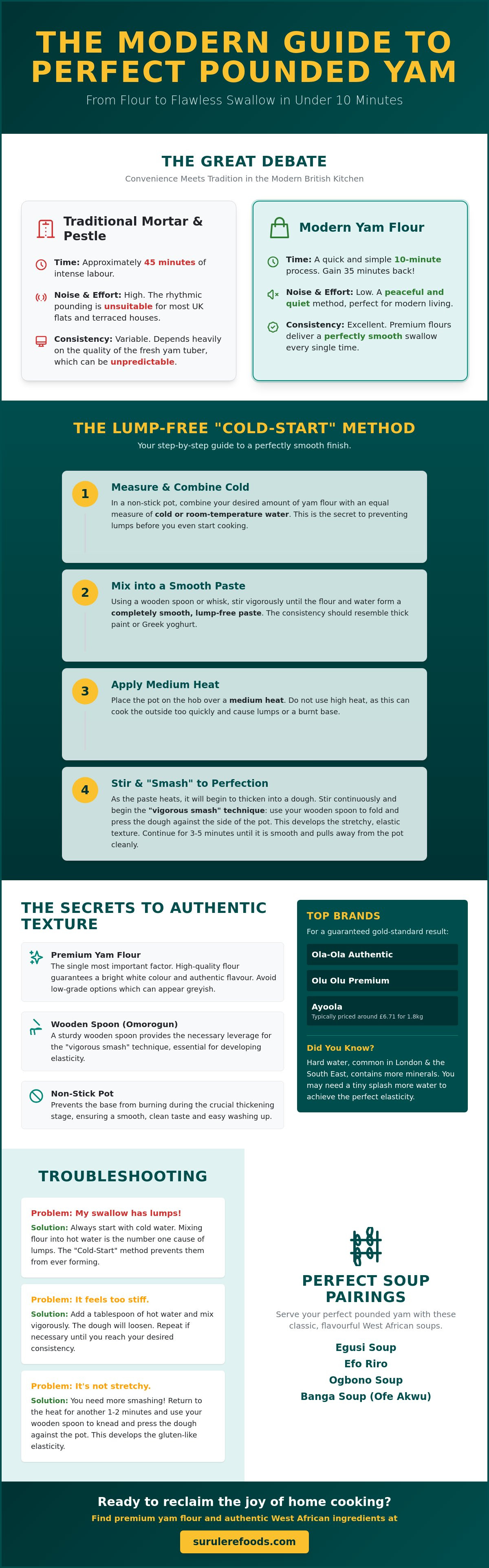
Step-by-Step: How to Prepare Smooth Pounded Yam with Flour
The journey from a bag of premium flour to a steaming, elastic swallow requires a specific sequence of actions. Whilst traditional methods often involve adding flour directly to boiling water, the secret to a professional UK result lies in the "Cold-Start" technique. This method acts as a safeguard against the dreaded "dusty" pockets of dry flour that can ruin an otherwise perfect meal. By mastering how to make pounded yam with flour through this structured approach, you ensure every dinner is a celebration of texture and heritage. It's a process that rewards patience, reflecting the very philosophy of Surulere.
The Mixing and Stirring Process
Success begins with a smooth foundation. Before turning on your hob, whisk a small amount of your chosen yam flour into a portion of cold water to create a thin, lump-free slurry. This initial step ensures that the granules are hydrated before they hit the heat. Bring the remaining water in your pot to a rolling boil, then reduce the heat to medium-low. This temperature control is vital; if the water is too aggressive, the flour will cook unevenly.
Add the rest of your flour in a steady, controlled stream whilst stirring vigorously with your wooden omorogun. Use the "Stir and Fold" technique by pressing the dough against the sides of the pot. This action mimics the traditional pounding motion, breaking down any tiny clusters and building the "stretch" that defines a high-quality swallow. For a reliable reference on ratios, this Pounded Yam (Fufu) Recipe provides an excellent baseline for beginners.
Mastering the Heat on UK Hobs
Managing heat is often where modern UK kitchens differ from traditional open-fire setups. Induction and electric hobs retain heat far longer than gas. If you notice the dough thickening too quickly or becoming difficult to turn, move the pot off the heat entirely for 30 seconds whilst you continue to work the dough. You will know it is ready when the mass becomes a single, cohesive unit that pulls away cleanly from the sides of the pot without sticking.
The final secret to a professional finish is the "Steam Finish." Once the dough is smooth, add a tiny splash of hot water around the edges, cover the pot with a tight-fitting lid, and leave it on the lowest possible heat for 2 minutes. This allows the steam to penetrate the centre, ensuring no "raw" taste remains. After this brief rest, give it one final, vigorous stir to incorporate the moisture. The result is a glossy, stretchy, and steaming hot swallow that is ready to be paired with your favourite soup.
Troubleshooting Common Issues: Achieving the Perfect Stretch
Even the most experienced cooks encounter the occasional culinary hurdle. Knowing how to make pounded yam with flour means being prepared for those moments when the texture isn't quite right. Whether you're facing a stubborn lump or a swallow that feels too soft, the solution is always within reach. Achieving a premium result requires a blend of technique and the right equipment. A perfectly clean pot is essential; any residue from previous cooking can discolour the dough, robbing it of that signature snowy white finish that defines a high-quality meal.
The Science of the Swallow
Starch gelatinisation is the secret behind the stretch. It's a chemical reaction where heat allows the yam granules to absorb water and swell. However, heat alone isn't enough; you need friction. Vigorous stirring with your wooden spoon breaks these swollen granules and aligns the starches, creating that elastic, authentic finish. Patience is rewarding when it comes to the final steam, as this brief rest completes the gelatinisation process and removes any lingering raw, dusty flavour. To keep your swallow fresh for the next day, wrap leftovers in cling film whilst they are still steaming hot to prevent a hard crust from forming.
Common Mistakes Beginners Make
Beginners often use too much water initially, which creates a "soupy" mix that is incredibly difficult to thicken later. It's much easier to add moisture to a stiff dough than it is to incorporate flour into a wet one. Another common error is using a simple circular stirring motion. This lacks the force needed to develop the stretch. Instead, use a "folding" motion, lifting the dough from the bottom and pressing it firmly against the side of the pot. On high-output UK induction hobs, you must monitor the pot bottom constantly to avoid scorching. A burnt base will release dark specks into your swallow, ruining the aesthetic and the flavour.
If you do spot lumps mid-cook, use the "hot water and vigorous smash" technique. Add a tiny splash of boiling water directly onto the lump and use the back of your spoon to press it firmly against the pot wall until it's smooth. If your dough feels too hard, add hot water in tiny increments, working it in fully before adding more. Conversely, if it's too soft, sprinkle a small amount of flour over the surface and beat it in quickly over low heat. Experience the joy of a perfectly smooth meal by sourcing your premium yam flour staples from our curated collection.
The Joy of the Swallow: Serving and Pairing Your Pounded Yam
The transition from the heat of the stove to the comfort of the dining table is where the true reward of your labour begins. Once you've mastered how to make pounded yam with flour, you possess the ability to turn any evening into a nostalgic celebration of heritage. In West African culture, eating is a tactile, communal experience that engages all the senses. Traditionally, you don't use cutlery for this meal. Instead, you use the fingers of your right hand to pinch a small portion of the steaming swallow. Use your thumb to create a small "dent" in the middle, then "dip" it into the soup to scoop up the rich, savoury liquid. This "dent and dip" technique ensures every bite is perfectly balanced between the sweetness of the yam and the complexity of the stew.
The Ultimate Soup Pairings
The nutty, protein-rich texture of Egusi soup is the most iconic partner for this dish. The melon seeds provide a savoury depth that perfectly complements the smooth, elastic nature of the swallow. For those who prefer a vibrant, iron-rich alternative, Efo Riro offers a stunning colour contrast with its deep green spinach and red bell pepper base. If you enjoy a "draw" soup, Okra (Ilásé) or Ogbono provide that unique, slippery texture that makes the swallow slide down effortlessly. To achieve the essential heat that defines these dishes, always include fresh Scotch bonnet peppers in your base. These peppers provide the authentic kick that bridges the gap between a British kitchen and a Lagos home.
From Pantry to Plate
Presentation is the final step in honouring the tradition. Shape your pounded yam into a smooth, glossy ball before placing it in the centre of the plate. This aesthetic, often achieved by lightly wetting your hands or using a small bowl to mould the dough whilst hot, signals to your guests that the meal was prepared with care and patience. A smooth ball not only looks professional but also retains heat longer, ensuring the swallow stays soft throughout the meal.
Bringing the joy of home cooking to your UK dining table is about more than just the recipe; it's about having the right staples at your fingertips. To recreate this entire experience, you can explore the full range of West African groceries available for fast delivery across the UK. From premium flours to essential spices and seasonings, we take the guesswork out of sourcing hard-to-find ingredients. Shop premium yam flour and authentic spices at SurulereFoods today!
Bring the Authentic Taste of Home to Your Table
Mastering how to make pounded yam with flour is a rewarding skill. It bridges the gap between your UK kitchen and your cultural roots. By embracing the "cold-start" method and that essential steam finish, you ensure a smooth, stretchy swallow every time. You don't have to settle for lumpy textures or raw flavours. The "joy of home cooking" is now within reach.
At SurulereFoods, we act as your knowledgeable cultural bridge by providing authentic Pan-African groceries delivered UK-wide. We keep premium brands like Ola-Ola and Elubo in stock so you never have to compromise on quality. Our highly-rated customer service and fast delivery mean your next family feast is only a few clicks away. Experience the joy of home cooking with our premium Yam Flour collection and transform your midweek meals into a celebration of heritage. With the right ingredients and a little patience, every swallow will be as perfect as the ones from home.
Frequently Asked Questions
Is pounded yam flour the same as mashed potato flakes?
No, pounded yam flour is distinctly different from mashed potato flakes. It is crafted from parboiled African yam tubers, which provide a unique, earthy flavour and a stretchy consistency that potato flakes cannot replicate. Whilst some manufacturers include potato starch to enhance the "stretch," the primary ingredient remains the yam. This ensures your swallow has the authentic weight and texture required for traditional Nigerian and Ghanaian soups.
Can I make pounded yam with flour in a food processor or stand mixer?
You can certainly use a stand mixer or food processor to smoothen your swallow. This modern method is a fantastic way to avoid the physical exertion of manual stirring. First, cook the flour on the hob as usual until it thickens. Once the dough has formed, transfer it to a mixer with a dough hook for two minutes to achieve an exceptionally silky, lump-free finish.
How much water do I need for one cup of yam flour?
A standard ratio is roughly 1.5 to 2 parts water for every 1 part yam flour. Since flours vary between brands, it's best to start with a smaller amount of water and add more gradually. Patience is rewarding in this process. Adding hot water in tiny increments allows you to control the stiffness of the dough, ensuring you reach that perfect, elastic consistency without it becoming soupy.
Why does my pounded yam turn grey instead of white?
Grey discolouration is often caused by using lower-quality flour or a pot that isn't perfectly clean. Premium brands are processed to preserve the natural white colour of the tuber. Additionally, high heat on electric or induction hobs can scorch the bottom of the pot, releasing dark particles into the dough. Always use moderate heat and clean equipment to maintain that pristine, snowy white appearance.
Is yam flour gluten-free and suitable for my diet?
Pure yam flour is naturally gluten-free and fits well within vegan and halal diets. It provides a dense source of energy without the proteins found in wheat, making it a safe choice for those with coeliac disease. Always verify the ingredients on the label, as some blended "Poundo" mixes might contain other starches. It remains a staple for health-conscious diners seeking authentic African flavours.
What happens if I don’t stir the flour vigorously enough?
Failing to stir vigorously will result in a lumpy texture and a "raw" taste. The friction from stirring is what develops the starch's elasticity, turning a simple paste into a stretchy swallow. If you don't fold the dough firmly against the pot's sides, you'll miss out on the cohesive, smooth mouthfeel that defines a successful meal. It's the most important step for a professional result.
Can I reheat leftover pounded yam the next day?
You can reheat leftovers easily if they were wrapped in cling film whilst still hot. This storage method prevents a dry crust from developing on the surface. To reheat, place the swallow in a microwave-safe bowl with a teaspoon of water and cover it tightly. Heat it for 60 seconds, then give it a quick stir or knead to restore its original, supple texture.
Where can I buy authentic Ola-Ola pounded yam flour in the UK?
You can find authentic Ola-Ola and other premium staples at SurulereFoods, with reliable delivery across the UK. We take pride in being a knowledgeable cultural bridge for the diaspora. Mastering how to make pounded yam with flour is much simpler when you have access to the same high-quality ingredients you'd find back home. Shop our collection today to bring the joy of heritage to your table.