

How to Cook Nigerian Beef Shin Stew: The Ultimate Slow-Cooked Guide
Your choice of meat is the single most important factor in a stew, yet many home cooks overlook the humble beef shin in favour of leaner, tougher cuts that simply cannot withstand the heat. It's incredibly disappointing when you've spent your afternoon over a hot stove only to end up with chewy meat and a sauce that tastes more like raw tomatoes than a rich, fried base. As beef prices continue to climb, every piece of meat in your pot represents a significant investment in your family's dinner that you simply can't afford to waste.
This masterclass will teach you exactly how to cook Nigerian beef shin stew that achieves a perfect, melt-in-the-mouth texture and that signature deep-red hue. We'll solve the common struggle of balancing acidic tomatoes and show you how to master the slow-cook process to release the natural collagen that makes a sauce truly silky. You're about to discover the secret to a savoury oil-to-pepper ratio that brings the authentic joy of home cooking directly to your UK kitchen, ensuring every spoonful is as rewarding as the patience it took to create it.
Key Takeaways
- Learn how to cook Nigerian beef shin stew by leveraging the high collagen content of the shin cut for a deeper, silkier flavour profile.
- Discover the essential "Holy Trinity" of peppers and the specific role of Tatashe in achieving that vibrant, deep-red authentic colour.
- Master the "First Boil" method to create a rich Omitoro (meat stock) that serves as the savoury soul of your finished sauce.
- Perfect your frying technique by using the "Oil Float" test to ensure your pepper base is fully cooked and free from raw acidity.
- Explore traditional serving suggestions, including the perfect "swallow" pairings like Pounded Yam or Semovita for a complete cultural experience.
What Makes Beef Shin the Best Choice for Nigerian Stew?
Nigerian Beef Stew is a versatile, tomato-based sauce that serves as an essential pillar of West African cuisine. At its core is the Nigerian pepper base, known as Obe ata, which provides the vibrant canvas for your protein. Whilst many recipes suggest using any generic stewing steak, the secret to a truly premium experience lies in the specific anatomy of the beef shin. This cut comes from the lower leg of the cow; it is a hardworking muscle wrapped in thick layers of connective tissue that require time and care to unlock.
Learning how to cook Nigerian beef shin stew requires a shift in mindset. You're moving from quick frying to the art of slow simmering. Standard lean steak often becomes dry and stringy when cooked for long periods. Beef shin does the opposite. The more time it spends in the pot, the more it rewards your patience. Choosing a high-quality cut is the first step in creating a meal that feels like home. Using authentic beef shin from SurulereFoods transforms the dish from a simple meal into a culinary celebration. It's the difference between a thin, watery sauce and a rich, deep-red masterpiece that coats the back of your spoon.
The Science of Collagen and Flavour
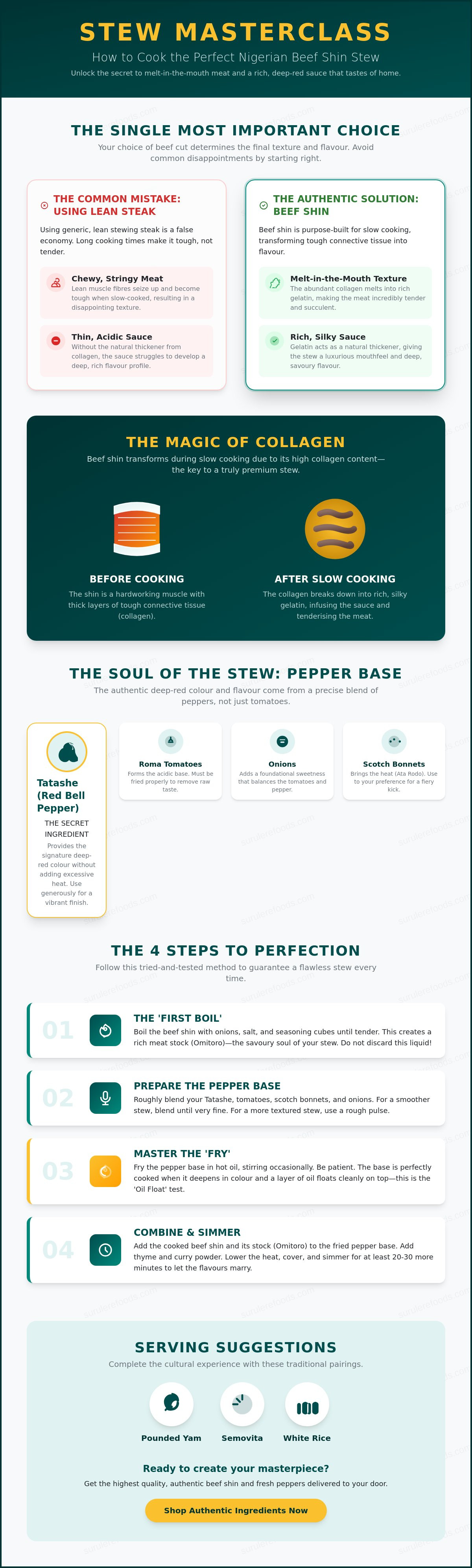
During the slow-cooking process, the tough connective tissue, or collagen, within the shin begins to break down. It melts into a rich, silky gelatin that infuses the entire sauce with a deep, savoury body. This gelatin acts as a natural thickener. It gives your stew a luxurious mouthfeel that starch or flour could never replicate. Beef shin is the ultimate cut for "low and slow" Nigerian cooking.
Why UK Home Cooks Prefer Beef Shin
For the Nigerian diaspora in the UK, finding the right texture is often a matter of cultural nostalgia. You want meat that holds its shape but yields to the fork. Sourcing premium beef shin from specialist retailers like SurulereFoods ensures you're getting a cut that mimics the "proper" meat found in traditional markets. With Nigerian beef prices hitting NGN 7,900 per kilogram in February 2026, UK home cooks are choosing shin as a cost-effective way to prepare large family batches without sacrificing quality. It offers a more satisfying, authentic experience than leaner, imported alternatives. This cut provides the perfect balance of value and high-end results, making it the preferred choice for those who take pride in their kitchen traditions.
Essential Ingredients for an Authentic Pepper Base
Achieving a perfect, deep-red finish starts long before the beef touches the pot. The foundation of any great stew lies in the "Holy Trinity" of Nigerian cooking: Roma tomatoes, Scotch bonnets (Ata Rodo), and onions. While the beef shin provides the texture, this pepper blend provides the soul. In West African culinary traditions, the balance between heat, acidity, and sweetness is a finely tuned art. You want a ratio that leans heavily on Red Bell Peppers (Tatashe) to achieve that vibrant crimson hue without making the sauce overwhelmingly spicy.
Mastering how to cook Nigerian beef shin stew requires an understanding of umami. This isn't just about salt; it's about the deep, savoury layers provided by seasoning cubes. Whether you prefer the classic Maggi Star or the rich profile of Knorr Chicken, these are non-negotiable for an authentic taste. To carry these flavours, you'll need a high-quality vegetable oil or a touch of palm oil for a more traditional, nutty undertone. The frying stage relies on this oil to cook out the raw water from the tomatoes, a process that requires patience and the right ingredients.
Sourcing Authentic Peppers in the UK
Finding the right heat profile in the UK can be a challenge. Supermarket varieties often lack the fruity punch of true Scotch bonnet -Atta Rodo. You should look for peppers that feel firm and have a waxy, bright skin. Since handling these can cause significant skin irritation, always wear gloves or wash your hands thoroughly with oil and soap immediately after chopping. SurulereFoods acts as your reliable cultural bridge, providing national delivery of fresh Tatashe and Rodo to ensure your kitchen never lacks these essentials.
The Secret Ingredient: Nigerian Seasoning Cubes
The choice between Maggi and Knorr often comes down to family tradition, but both offer the essential depth that salt alone cannot provide. For a truly professional result, many home chefs combine these with aromatic staples like dried thyme and a good quality curry powder. If your fresh tomatoes aren't as red as you'd like, adding a small tin of Gino Tomato Paste is a brilliant trick. It provides a thicker consistency and a concentrated sweetness that helps eliminate the "slapped-on" acidic taste often found in rushed stews. This combination ensures your sauce is as premium as the beef shin it accompanies.
Step-by-Step: Preparing and Tenderising the Beef Shin
Before the vibrant red sauce comes to life, the foundation of a premium stew begins with the meticulous preparation of the meat. Start by washing your Beef Shin under cool water to remove any bone fragments or debris. Once cleaned, pat the meat dry and cut it into uniform, bite-sized chunks. Consistency is vital here; pieces of the same size ensure that every morsel reaches that desired melt-in-the-mouth texture at the same time. Understanding how to cook Nigerian beef shin stew properly means respecting the time this specific cut requires to transform from tough muscle into tender delight.
Place the chunks in a large pot and add your aromatics. Sliced red onions, crushed garlic, and finely grated ginger are the traditional choices that build the first layer of flavour. At this stage, add your seasoning cubes, such as Maggi Star or Knorr Chicken, to infuse the meat from within. Do not add water immediately. Instead, cover the pot and allow the beef to "sweat" on a medium heat for about 10 to 15 minutes. This allows the meat to release its natural juices, which are far more flavourful than plain tap water.
Building the Meat Stock (Omitoro)
After the initial sweating, add just enough water to submerge the meat and bring it to a gentle simmer. This creates the "Omitoro," a nutrient-dense meat stock that forms the soul of your stew. Never discard this liquid; it contains the dissolved collagen and marrow that give the final sauce its luxurious body. Unlike leaner cuts that might be ready in 30 minutes, beef shin usually requires between 60 and 90 minutes of simmering to reach perfection. To test for tenderness, simply press a fork against a piece of meat; it should slide in with minimal resistance and the muscle fibres should begin to pull apart easily.
Optional: Frying vs. Boiling the Beef
Once the meat is tender, you face a choice: leave it as is or fry it. Frying the boiled chunks in hot vegetable oil for 3 to 5 minutes creates a slightly crusty, golden exterior that provides a wonderful textural contrast against the soft interior. This step adds a distinct, roasted dimension to the stew's profile that is highly prized in many Nigerian households. If you choose to fry, ensure the meat is patted dry first to avoid dangerous oil splatters. Use a slotted spoon to move the meat safely and keep a lid nearby to act as a shield if the oil becomes too lively. This extra step is a small investment in time that yields a significantly more professional, "catered" result.
Mastering the 'Fry': Achieving the Perfect Stew Consistency
The frying stage is where the magic happens. It's the moment your blended peppers and tomatoes shed their raw, acidic edge and transform into a sophisticated sauce. When learning how to cook Nigerian beef shin stew, you must embrace the philosophy of Surulere; patience truly has its rewards here. Rushing this process results in a stew that tastes "slapped on" and sharp. Instead, you want to fry the base until you achieve the "Oil Float." This is the unmistakable visual cue where the oil separates from the pepper mix and rises to the surface, signalling that the water has completely evaporated and the natural sugars have caramelised.
Once you see that beautiful oil separation, it's time to reintroduce your tender beef shin and the reserved Omitoro. This stock is liquid gold; it carries the deep, savoury essence of the meat and the aromatics from the first boil. Pour it in gradually, stirring gently to marry the fried base with the rich liquid. The final simmer is essential. It allows the spicy, savoury sauce to penetrate deep into the beef shin fibres, ensuring every bite is a concentrated explosion of flavour. This is the stage where the premium quality of your ingredients truly shines through, creating a dish that bridges the gap between your UK kitchen and your cultural roots.
The Frying Technique
Balance is everything when it comes to oil. You need enough to fry the peppers effectively, but you don't want a heavy, greasy finish. A good rule of thumb is to use enough oil to coat the bottom of the pot generously. As the mixture fries, watch the colour shift. It will move from a bright, raw orange to a rich, sophisticated deep red. If the mixture starts to stick or smell acrid, reduce the heat immediately; you want caramelisation, not carbonisation. This slow transformation is what removes the metallic tang of undercooked tomatoes, a common pain point for many home cooks.
Achieving the Right Thickness
The consistency of your stew should be thick enough to coat a piece of yam but fluid enough to pour over rice. If your sauce feels too thin, a tablespoon of Gino Tomato Paste can act as an immediate "fixer," adding body and a concentrated sweetness. However, the secret weapon in this recipe is the beef shin itself. Because of the high collagen content we discussed earlier, the gelatin released into the stock will continue to thicken the stew naturally as it rests. This creates a luxurious, velvety texture that standard stewing steaks simply cannot provide. To ensure you have the best start, shop premium Beef Shin from our curated selection and experience the difference that quality makes.
Serving Suggestions and Traditional Pairings
Once you've mastered how to cook Nigerian beef shin stew, the final reward is the presentation. The rich, deep-red sauce and the fork-tender beef deserve a stage that complements their intensity. For many, the gold standard is a simple bed of white rice, such as Tolly Boy Easy Cook Long Grain Rice or Laila Basmati Rice. The grains act as a neutral canvas, allowing the savoury, pepper-led flavours of the stew to take centre stage. If you're looking for something more celebratory, serving this stew alongside a vibrant Jollof rice creates a double-layered experience of West African spice and soul.
For a more traditional "swallow" experience, this stew is the perfect companion for Pounded Yam or Semovita. The smooth, elastic texture of the swallow is ideal for scooping up the thick, gelatinous sauce. No plate is truly complete without a side of Dodo. Frying up some Ripe Plantain adds a caramelised sweetness that balances the heat of the Scotch bonnets. This contrast is a hallmark of Nigerian home cooking, providing a cooling relief that makes the next spicy bite even more enjoyable. It's these small details that transform a simple dinner into a meaningful domestic ritual.
Serving for a Crowd
When hosting family or friends, plating for a premium experience makes all the difference. Use a deep serving bowl to keep the stew warm and ensure each guest receives a generous portion of the beef shin. Because we've used the shin cut, the meat won't disintegrate; it will hold its shape beautifully on the plate whilst remaining incredibly soft. If you're preparing a full feast, consider serving the stew alongside a bowl of Egusi soup. The combination of the nutty melon seeds and the fried pepper stew is a classic duo that offers a variety of textures and flavours to your guests.
Freezing and Meal Prepping
Nigerian stew is famous for tasting even better the next day. As the stew rests, the spices continue to mellow and the beef shin absorbs more of the sauce's essence. This makes it an ideal candidate for meal prepping. If you have leftovers, allow the stew to cool completely before portioning it into airtight containers. It freezes exceptionally well for up to three months. When you're ready to eat, thaw it overnight in the fridge and reheat it gently on the hob over a low flame. Avoid using a high heat during reheating to ensure the beef remains tender rather than becoming rubbery. Shop authentic Nigerian Beef Shin and spices at SurulereFoods for your next stew and enjoy the lasting rewards of a slow-cooked masterpiece.
Bring the Joy of Authentic Heritage to Your Table
You now possess the specialised knowledge required to transform a simple cut of meat into a culinary masterpiece. By choosing beef shin, you've unlocked the secret of slow-released collagen that creates a silky, premium sauce standard cuts cannot replicate. Mastering the "Oil Float" test ensures your pepper base is perfectly fried, free from raw acidity, and ready to embrace the tender, stock-infused beef.
Understanding how to cook Nigerian beef shin stew is about more than just following a recipe; it's about reconnecting with a heritage that values patience and quality. At SurulereFoods, we're proud to act as your knowledgeable cultural bridge. We offer authentic West African ingredients that are highly rated by the UK diaspora, backed by premium UK-wide delivery. We take the guesswork out of sourcing so you can focus on the joy of home cooking.
Ready to start your slow-cooked journey? Order Premium Beef Shin and Authentic Nigerian Spices from SurulereFoods today. Your kitchen is about to become the heart of the home, filled with the aroma of tradition and the reward of a perfectly executed meal. Enjoy every savoury bite.
Frequently Asked Questions
Can I cook Nigerian beef stew without frying the peppers?
You cannot achieve a truly authentic result without frying the peppers. Frying is the essential step that cooks out the raw water and removes the metallic acidity found in fresh tomatoes. Without this process, your base will remain a watery puree instead of a rich, oil-infused sauce. Most traditional recipes require at least 20 to 25 minutes of frying to reach the perfect consistency.
How long does it take for beef shin to get tender in a stew?
It takes approximately 60 to 90 minutes for beef shin to reach a tender, pull-apart consistency on a standard hob. This duration allows the tough muscle fibres to soften and the internal collagen to dissolve into the sauce. If you're using a pressure cooker, you can achieve this result in roughly 35 minutes. Always check the meat with a fork before moving to the final frying stage.
Why is my Nigerian stew tasting sour or acidic?
Your stew tastes acidic because the tomatoes haven't been fried long enough to break down their natural sugars. This is a common hurdle when learning how to cook Nigerian beef shin stew in a hurry. You must wait for the oil to separate completely from the pepper mix. Adding a teaspoon of sugar or a small amount of Gino Tomato Paste can also help balance the pH level.
What is the difference between Nigerian stew and Nigerian soup?
Nigerian stew is a versatile tomato and pepper sauce used as a topping for staples like rice, beans, or yam. In contrast, Nigerian soups are complex, thickened dishes like Egusi or Ogbono that are specifically paired with "swallow" foods. While stews rely on a fried base and vegetable oil, soups often use palm oil and distinct indigenous thickeners to create a heavier, more textured meal.
Can I use tinned tomatoes instead of fresh Roma tomatoes?
You can certainly use tinned tomatoes, though tinned plum varieties are superior to chopped ones for a smoother texture. Because tinned tomatoes are often preserved in an acidic juice, you'll need to fry them for an additional 10 minutes to neutralise the sharp flavour. Many UK households prefer this method for its convenience, provided you balance the mix with fresh Scotch bonnets and onions.
How do I make my stew less spicy if I added too many Scotch bonnets?
The most effective way to reduce the heat is to increase the volume of the other ingredients, such as adding more fried tomato puree or meat stock. The gelatin from the beef shin also helps to mellow the fire of the Scotch bonnets by coating your taste buds. If the spice is still overwhelming, serving the stew with a double portion of boiled yam or white rice will help.
Is beef shin healthy for slow-cooked stews?
Beef shin is a very healthy option for slow-cooking because it is a lean muscle that is rich in protein and essential minerals. The slow-cooking process releases gelatin from the connective tissues, which supports joint health and provides a natural thickness to the stew without needing flour. It's a nutrient-dense choice that offers a premium dining experience without the high saturated fat found in other marbled cuts.
What can I use as a substitute for Tatashe (Red Bell Peppers) in the UK?
Red Romano peppers are the most effective UK substitute for Tatashe due to their deep red pigment and thick walls. While they lack the specific smokiness of Nigerian varieties, they provide the necessary texture and colour for a premium sauce. For those seeking a 100% authentic flavour, sourcing specific peppers from specialist providers like SurulereFoods ensures you don't have to compromise on your cultural roots.