

How to Cook Honey Beans Without Gas: The Ultimate Degassing Guide
What if the "musical fruit" reputation of Oloyin beans was actually a sign of rushed preparation rather than an inevitable side effect? We all love the creamy, naturally sweet taste of these premium staples, but nobody enjoys the uncomfortable bloating or digestive gas that often follows a hearty bowl of Ewa Aganyin. If you've been avoiding your favourite comfort food because of the after-effects, you're not alone. A 2025 poll found that 64% of people are intentionally trying to add more fiber to their diets through the "fibermaxxing" trend, yet many still struggle with the digestive toll of legumes. Learning how to cook honey beans without gas is the secret to enjoying this West African delicacy with complete confidence.
At SurulereFoods, we believe that "patience is rewarding," and this philosophy is the key to a gut-friendly meal. In this guide, you'll learn the expert secrets to preparing stone-free, soft Oloyin beans that are gentle on the stomach whilst preserving their authentic flavour. We will cover the essential double-boil method, the science of breaking down complex sugars, and how to use 2026's top-rated multi-cookers, such as the Instant Pot Plus or the Ninja Foodi, to achieve perfect results in less time. Get ready to transform your cooking ritual into a joyous, bloat-free experience that honours your heritage.
Key Takeaways
- Understand why Oloyin beans require specific preparation techniques to break down the complex sugars that lead to digestive discomfort.
- Master the "Boil and Discard" method and the 12–24 hour soak to effectively degas your beans whilst maintaining their naturally sweet profile.
- Discover how to cook honey beans without gas using modern electric alternatives like slow cookers and pressure cookers for a perfect, tender finish.
- Learn which carminative ingredients, such as ginger and early-added onions, act as natural digestive aids to make your meal even gentler on the stomach.
- Recognise the importance of sourcing premium, stone-free beans to ensure your cooking process is efficient and your results are authentically delicious.
Understanding Honey Beans: Why Do They Cause Gas?
Experience the rich, caramel-like sweetness of Oloyin beans, the undisputed crown jewel of Nigerian legumes. These "honey beans" aren't just a source of protein; they're a nostalgic link to home for the West African diaspora across the UK. Their unique, naturally sweet profile makes them the premium choice for beloved dishes like Gbegiri or Ewa Aganyin. Despite their popularity, the fear of post-meal bloating often keeps them off the weekly menu. Validating this experience is vital. It's a common barrier that prevents many from enjoying a nutrient-dense staple that should bring nothing but joy to the table.
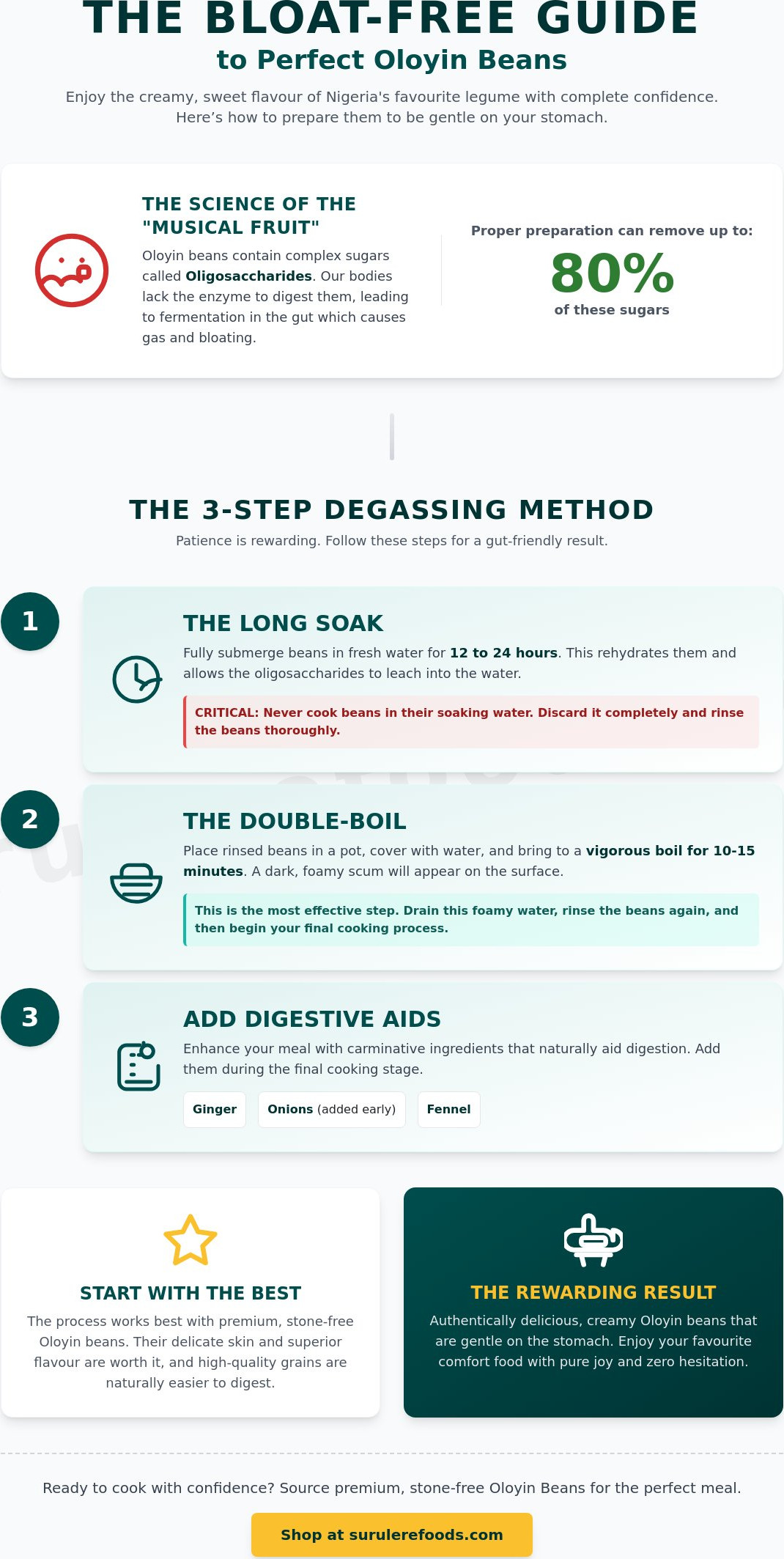
The primary reason for this digestive hurdle lies in a group of complex sugars called oligosaccharides, specifically raffinose and stachyose. Since the human body lacks the alpha-galactosidase enzyme required to process these in the small intestine, they arrive intact in the large intestine. Here, gut bacteria begin the fermentation process. This biological reaction is fundamentally why beans cause gas. Learning how to cook honey beans without gas involves specific, deliberate steps to leach these sugars out before the beans ever reach your plate.
The Science of the "Musical Fruit"
When these sugars ferment in the lower gut, they release gases like carbon dioxide and hydrogen. While this is a natural part of a healthy gut's behaviour, the volume can be overwhelming if the beans aren't treated correctly. Modern nutritional studies show that traditional preparation methods, such as long-soaking and parboiling, can reduce these troublesome sugars by up to 80%. Beyond comfort, proper degassing also tackles phytic acid. This "anti-nutrient" can block the absorption of essential minerals like iron and zinc. By breaking it down through correct preparation, you ensure your body actually benefits from the high nutritional value found in every grain.
Honey Beans vs. Black-Eyed Beans
Oloyin beans are distinct from the standard black-eyed beans found in most UK supermarkets. They possess a much thinner, more delicate skin and a higher concentration of natural sugars. This thinner exterior means they cook faster but also requires a more nuanced degassing approach to avoid turning the beans into a mushy paste. This refined texture and superior sweetness are exactly why they're the favourite amongst the community. To get the best results, always start with premium, stone-free Oloyin. Low-quality beans often contain old, hardened grains that are nearly impossible to digest, regardless of how much you soak them. Choosing high-quality staples is the first step in mastering how to cook honey beans without gas while maintaining that authentic West African flavour.
Proven Methods to Degas Honey Beans During Preparation
Mastering how to cook honey beans without gas begins long before the pot touches the stove. In the tradition of Surulere, where patience is rewarding, the preparation phase is where the real work happens. While some sources suggest extreme 48-hour soaks that can lead to fermentation and sourness, we've found that a 12 to 24-hour window is the gold standard for Oloyin. This duration allows the beans to fully rehydrate and release the bulk of those stubborn oligosaccharides into the water without compromising the bean's delicate integrity.
The most critical rule is simple: never cook your beans in the water they were soaked in. This liquid is essentially a concentrated solution of the very sugars that cause discomfort. By discarding it and rinsing the beans under a cold tap until the water runs clear, you're physically removing the triggers for bloating. These Culinary Secrets for Digestion are the foundation of a comfortable, authentic meal. For the best results, always start with authentic Oloyin beans that have been carefully sorted for quality.
The Traditional Two-Step Boil
This technique is a staple in West African kitchens for a reason. Start by placing your beans in a pot with enough water to cover them by at least two inches. Bring them to a vigorous boil for 10 to 15 minutes. You'll notice a dark, foamy scum rising to the surface; this is exactly what you want to get rid of. Drain this water entirely and rinse the beans once more with fresh cold water before starting the final cook. This two-step process effectively leaches out water-soluble sugars that soaking alone might miss, ensuring your meal is as light as it is delicious.
Optimising the Soak
If you're organised, try to change the soaking water every four to six hours. This keeps the concentration gradient high, encouraging more sugars to leave the beans. If you're short on time, a "quick soak" involves boiling the beans for two minutes and then letting them sit off the heat for one hour. While not as thorough as the overnight method, it's a decent alternative for busy schedules. Beyond digestive comfort, a proper soak reduces the final cooking time by approximately 30%. This is a significant saving on energy bills for UK households whilst ensuring the beans achieve that signature creamy texture.
Finally, consider adding a tiny pinch of baking soda to the soaking water. This alkaline agent helps soften the pectin in the thinner skins of honey beans, making the complex fibres easier to break down. Just remember to rinse thoroughly afterwards. You don't want any residual alkalinity to mask the natural, honey-like sweetness of your Oloyin. Learning how to cook honey beans without gas is about these small, deliberate choices that honour both your health and your heritage.
Cooking Without a Gas Stove: Modern Electric Alternatives
When searching for how to cook honey beans without gas, you might be looking for ways to avoid flatulence, or perhaps you're one of the many UK residents moving toward all-electric kitchens. Fortunately, modern electric appliances excel at both. Transitioning away from a traditional gas hob doesn't mean sacrificing the authentic texture of your Oloyin. In fact, electric methods often provide superior temperature control. Induction hobs, for instance, allow for precise simmering that prevents the natural sugars in honey beans from scorching at the bottom of the pot. This steady heat is far safer for the long cooking times beans require, especially in homes with young children or busy schedules.
Slow Cooker Honey Beans
Slow cookers are the spiritual successor to the traditional West African hearth. By setting your device to "Low" for 6 to 8 hours, you achieve a buttery, cream-like consistency that mimics the slow, deliberate cooking of our ancestors. It's the ultimate "patience is rewarding" method. However, you must still perform the "Boil and Discard" step on a hob before transferring the beans to the slow cooker. This ensures you've removed the initial foamy scum and water-soluble sugars. For a deeper flavour, add chopped onions and a spoonful of premium palm oil at the very start of the slow-cook cycle. The long hours allow these aromatics to penetrate the heart of each bean, creating a rich, unified taste.
Pressure Cooking for Busy Households
For the busy professional in London or Birmingham, the electric pressure cooker is an essential tool. It offers a way to master how to cook honey beans without gas in a fraction of the time. Devices like the Instant Pot Plus 9-in-1, which Mumsnet rated as the best overall pressure cooker for 2026, can deliver perfectly soft beans in just 25 to 35 minutes. This speed doesn't mean you skip the methods to degas beans we've discussed; you still need to soak and rinse them beforehand.
To manage the foam that legumes naturally produce, never fill your pressure cooker more than halfway. This prevents the steam valve from clogging. Always opt for a "natural release" rather than a "quick release" when the timer ends. This gentle drop in pressure keeps the delicate skins of the Oloyin intact, ensuring they stay whole rather than turning into a mushy puree. Whether you choose the speed of a Ninja Foodi or the steady pace of a Sage Fast Slow Cooker Pro, electric alternatives make the joy of home cooking both efficient and deliciously authentic.
Culinary Secrets: Ingredients That Aid Digestion
Beyond the mechanical steps of soaking and rinsing, your spice rack holds the final keys to a comfortable meal. Incorporating carminative ingredients is a time-honoured strategy in West African kitchens to soothe the gut. Ginger and garlic aren't just aromatic staples; they contain active compounds like gingerol that stimulate digestive enzymes. Adding these early in the simmering process is a vital part of how to cook honey beans without gas. Similarly, onions should be introduced at the very start. Their natural sulphur compounds help break down the complex fibres of the Oloyin, ensuring they reach that signature buttery texture without causing distress.
A cross-cultural secret often used in Indian dal preparation is a pinch of "Hing" or Asafoetida. Whilst not a traditional Nigerian ingredient, its potent anti-flatulent properties make it a brilliant addition to any bean stew. Use it sparingly; a tiny pinch goes a long way in neutralising those stubborn oligosaccharides. Most importantly, mind your salt timing. Adding salt or bouillon cubes too early in the process toughens the outer skin of the honey beans. This creates a barrier that prevents the beans from softening properly, making them significantly harder to digest. Wait until the beans are completely soft before seasoning to ensure the best results.
Traditional Flavour Enhancers
Premium palm oil is more than just a source of rich colour. It provides a smooth, lubricating quality to the dish that can aid the passage of food through the digestive tract. For those who enjoy heat, Scotch bonnet (Atta Rodo) offers metabolic support that helps the body process heavy meals more efficiently. You might also consider integrating Egusi into your recipe. These melon seeds add a nutty depth and essential fats that create a more balanced, nutrient-dense meal, slowing down the digestion of sugars and preventing that heavy, bloated feeling.
Pairing for Digestive Success
What you serve alongside your Oloyin matters just as much as what's inside the pot. Pairing beans with fermented foods like Garri Ijebu provides a natural probiotic boost that supports gut health. The high fibre content of ripe plantain also helps move things along, whilst a warm mug of Zobo tea after your meal can act as a natural digestive aid. These pairings aren't just traditional; they're scientifically sound ways to enjoy a heavy protein meal without the "musical" side effects. To recreate these authentic flavours in your UK kitchen, you can shop authentic West African ingredients directly from our curated collection today.
Sourcing Premium Honey Beans in the UK
Even if you master how to cook honey beans without gas using the techniques we've discussed, your results will only be as good as your raw ingredients. The "gas factor" is significantly higher in old, stale stock. As beans age, their cell walls thicken and the complex sugars become more resistant to soaking. This is why some beans remain stubbornly hard even after hours of boiling. Starting with fresh, high-quality Oloyin is the most important step in ensuring a gentle digestive experience. In the UK market, where import regulations for dried legumes are increasingly strict, finding a reliable supplier is essential for maintaining your culinary traditions.
At SurulereFoods, we understand that your time is precious and your heritage is a source of pride. Our promise is simple: we provide premium, stone-free Oloyin beans delivered nationwide across the UK. We take the guesswork out of your grocery shop so you can focus on the sensory experience of cooking. By sourcing with care and maintaining high turnover, we ensure that our beans are never sitting in a warehouse for years. This freshness is what allows our beans to achieve that buttery, cream-like texture you remember from home kitchens in Lagos or Accra. We bridge the gap between your current location and your cultural roots through the joy of home cooking.
Selecting the Best Oloyin
When you're shopping for your next meal, look for grains with a uniform, golden-brown colour and a smooth surface. Shrivelled or dark, discoloured beans are clear signs of age and poor storage. These older beans require much longer cooking times and often retain more of the sugars that lead to bloating. Our beans are hand-selected to ensure your "patience is rewarding" in the kitchen, saving you the tedious task of picking out stones and debris for an hour before you can even start soaking. This commitment to quality ensures every pot you cook is as delicious as it is digestible.
From Pantry to Plate
A well-stocked pantry is the foundation of a happy, efficient kitchen. Organise your cupboards with essential seasonings like Maggi or Knorr Chicken cubes to bring out the natural sweetness of the Oloyin. Buying in bulk doesn't just save you money; it ensures you always have a supply ready for those long, 24-hour soaks. We invite you to browse our full Pan-African range to find everything from premium palm oil to Scotch bonnet peppers for a complete, authentic meal. Whether you're preparing a simple midweek dinner or a festive spread, we're here to support your journey as a home chef. Shop our Premium Brown Honey Beans for UK delivery and experience the difference that quality makes.
Master the Art of the Perfect Oloyin Meal
Mastering the 24-hour soak and the traditional two-step boil can reduce gas-causing sugars by up to 80%, ensuring your meal is as light as it is sweet. Whether you use a top-rated 2026 multi-cooker or a steady induction hob, you now have the expert secrets to honour your heritage without digestive discomfort. Knowing how to cook honey beans without gas transforms a heavy staple into a nutritious celebration that supports the 64% of people seeking more fibre in their diet as of 2025. These deliberate steps ensure your digestive health is protected whilst preserving the authentic West African flavours you love.
At SurulereFoods, we take pride in being your reliable cultural bridge. Our premium, stone-free Oloyin beans are sourced through authentic Pan-African partnerships to ensure freshness that old, shrivelled stock simply cannot match. With fast UK-wide delivery, the joy of home cooking is only a click away. Experience the sweetness of authentic Oloyin; Shop our Premium Honey Beans now. Your kitchen is a gateway to your roots. With these techniques and high-quality staples, every bowl you serve will be a rewarding experience for both the palate and the gut.
Frequently Asked Questions
Can I use baking soda to degas honey beans?
Yes, adding a tiny pinch (about one-quarter of a teaspoon) of baking soda to your soaking water helps soften the pectin in the bean skins. This alkaline environment makes the complex fibres easier to break down during the final simmer. Just ensure you rinse the beans thoroughly after soaking to remove any soapy aftertaste and preserve the natural sweetness of the Oloyin.
Is it necessary to soak honey beans overnight?
While modern pressure cookers can soften beans quickly, a 12 to 24-hour soak remains the most effective way to reduce oligosaccharides. Research indicates that a long soak followed by rinsing can remove up to 80% of the sugars responsible for digestive discomfort. If you're looking for how to cook honey beans without gas, this traditional step is your most reliable tool for a comfortable meal.
How much water do I need to cook 1kg of honey beans?
You should use a ratio of three parts water to one part beans, which means approximately 3 litres of water for 1kg of dry Oloyin. Honey beans are incredibly absorbent and will expand to nearly three times their original size during the cooking process. Always keep a kettle of hot water nearby to top up the pot, ensuring the beans stay submerged and cook evenly.
What happens if I don’t discard the first boiling water?
If you skip this step, you'll be cooking your beans in a concentrated solution of the very sugars that cause bloating and flatulence. The dark, foamy scum that rises during the first 15 minutes of boiling contains the highest concentration of water-soluble gas triggers. Discarding this liquid is a non-negotiable technique for anyone sensitive to the "musical" effects of legumes.
Can I cook honey beans in a microwave to save gas?
No, microwaves aren't suitable for the long, slow simmering process that honey beans require to become digestible. Microwaves cook by vibrating water molecules, which often leads to uneven heat distribution and "hot spots" that leave the centre of the bean hard. For the best results, stick to a slow cooker or an induction hob where you can maintain a steady, gentle simmer.
How do I know when honey beans are perfectly cooked?
Perfectly cooked Oloyin should have a "buttery" texture, meaning they mash easily between your thumb and forefinger with very little pressure. The skins should be tender and shouldn't feel papery or tough in the mouth. If you find a few grains are still firm whilst others are soft, it's often a sign that the beans were of uneven age or quality.
Does adding salt to beans make them gassy?
Salt doesn't directly increase gas production, but adding it at the wrong time can make beans much harder to digest. If you add salt or bouillon cubes before the beans have softened, the sodium toughens the outer skins. This prevents the interior starches from breaking down properly, which can lead to a heavier, more uncomfortable feeling in the stomach after eating.
Why are my honey beans still hard after hours of cooking?
The most common culprit is the age of the beans; stock that has been sitting for over 18 to 24 months develops "hard-to-cook" syndrome where the cell walls become nearly impenetrable. Other factors include using hard water, which is common in many parts of the UK, or adding acidic ingredients like tomatoes too early. Starting with fresh, premium beans is the best way to avoid this frustration.