

Easy Efo Riro Recipe for Beginners: The Ultimate 2026 Guide to Authentic Nigerian Spinach Stew
Why does your Efo Riro always end up looking more like a watery soup than the thick, vibrant masterpiece you remember from home? It is a common frustration for many home cooks in the UK, especially when you are trying to recreate that specific, nostalgic depth of flavour using standard supermarket greens. You likely agree that there is nothing more disappointing than spending your budget on premium beef shin or smoked catfish, only to have the final dish turn out limp and flavourless. With Nigeria's food market projected to reach over £180 billion by late 2025, the 2026 trend of "intentional cooking" has never been more relevant for those of us in the diaspora seeking quality and authenticity.
This easy efo riro recipe for beginners provides a foolproof path to success, ensuring you achieve a rich, non-soggy result every single time you step into the kitchen. You will learn the professional secret of the "no-tomato" pepper base and how to properly incorporate essential staples like palm oil and Iru to create a meal that truly feels like home. We are going to cover everything from managing moisture levels to sourcing the best traditional ingredients right here in the UK, giving you the confidence to master this beloved Yoruba classic.
Key Takeaways
- Learn why authentic Efo Riro relies on a chunky pepper base and the complete exclusion of tomatoes to maintain its signature savoury depth.
- Follow this easy efo riro recipe for beginners to master the art of prepping premium Beef Shin and Shaki for a truly celebratory meal.
- Discover the "salt and squeeze" technique and tea towel wringing method to eliminate moisture, ensuring your spinach stew stays thick and vibrant.
- Gain confidence in using essential traditional ingredients like Palm Oil and Iru to recreate the nostalgic flavours of a Nigerian kitchen in the UK.
- Identify the perfect accompaniments for your stew, from the comforting texture of Ola-Ola Pounded Yam to the simple elegance of long grain rice.
What is Efo Riro? Understanding Nigeria’s Favourite Spinach Stew
Efo Riro is a vibrant, savoury masterpiece that sits at the very heart of Yoruba culinary heritage. To truly appreciate What is Efo Riro?, you have to understand the literal meaning behind its name. In the Yoruba language, 'Efo' simply means vegetable, whilst 'Riro' means to stir. This isn't just a descriptive label; it's a technical instruction for the cook. Unlike many Western stews that simmer for hours in a liquid base, this dish is defined by its "stirred" nature, where the greens are folded into a concentrated, oil-based pepper reduction. It offers a complex flavour profile that's smoky, umami-rich, and beautifully layered with heat.
Whilst many beginners might confuse it with other popular Nigerian dishes, it's quite distinct from its counterparts. For instance, Egusi soup relies on ground melon seeds for a nutty, creamy texture. In contrast, Efo Riro is entirely about the leafy greens. It's fundamentally a "dry" stew, meaning the sauce should cling to the vegetables rather than drown them. Achieving this balance is the first hurdle in an easy efo riro recipe for beginners, as it requires a specific approach to moisture management that we'll explore in detail.
The Yoruba Tradition: Why Authenticity Matters
This dish is the undisputed king of Nigerian parties, often serving as the centrepiece of celebratory "Owambe" gatherings. Its cultural importance lies in the traditional 'fry-then-stir' technique. You first fry the pepper base in premium palm oil until the water evaporates and the oil rises to the top. Only then do you stir in the greens. In the UK diaspora, this tradition remains a vital link to home. Whilst ingredients might be sourced from local African markets across the country, the core technique hasn't changed. It's a slow, rewarding process that embodies the philosophy of patience bringing rewards in the form of deep, developed flavours.
Efo Shoko vs. Efo Tete: Choosing Your Greens
In Nigeria, the gold standard involves Efo Shoko (Lagos spinach) or Efo Tete (African spinach). These varieties are heartier than Western varieties and hold their structure better under heat. Whilst Efo Tete is preferred for its slightly sweet undertone, standard UK baby spinach is an excellent substitute if prepared correctly. The secret is ensuring the 'leafy' part of the stew remains the star. This easy efo riro recipe for beginners focuses on that exact ratio. You don't want a pepper soup with a few leaves floating in it; you want a mountain of greens barely coated in a rich, spicy essence. This distinction is what separates an authentic home-cooked meal from a generic vegetable stew.
Essential Ingredients for an Easy Efo Riro Recipe
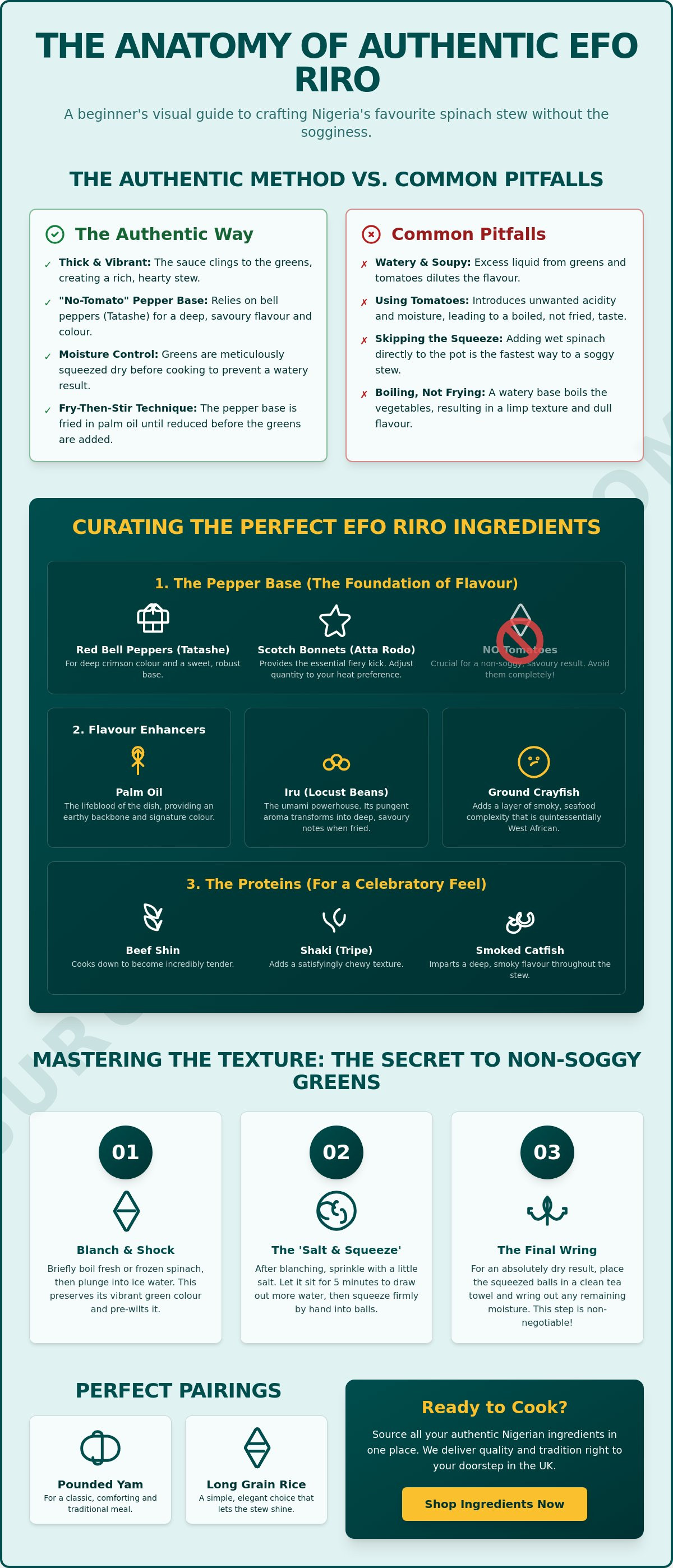
Building a culinary masterpiece requires the right materials. For an easy efo riro recipe for beginners, success starts at the grocery store. You aren't just looking for vegetables; you're curating a specific profile of heat, colour, and umami. The foundation of any authentic Efo Riro is the pepper base. You must use red bell peppers (Tatashe) for that deep crimson hue and Scotch bonnets (Atta Rodo) to provide the necessary kick. Whilst it might be tempting to reach for a tin of plum tomatoes, resist that urge. You want a thick paste that fries in the oil, not a watery sauce that boils the greens.
Next is the Palm Oil. This is the lifeblood of the dish. It provides a rich, earthy backbone and that unmistakable golden-orange glow that defines Nigerian vegetable stews. To add layers of complexity, you need the 'secret' umami duo: Iru (fermented locust beans) and ground crayfish. Iru might have a pungent aroma when you first open the packet, but once it hits the hot oil, it transforms into a deep, savoury essence that can't be replicated. For your proteins, aim for 'assorted meats.' A combination of tender Beef Shin, chewy Shaki (tripe), and Smoked Catfish creates a multi-textured experience that feels truly premium.
Finally, your seasoning should remain focused. You don't need an overcrowded spice rack. A simple combination of salt and Knorr Chicken or Maggi Star seasoning cubes is all that's required to elevate the natural flavours of the meat and vegetables. This simplicity allows the fermented notes of the Iru and the smokiness of the fish to shine through without competition.
The No-Tomato Rule: Why We Avoid Them
Tomatoes are the enemy of a perfect Efo Riro. They introduce excessive acidity and, more importantly, too much moisture. Remember, 'Riro' means to stir, and you can't stir-fry vegetables in a pool of tomato juice. As many expert chefs noted in January 2026, the trend towards 'intentional cooking' means respecting the original chemistry of the dish. Rely on the natural sweetness of your red bell peppers instead. As the saying goes: 'Authentic Efo Riro relies on a thick, fried pepper paste, never a watery tomato base.'
Sourcing Authentic Ingredients in the UK
Finding high-quality ingredients shouldn't be a struggle whilst living in the UK. Whilst standard supermarkets might stock basic peppers, they often lack the pungent Iru or the rich, unadulterated Palm Oil needed for this stew. You can easily shop for authentic Nigerian staples like Smoked Catfish and premium Beef Shin at SurulereFoods to ensure your kitchen is fully equipped. If you're a beginner, don't be afraid to use frozen spinach. It is often more convenient than washing and chopping large batches of fresh leaves, and if you wring it out properly, the result is virtually identical to the traditional version. Using this easy efo riro recipe for beginners with the right ingredients ensures you bridge the gap between London and Lagos with every bite.
Step-by-Step Guide: How to Cook Efo Riro for Beginners
Mastering the rhythm of the kitchen is the final hurdle in your journey to culinary excellence. This easy efo riro recipe for beginners transforms a list of premium ingredients into a cohesive, soul-warming meal through a series of deliberate, traditional steps. Patience is truly rewarding here; don't rush the frying process, as it's the foundation of the entire dish. By following this structured approach, you'll avoid the common pitfalls of watery stews and overcooked greens.
- Step 1: Protein Preparation. Start by boiling your Beef Shin and Shaki in a pot with sliced onions and seasoning cubes. You want the meat to be tender but still hold its shape. If you're using Smoked Catfish, soak it in hot water and salt first to remove any debris before breaking it into large chunks.
- Step 2: The Pepper Pulse. Coarsely blend your red bell peppers and Scotch bonnets with one onion. It's vital that you don't over-process this into a smooth purée. You're looking for a textured, chunky consistency that will grip the spinach leaves later.
- Step 3: The Palm Oil Base. Heat your Palm Oil in a large pot. Once it's hot, add sliced onions and your pepper blend. Fry this on medium heat. You'll know it's ready when the water has evaporated and the oil begins to float gracefully on top of the sauce.
- Step 4: The Flavour Build. Stir in your Iru, ground crayfish, and pre-cooked meats. Let these simmer in the pepper sauce for 5 to 10 minutes so the flavours can marry.
- Step 5: The Final Fold. Add your prepared spinach last. Stir centrally to ensure every leaf is coated in the savoury, spicy oil.
Prepping the Pepper Base (The Sauce)
When heating your palm oil, you can choose to 'bleach' it slightly by heating it until it's clearer, but for most home cooks, simply heating it until it's hot enough to sizzle an onion is sufficient. The goal is to fry the base until it loses its raw, sharp taste and thickens significantly into a concentrated paste. Adjust your Scotch bonnet counts based on your personal spice tolerance. Two peppers are usually plenty for beginners to achieve a balanced heat without overwhelming the palate.
The Final Stir: Timing is Everything
Timing is the difference between a professional result and a mediocre one. You should turn off the heat almost immediately after adding the spinach to the pot. Rely on the residual heat to wilt the greens. This prevents them from overcooking into a dull, brown mush. Your visual cue for perfection is simple. The stew is ready when the spinach remains a vibrant, deep green and the golden oil is clearly visible at the edges of the pot. This easy efo riro recipe for beginners ensures your final result looks as good as it tastes.
Mastering the Texture: Tips to Avoid Soggy Efo Riro
The most common failure for anyone attempting an easy efo riro recipe for beginners is ending up with a watery, limp mess. Authentic Nigerian spinach stew should be thick, with the savoury pepper sauce clinging to the leaves rather than the leaves swimming in a soup. Achieving this texture requires a fundamental shift in how you handle moisture. You must treat the spinach as a solid ingredient rather than a liquid-based one. By managing the water content before the greens ever touch the pot, you ensure a premium, restaurant-quality result that honours the 'Riro' (stirred) tradition.
For fresh leaves, the 'Salt and Squeeze' method is your most effective tool. After chopping your spinach, sprinkle a teaspoon of salt over the greens and let them sit for approximately 10 to 15 minutes. The salt draws out the internal moisture through osmosis. Once the time is up, gather the leaves in your hands and squeeze firmly until the liquid is completely drained. If you're using frozen spinach, which is a fantastic time-saver for beginners, the process is even more critical. Defrost the spinach entirely, then place it in the centre of a clean tea towel. Twist the towel with all your strength; you'll be amazed at how much excess water you can wring out. This step is a total game-changer for the final consistency of your stew.
Dealing with UK Supermarket Spinach
Spinach varieties found in UK supermarkets, such as baby spinach or Savoy, are significantly more 'watery' than the hardy Efo Shoko used in Nigeria. To prevent these delicate leaves from turning into a brown mush, try blanching them quickly in boiling water for 30 seconds, then immediately 'shocking' them in a bowl of ice water. This preserves the bright green colour. Before adding them to your sauce, wring the spinach until it forms a dry ball. To get the best results with these techniques, you can shop for authentic Palm Oil and Smoked Catfish at SurulereFoods to provide the heavy, oil-based foundation that UK spinach needs.
Common Beginner Mistakes to Avoid
- Adding too much stock: Remember that Efo Riro is a stew, not a soup. Use only a tiny amount of meat stock, perhaps two or three tablespoons, just to loosen the pepper base.
- Over-blending the peppers: If you blend your peppers into a liquid juice, you'll have to fry them for much longer to evaporate the water. Keep the pulse short for a chunky texture.
- Using the wrong oil: Never substitute vegetable oil for Palm Oil. Without the thick, earthy depth of Palm Oil, the spinach will lack the necessary body and flavour profile.
This attention to detail is what makes an easy efo riro recipe for beginners successful. By using high heat to fry your pepper base until the oil separates, you create a concentrated environment where the dry spinach can thrive. This ensures every bite is packed with the smoky, umami-rich essence of the traditional Yoruba kitchen.
Serving Suggestions and Sourcing Quality Ingredients
Completing your easy efo riro recipe for beginners is a moment of triumph, but the real joy lies in the first bite. To truly honour the spirit of the Yoruba kitchen, you must consider the accompaniment. Traditionally, Efo Riro is paired with 'Swallow'-starchy sides designed to be used as a vessel for the stew. Whilst there are many options, Ola-Ola Authentic Pounded Yam remains the most beloved choice amongst Nigerian families in the UK. Its smooth, resilient texture is the perfect foil for the chunky, spicy greens. For those seeking a slightly lighter alternative, Golden Penny Semovita offers a wonderful consistency that holds up well against the rich palm oil base.
If you prefer a more modern or familiar pairing, this stew transitions beautifully to a rice-based meal. It sits perfectly on a bed of Tolly Boy Easy Cook Long Grain Rice; the savoury, smoky oils from the stew naturally season the rice as you eat. To create a truly premium dining experience, don't forget the Fried Plantain (Dodo). The sweet, caramelised notes of ripe plantain balance the heat of the Scotch bonnets, creating a harmonious plate of food that hits every flavour profile.
The Perfect "Swallow" Pairing
For the most authentic experience, organise a family-style platter with the Efo Riro placed centrally in a large bowl, surrounded by neatly wrapped portions of Pounded Yam. This communal style of eating is a hallmark of West African hospitality. If you're looking for a health-conscious alternative, boiled unripe plantain provides a firm texture that complements the stew without the heaviness of traditional swallows. Regardless of your choice, ensure the stew is served piping hot to allow the aromas of the Iru and smoked fish to fill the room.
One of the best things about this stew is its longevity. Efo Riro is famous for developing deeper flavours overnight as the proteins continue to infuse the sauce. To maintain the premium quality of your leftovers, follow these simple storage tips:
- Cooling: Allow the stew to reach room temperature before sealing it in an airtight container to prevent condensation.
- Refrigeration: The stew stays fresh for up to 4 days, but the flavours are typically at their peak on day two.
- Reheating: Warm it gently in a small pot on low heat. Adding a tiny splash of water helps loosen the sauce without overcooking the delicate spinach leaves.
Get Everything You Need from SurulereFoods
Authenticity in the kitchen is only possible when you have the right tools and ingredients at your disposal. You can easily buy premium Palm Oil and authentic Smoked Fish directly from SurulereFoods for fast, national UK delivery. We take the guesswork out of sourcing hard-to-find staples, ensuring that your journey with this easy efo riro recipe for beginners is as seamless as possible. With the right ingredients delivered to your door, your first Efo Riro will be a resounding success, bringing the unmistakable taste of home to your UK table.
Bring the Authentic Taste of Home to Your UK Kitchen
Mastering this easy efo riro recipe for beginners is about more than just following steps; it's about reclaiming the joy of authentic home cooking. You now understand that the secret to a non-soggy stew lies in rigorous moisture control and the total exclusion of tomatoes. By focusing on a thick, fried pepper base and the umami depth of Iru, you can recreate the vibrant flavours of a traditional Yoruba celebration right in your own home. This approach respects the intentional cooking trend of 2026, ensuring every leaf is perfectly coated in savoury essence.
The final piece of the puzzle is sourcing the right staples. As an authentic Pan-African grocery specialist, SurulereFoods bridges the gap between your UK kitchen and your cultural roots. Whether you need premium quality Smoked Catfish, tender Shaki, or rich Palm Oil, we provide the essential building blocks for a perfect meal. Ready to cook? Shop authentic Nigerian ingredients at SurulereFoods for nationwide UK delivery and experience the rewards of patience. With our fast national delivery across the UK, your next masterpiece is only a few clicks away. Happy cooking!
Frequently Asked Questions
Can I make Efo Riro without Palm Oil?
You can use vegetable oil as a substitute, but you'll lose the signature earthy depth and vibrant orange hue that only Palm Oil provides. Palm Oil is the traditional fat source that carries the smoky flavours of the Iru and crayfish. If you're looking for a lighter alternative, simply reduce the quantity of Palm Oil used rather than swapping it entirely for a neutral oil.
What is the best substitute for Nigerian spinach in the UK?
Baby spinach or Savoy spinach are the most reliable substitutes found in UK supermarkets like Tesco or Sainsbury's. Whilst these leaves are thinner than traditional Efo Shoko, they work perfectly if you follow the moisture control tips discussed earlier. Aim for larger leaf varieties where possible, as they hold their structure better during the final stirring process.
Is Efo Riro healthy for a beginner's diet?
Efo Riro is exceptionally healthy as it's packed with iron, vitamins A and C, and high-quality protein from beef or fish. This easy efo riro recipe for beginners focuses on nutrient-dense ingredients that support a balanced diet. To keep it even leaner, you can opt for skinless chicken thighs or extra-lean beef shin whilst maintaining the authentic vegetable-heavy ratio.
How do I stop my Efo Riro from being watery?
You must wring out every drop of moisture from your spinach before adding it to the pot. This is the most critical step in an easy efo riro recipe for beginners to avoid a soggy result. Additionally, ensure your pepper base has fried until the oil floats to the top, which indicates all the water has evaporated from the sauce.
Can I use frozen spinach for this recipe?
Yes, frozen spinach is a brilliant, cost-effective option for home cooks in the UK. It's often pre-chopped, which saves significant preparation time. Just ensure you defrost it completely and use the tea towel wringing method to remove the high water content typical of frozen greens before you stir them into your fried pepper base.
Do I really need to add Iru (Locust Beans)?
You really do need Iru if you want that authentic, nostalgic umami flavour. These fermented locust beans provide a deep, savoury backbone that salt or seasoning cubes alone cannot replicate. Even a small quantity, such as 20 grams, transforms the dish from a simple vegetable stew into a complex, traditional Yoruba masterpiece.
How long does Efo Riro last in the fridge?
Efo Riro typically lasts for up to 4 days when stored in an airtight container in the fridge. Many enthusiasts argue it actually tastes better on the second or third day because the flavours have had more time to meld. If you've made a large batch, it also freezes well for up to 3 months without losing its nutritional value.
Can I make a vegan version of Efo Riro?
You can easily create a vegan version by swapping the assorted meats for chunky mushrooms, tofu, or fried yam cubes. Use a vegetable-based seasoning cube instead of chicken or beef stock to maintain the flavour profile. The most important thing is to keep the Palm Oil and Iru, as these provide the essential flavours that define the dish regardless of the protein used.