

Authentic Nigerian Jollof Rice Recipe: The Ultimate Guide to Party-Style Perfection (2026)
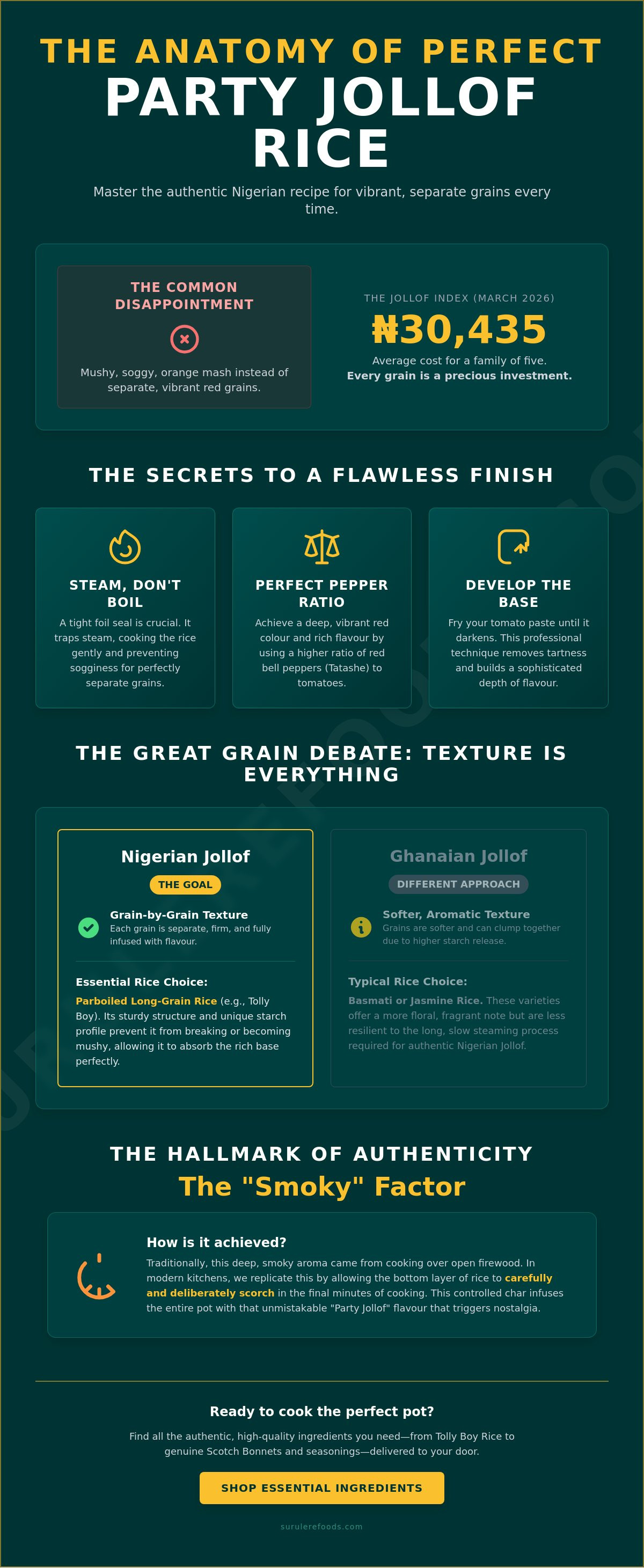
Why is it that despite your best efforts, your home-cooked pot rarely captures that elusive, scorched aroma of a Lagos wedding party? You likely recognise the disappointment of lifting the lid to find a mushy, orange mash rather than the vibrant, separate grains you expected. With the Jollof Index reaching an all-time high of 151.3 in March 2026, cooking a pot for a family of five now costs an average of ₦30,435. This makes every single grain a precious investment you can't afford to get wrong.
We understand that the joy of home cooking comes from recreating those nostalgic flavours perfectly. This authentic nigerian jollof rice recipe ensures you master the art of the "party-style" finish by treating the process as a slow steam rather than a boil. You'll learn how to balance your Scotch bonnet and Gino tomato paste for the perfect base, whilst discovering why Tolly Boy Easy Cook Long Grain Rice is the essential choice for that separate, non-sticky texture. We are going to walk you through the precise pepper-to-tomato ratios and the traditional foil-steaming techniques that guarantee a smoky, grain-by-grain masterpiece every time you cook.
Key Takeaways
- Learn why steaming your rice with a tight foil seal is the secret to achieving perfectly separate grains that never turn mushy or soggy.
- Master the precise pepper-to-tomato ratio using this authentic nigerian jollof rice recipe to recreate that vibrant, deep red colour and rich flavour profile.
- Discover the professional technique of frying tomato paste until it darkens, ensuring your base loses its tartness and develops a sophisticated depth.
- Explore expert recommendations for protein pairings, such as beef shin and chicken leg, alongside traditional sides like fried ripe plantain for a complete culinary experience.
- Understand the cultural significance behind "Party Jollof" and how to safely achieve that iconic smoky aroma in a modern kitchen setting.
The Cultural Heart of West Africa: Why Nigerian Jollof Rice is Supreme
Nigerian Jollof isn't merely a meal; it's a vibrant, one-pot celebration that defines the West African culinary identity. At its core, this dish consists of parboiled long-grain rice steamed within a concentrated, oil-fried reduction of Scotch bonnets, red bell peppers, and onions. For the Nigerian diaspora living in the UK, a perfectly executed pot bridges the gap between London and Lagos, bringing the unmistakable joy of home to their kitchens. Understanding the history and cultural significance of Jollof rice helps one appreciate why this dish is protected with such fierce national pride and why it remains the centrepiece of every significant gathering.
In our kitchens, we view Jollof as a sensory bridge. It connects the fast-paced requirements of modern life with the slow, deliberate traditions of our heritage. To cook it well is to honour the "Surulere" philosophy; it's a reminder that patience truly has its rewards. Whether you're a seasoned chef or a beginner, mastering this dish is a rite of passage that signals a deep respect for authentic flavours.
Nigerian vs. Ghanaian Jollof: The Texture Debate
The legendary "Jollof Wars" often centre on the fundamental choice of grain. Whilst our Ghanaian neighbours typically prefer the floral, softer notes of Basmati or Jasmine rice, an authentic nigerian jollof rice recipe demands parboiled long-grain rice. We specifically recommend Tolly Boy Easy Cook Long Grain Rice for its resilience and unique starch profile. This variety is sturdier, which allows each grain to absorb the rich, savoury "stew" base without breaking or becoming mushy. The goal is always a "grain-by-grain" texture, where every piece of rice stands independent, fully infused with the vibrant red colour of the pepper reduction.
The "Smoky" Factor: The Hallmark of Authenticity
The gold standard for any celebration is "Party Jollof." Historically, this was achieved by cooking over open firewood. The flames would lick the bottom of large cast-iron pots, creating a slight char that infused the entire batch with a deep, smoky aroma. In modern UK kitchens, we recreate this hallmark of authenticity through controlled scorching and tight steaming. Achieving this without burning the rice requires a delicate balance of heat and timing. An authentic nigerian jollof rice recipe isn't complete without this hint of char; it provides the sophisticated depth that distinguishes a premium pot from a standard home-cooked meal. It's this specific aroma that triggers nostalgia, reminding us of weddings, birthdays, and the shared laughter of community.
The Anatomy of Flavour: Essential Ingredients for an Authentic Base
The foundation of any authentic nigerian jollof rice recipe lies in the "Holy Trinity" of Nigerian aromatics: Scotch Bonnet (Atta Rodo), Red Bell Peppers (Tatashe), and onions. Whilst many recipes over-rely on fresh tomatoes, the secret to that vibrant crimson hue is a higher ratio of Tatashe to tomatoes. This combination ensures the dish is savoury rather than sour. According to Britannica, these essential Jollof rice ingredients form the backbone of the dish's complex flavour profile, providing both the heat and the sweetness necessary for a balanced pot.
Achieving a premium result also depends on the quality of your seasonings and fats. Frying the pepper base in high-quality vegetable oil allows the flavours to meld and intensify. For that unmistakable "home-cooked" depth, Maggi Star or Knorr Chicken Seasoning Cubes are essential. These cubes provide a concentrated umami punch that salt alone cannot replicate. You can find these essential seasonings and authentic peppers in our curated collection, ensuring your base starts with the right building blocks.
Choosing the Right Rice: The Tolly Boy Advantage
For Nigerians in the UK, Tolly Boy Easy Cook Long Grain Rice is the gold standard for Jollof. Its parboiled nature is a critical safeguard against the dreaded "soggy Jollof" outcome. Because the grains have been partially steamed in their husks before milling, they're sturdier and less likely to release excess starch. However, preparation is still paramount. You must wash the rice in lukewarm water until the liquid runs completely clear. This removes any remaining surface starch, which is the primary cause of grains sticking together during the final steam.
Concentrated Umami: Tomato Paste and Spices
Gino Tomato Paste provides the concentrated umami and deep colour that fresh tomatoes lack. It acts as a thickening agent, helping the sauce cling to every individual grain. Along with the paste, a blend of dried thyme, Nigerian-style curry powder, and bay leaves creates the aromatic "soul" of the dish. The base is a concentrated fried reduction that must lose its raw tartness before the rice is added. This frying process, which should continue until the oil begins to separate from the sauce, is the most important step in ensuring your Jollof has a sophisticated, mature flavour rather than a sharp, metallic one.
The Science of the Steam: Achieving the Perfect 'Grain-by-Grain' Texture
Many home cooks treat Jollof like a standard boiled rice dish. This is the first mistake. Whilst ingredients are vital, the true mastery of an authentic nigerian jollof rice recipe is found in the science of the steam. You aren't boiling the rice in water; you're steaming it within the concentrated juices of your pepper base. This distinction is what separates a premium, party-style pot from a soggy home-cooked version. To achieve this, the "Foil Method" is your most powerful tool. By placing a double layer of kitchen foil tightly over the pot before adding the lid, you create a pressurised environment that forces heat into the core of every grain.
Managing heat on UK hobs requires specific attention. If you're using an electric or induction hob, remember that these surfaces retain heat differently than traditional gas flames. Electric hobs often take longer to cool down, which can lead to premature burning if you don't adjust the settings early. You should bring the pot to a brief boil, then immediately drop the heat to the lowest possible setting. This slow, steady temperature allows the rice to soften gradually whilst the bottom layer develops that iconic "bottom-burn" char. This scorched layer isn't a failure; it's the sacrificial foundation that releases the smoky aroma essential for a true Nigerian celebration.
The Golden Rule of Water Ratios
The liquid in your pot should barely cover the surface of the rice. If you can see the rice grains peeking through the sauce, you've likely got the ratio right. Relying on steam rather than a flood of water ensures the grains remain distinct. If you find the rice is still firm once the liquid has evaporated, don't add more water. Instead, tighten the foil seal and let the residual heat do the work. You'll know you've succeeded when you lift the lid and see the grains standing upright, almost like tiny soldiers. For those looking for a baseline to compare their progress, this step-by-step Jollof Rice recipe offers a reliable perspective on liquid management and timing.
Developing the Smoky Aroma Without a Fire
In a modern kitchen, the smoky flavour comes from the recirculating oils and spices trapped by your foil seal. As the bottom of the pot chars, the smoke is forced back up through the rice, infusing every grain with a deep, earthy essence. Patience is rewarding here; the "final rest" is a non-negotiable step. Once you turn off the heat, keep the lid and foil tightly closed for at least 10 minutes. This allows the internal pressure to subside and the starches to set, ensuring that when you finally stir the pot, the grains remain separate and the aroma is at its peak.
Step-by-Step: How to Cook Authentic Nigerian Jollof Rice at Home
Executing an authentic nigerian jollof rice recipe requires more than just following a list; it demands an understanding of how flavours transform through heat. Begin by blending your Scotch bonnets (Atta Rodo), red bell peppers (Tatashe), and tomatoes into a perfectly smooth puree. In a heavy-based pot, heat your vegetable oil and sauté sliced onions until they're soft and translucent. Now, add your Gino Tomato Paste. You must fry this paste for several minutes until it darkens in colour and loses its sharp, metallic tartness. This specific step is what separates professional results from amateur attempts, as it creates the concentrated umami needed for a deep flavour profile.
Once the paste is ready, pour in your blended pepper mix. You'll need to fry this reduction until the oil separates and floats on top, which is the "oil-on-top" sign that the water has fully evaporated. Season this rich base with Knorr Chicken cubes, thyme, curry powder, and salt. Stir in your thoroughly washed Tolly Boy rice, ensuring every single grain is coated in the vibrant red sauce. Pour in your chicken stock until it barely covers the rice. Finally, seal the pot with a double layer of foil and a tight-fitting lid, cooking on the lowest possible heat for 30 to 40 minutes until the grains are tender and the liquid is gone.
Mastering the Pepper Base (Obun)
A pro tip for the perfect base is to boil your blended pepper mix in a separate pot before you begin the frying stage. This removes excess moisture and prevents the sauce from splashing. You'll observe the visual cue of the sauce changing from a raw, bright orange to a sophisticated, oil-speckled red. For a glossy, premium finish that mirrors the best Lagos catering, stir in a small knob of butter just before the final 10 minutes of steaming. This adds a subtle richness and a beautiful sheen to the finished dish.
Troubleshooting Common Jollof Issues
If you realise your rice is becoming mushy, immediately spread it out on a large baking tray to air-dry. This stops the cooking process and allows excess steam to escape. Conversely, if the grains remain hard when the liquid has vanished, add a tiny splash of water only around the edges of the pot, re-seal the foil tightly, and wait. If your Jollof lacks that iconic vibrant colour, you likely haven't used enough Tatashe or Gino paste. You can shop for authentic Gino tomato paste and premium peppers to ensure your next pot achieves that perfect, party-style crimson hue.
Serving and Sourcing: Completing Your Premium Nigerian Culinary Experience
A masterful pot of rice is only the beginning of the journey. To truly honour an authentic nigerian jollof rice recipe, you must curate the surrounding elements with the same level of care. Traditional pairings like fried ripe plantain (Dodo), creamy coleslaw, and savoury Moin Moin provide the necessary contrast in texture and temperature. For the protein, we recommend choosing cuts like beef shin or chicken leg and thigh. These pieces are resilient enough to be slow-cooked or fried without drying out; they stay succulent alongside the rice. Using authentic Maggi Star or Knorr Chicken cubes for your meat stock is vital. It ensures the flavour profile of your protein perfectly complements the seasoning of the rice base.
Organising a Pan-African feast requires a commitment to quality that transcends basic supermarket options. Given that the national average cost to prepare a pot of Jollof for a family reached ₦30,435 in March 2026, every ingredient choice must be deliberate. By using premium ingredients delivered directly to your door, you can transform a standard dinner into a high-end celebration of heritage. This attention to detail reflects the "Surulere" philosophy, where the patience of slow cooking is rewarded by the sensory delight of a perfect meal.
The Premium Pantry: Why Quality Ingredients Matter
The difference between a standard meal and a premium culinary experience often comes down to the specific brands in your larder. Whilst supermarket long-grain rice might seem convenient, it lacks the structural integrity of Tolly Boy Easy Cook Long Grain Rice. This brand is essential for that separate, non-sticky finish we discussed in earlier sections. Sourcing your seasonings from a specialist retailer ensures you are getting the specific West African formulations of Maggi or Knorr that provide the correct umami depth. If you are looking to expand your menu, you might also consider serving your Jollof with a rich vegetable soup. You can learn more about this in our guide to Egusi: The Ultimate Guide to West Africa’s Favourite Melon Seeds, which explores another staple of the Pan-African table.
Sourcing Your Jollof Essentials in the UK
Organising a feast for family and friends should be a source of joy rather than a logistical headache. SurulereFoods acts as a knowledgeable cultural bridge, providing national delivery across the UK for the essential staples that are often hard to find in local shops. Whether you need fresh Scotch bonnets (Atta Rodo) or the specific Gino tomato paste required for that deep crimson colour, we ensure the highest quality ingredients reach your door. This convenience allows you to focus on the rewarding process of cooking. As Jollof rice consumption continues to grow, with delivery apps like Glovo reporting a 166% year-on-year increase in 2024, there has never been a better time to master this dish at home. Experience the joy of home cooking with our authentic Jollof ingredients and bring the true taste of West Africa to your UK kitchen.
Bring the Spirit of Celebration to Your Table
You now possess the expertise to move beyond mushy grains and flat flavours. By applying the foil-steam method and ensuring your pepper base is fried until the oil separates, you can recreate the iconic "Party Jollof" aroma in any UK kitchen. This authentic nigerian jollof rice recipe serves as your blueprint for culinary success, allowing you to bypass the rising costs of restaurant dining. With the Jollof Index reaching an all-time high of 151.3 in March 2026, there's never been a better time to master this rewarding craft at home.
We provide the essential tools you need to succeed. Our inventory includes authentic Tolly Boy Long Grain Rice, fresh Scotch Bonnet peppers delivered nationwide, and premium Knorr or Maggi seasoning cubes for that genuine taste. Shop our Premium Nigerian Jollof Bundle for UK Delivery and start your journey today. Cooking is a meaningful ritual that connects us to our roots. Patience always has its rewards; soon, your home will be filled with the unmistakable scent of a Lagos celebration. You're ready to create something truly special.
Frequently Asked Questions
Which rice is best for authentic Nigerian Jollof rice?
Tolly Boy Easy Cook Long Grain Rice is the definitive choice for an authentic nigerian jollof rice recipe. Its parboiled nature ensures that each grain remains separate and firm whilst absorbing the rich, savoury flavours of the pepper base. Unlike softer varieties, this sturdier grain can withstand the prolonged steaming process required to achieve a premium, party-style texture without becoming mushy.
How do I get my Jollof rice to be red without using food colouring?
Achieving a vibrant crimson hue depends on using a high ratio of red bell peppers (Tatashe) and concentrated Gino Tomato Paste. You don't need artificial additives; simply fry your pepper base until the oil separates and the sauce darkens into a deep red. This frying process caramelises the sugars in the peppers and paste, providing the natural, rich pigment that is a hallmark of authentic Jollof.
Why is my Jollof rice always mushy and how can I fix it?
Mushy rice is usually the result of using too much liquid or boiling the grains rather than steaming them. If your rice is already soggy, spread it out on a large baking tray to air-dry immediately, which helps stop the cooking process. To prevent this in the future, ensure your liquid barely covers the rice and use a double layer of foil to create a tight steam seal.
Can I make Jollof rice with Basmati rice instead of long grain?
You can use Basmati rice, but it will produce a texture more common in Ghanaian Jollof rather than the Nigerian version. Basmati is a more delicate, aromatic grain that requires significantly less water and a shorter cooking time. For a true Nigerian experience, stick to parboiled long grain, as it has the structural integrity needed to soak up the heavy pepper reduction without breaking.
What is the secret to the smoky flavour in Party Jollof?
The secret to that elusive smoky aroma is a controlled "bottom-burn" combined with a tight foil seal. By allowing the bottom layer of rice to slightly scorch against the pot, you create aromatic smoke that the foil traps and recirculates. This process infuses the entire pot with an earthy, charred essence that mimics the traditional firewood cooking methods used at Nigerian celebrations.
How much water do I need for 4 cups of Jollof rice?
For 4 cups of rice, you typically need approximately 3 to 3.5 cups of total liquid, which includes your blended pepper puree and chicken stock. The most reliable method is to ensure the liquid level sits just at the surface of the rice. It's better to start with less liquid and allow the trapped steam to do the work, as you can always add a tiny splash later if needed.
What are the essential spices for Nigerian Jollof rice?
The essential flavour profile relies on a blend of dried thyme, Nigerian curry powder, bay leaves, and white pepper. These spices must be bolstered by the concentrated umami of Knorr Chicken or Maggi Star seasoning cubes. This specific combination creates the layered, aromatic soul of the dish, ensuring your authentic nigerian jollof rice recipe has the necessary depth to stand out.
Is it better to use fresh tomatoes or canned tomato paste for Jollof?
A premium pot requires a combination of both fresh aromatics and concentrated paste. Whilst fresh Scotch bonnets and bell peppers provide the essential heat and sweetness, Gino Tomato Paste is vital for achieving a rich colour and thick consistency. You must fry the paste in oil first to remove its raw, metallic tartness, creating a mature flavour base that fresh tomatoes alone cannot provide.